Prof. Kiyoteru Tsutsui
Henri H. and Tomoye Takahashi Professor of Japanese Studies
Professor of Sociology
Senior Fellow, Freeman Spogli Institute for International Studies
Director, Walter H. Shorenstein Asia-Pacific Research Center and its Japan Program, Stanford University
Kiyoteru Tsutsui is Henri H. and Tomoye Takahashi Professor of Japanese Studies, Director of the Shorenstein Asia Pacific Research Center (APARC), Director of the Japan Program, Co-Director of the Southeast Asia Program, Senior Fellow of the Freeman Spogli Institute for International Studies, Co-Director of the Center for Human Rights and International Justice, Executive Director of the Inter-University Center for Japanese Language Studies (IUC), and Professor of Sociology, all at Stanford University.
His research on the globalization of human rights and its impact on local politics has appeared in American Sociological Review, American Journal of Sociology, American Political Science Review, Social Forces, Social Problems, Journal of Peace Research, Journal of Conflict Resolution, and other social science journals.
His book publications include Rights Make Might: Global Human Rights and Minority Social Movements in Japan (Oxford University Press 2018), which received three awards from the American Sociological Association (Distinguished Contribution to Scholarship Book Award from the Section on Political Sociology, Gordon Hirabayashi Human Rights Book Award from the Section on Sociology of Human Rights, and the Most Outstanding Asia/Transnational Book Award from the Section on Asia and Asian America), and Human Rights and the State: the Power of the Ideal and the Reality of International Politics (人権と国家:理念の力と国際政治の現実)(Iwanami Shoten 2022), which received the 43rd Ishibashi Tanzan Book Award and the 44th Suntory Prize for Social Sciences and Humanities.
Abstract
What might be the political consequences of having greater or fewer numbers of national elections? Comparative analyses show that countries with more national elections tend to have lower voter turnouts but the impact on political division is unclear. After examining these cross-national data, I focus on the case of Japan, which ranks among the top countries in terms of the number of national elections (not including referenda). I examine how it has developed a political system that offers many opportunities for voters to express their dissatisfaction while containing major dissents and fostering voter indifference.
Speech
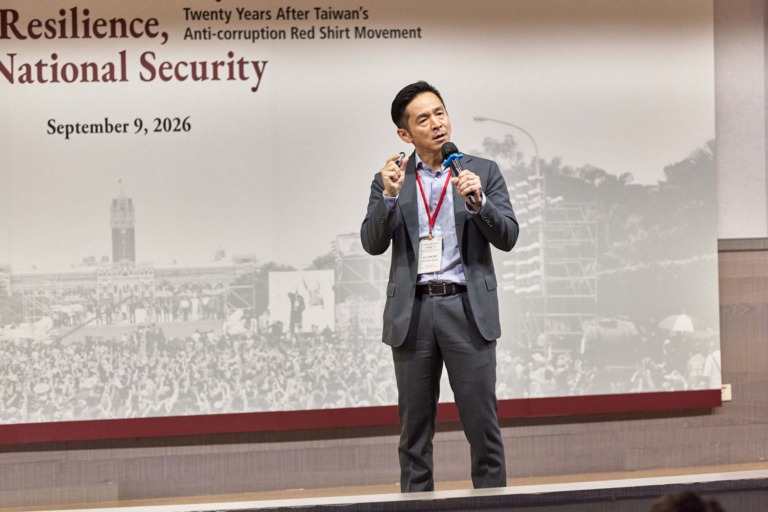
▪ Introduction: A Puzzle About Democratic Stability
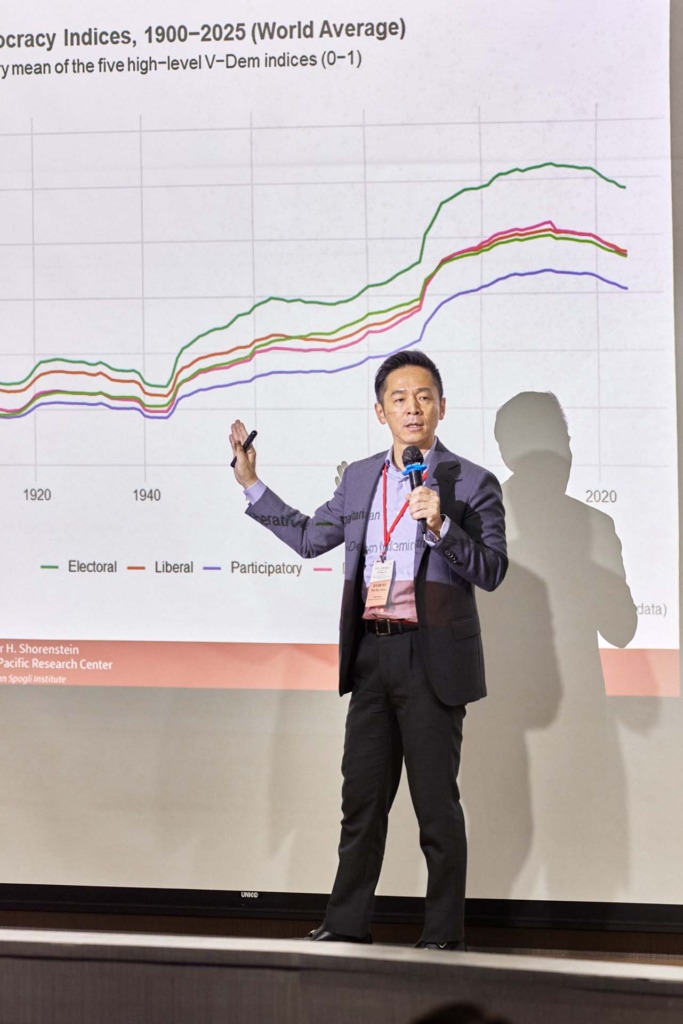
It is an honor to speak at an institution that preserves the legacy of Shih Ming-teh. My remarks follow naturally from the broader discussion of democratic resilience. I share the concern that democracy is under significant pressure in many parts of the world. At the same time, taking a longer historical view suggests that democratic institutions still retain important safeguards and capacities for resilience.
Against that background, I want to focus on a narrower question: what are the political consequences of having more or fewer national elections? Comparative research has long examined electoral systems, party competition, and voter turnout, but the frequency of national elections itself deserves more attention. Does holding elections more often intensify political division by repeatedly mobilizing partisan conflict? Or can frequent elections create opportunities for governments to hear and respond to grievances before they become more disruptive? And what happens to citizens when they are asked to vote again and again?
Japan provides a useful case for exploring these questions. It holds national elections with unusual frequency, yet it has generally avoided the intense populist polarization visible in a number of other democracies. At the same time, voter turnout is often modest, and political engagement can appear muted. This combination – relative political stability alongside voter indifference – raises an important question about how election frequency may shape democratic politics.
▪ Why Japanese Democracy Appears Stable
Japan is often described today as a relatively stable democracy. That description is striking to those who remember earlier debates about the quality of Japanese democracy. The Liberal Democratic Party (LDP) has governed for most of the postwar period, with only brief interruptions. Political change has often been incremental rather than dramatic, and critics have long pointed to the limited political representation of women and minorities, including Ainu and Korean residents and citizens.
Yet in recent years Japan has also stood out for what it has largely not experienced. It has not seen the same degree of populist upheaval or destructive political polarization found in countries such as the United States or South Korea. This makes Japan an interesting case for thinking about the institutional and social conditions that may contain political division.
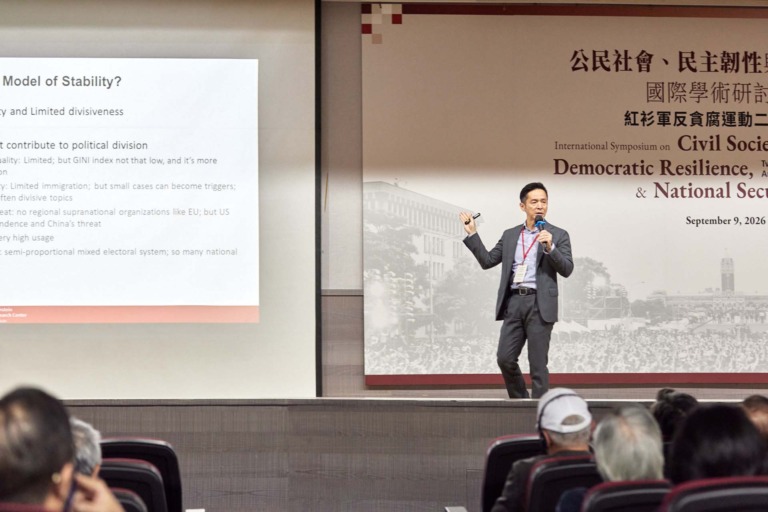
Several familiar explanations are plausible but incomplete. Economic inequality in Japan is lower than in some countries, but it is not exceptionally low. Large-scale immigration has been limited, which may reduce the salience of the kinds of cultural conflicts that have fueled populism elsewhere. Traditional social and family norms have also remained comparatively durable. Japan is not embedded in a supranational political structure comparable to the European Union, which has sometimes become a focus for sovereignty-based political mobilization. At the same time, none of these factors fully explains why political polarization has remained relatively contained.
Social media further complicates the picture. Japanese citizens make intensive use of platforms such as Twitter/X, and the country is not insulated from online narratives about cultural threat, sovereignty, or political grievance. Yet these dynamics have not, at least so far, produced the same level of virulent populist discourse seen in a number of other democracies. This led me to look more closely at Japan’s political institutions and, in particular, the frequency of elections.
▪ Frequent National Elections in Japan
Japan combines proportional representation with single-member district elections, but one especially notable feature of its political system is simply how often national elections occur. In roughly the past quarter century, Japan has held nineteen national elections – more than one every two years. This count refers to elections for national representatives and does not include referenda. It also excludes the internal presidential elections of the LDP, which provide an additional layer of political contestation.
Over the longer postwar period, Japan ranks at or near the top internationally in the number of national elections. One reason is institutional: the House of Representatives can be dissolved, allowing prime ministers to call snap elections. As a result, the timing of lower-house elections is less predictable than in systems with fixed electoral cycles.
Frequent elections repeatedly bring politicians into contact with voters. LDP politicians, in particular, have developed strong incentives and organizational capacities to listen to constituents and respond to emerging concerns. These concerns are often ordinary but politically consequential: childcare shortages, food prices or supply, social services, local economic conditions, and other issues that affect daily life. Opposition parties may initially raise such concerns, but the LDP often responds by proposing or adopting policy measures of its own.
This suggests a possible mechanism. Elections can function as a kind of pressure valve. They provide recurring opportunities for voters to express dissatisfaction and for governing politicians to respond before grievances accumulate into more fundamental rejection of the political system. In Japan, this process may have helped sustain LDP dominance while containing broader political dissent.
▪ Elections as a Pressure Valve – and a Source of Indifference
The pressure-valve function may also help explain why highly divisive value conflicts have historically played a more limited role in Japanese electoral politics. Issues such as imperial succession or same-sex marriage can certainly become contentious, just as abortion, gun control, and immigration have become highly polarizing in other democracies. But in Japan, electoral competition has often remained centered on more immediate economic and social concerns.
My argument is not that frequent elections eliminate disagreement. Rather, frequent opportunities for electoral response may reduce the likelihood that dissatisfaction over everyday governance becomes fused with broader, identity-based political conflict. By addressing practical grievances as they emerge, the governing party may be able to keep more fundamental divisions from becoming the central organizing principle of electoral competition.
There is, however, another side to this pattern. Frequent elections may also generate voter fatigue. If another election is always approaching, citizens may conclude that any single contest is less consequential. A voter who is not strongly concerned about the issues at stake in one election may simply decide to participate next time. Repeated electoral opportunities can therefore lower the perceived cost of abstention while weakening the sense that participation in a particular election is urgent.
In this sense, the same institutional pattern that gives citizens many opportunities to express dissatisfaction may also foster political indifference. Stability and apathy can coexist.
▪ Cross-National Patterns
To examine whether the Japanese case reflects a broader pattern, I began looking at cross-national data on the number of national elections, excluding referenda. In the twenty-first century, the Czech Republic has had the highest number in the data I examined, while Japan ranks near the top and is tied with Hungary. Over the full post-1945 period, Japan has held more national elections than any other country in the dataset.
The relationship between election frequency and political polarization is not straightforward. In the full cross-national sample, the association is weak and not statistically significant; countries with more elections appear, if anything, somewhat less polarized. When the analysis is restricted to democracies, however, the pattern changes. In some specifications, especially for the twenty-first century, more frequent elections are associated with greater political polarization. That possibility is consistent with a standard expectation in political science: elections generate political debate, mobilize competing camps, and can deepen division.
Yet among liberal democracies – where political liberties, the rule of law, and other institutional protections are more secure – the relationship is essentially flat. Whether the period begins in 1945 or is limited to the twenty-first century, frequent national elections do not clearly produce greater polarization in this group. These results are preliminary and should not be treated as a settled causal finding. The impact of election frequency on political division remains unclear and is likely shaped by other institutional, social, and political factors.
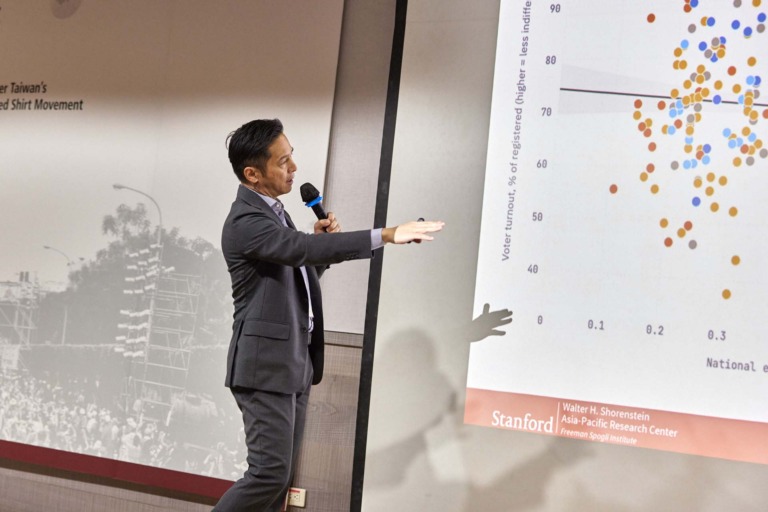
The relationship with voter turnout is clearer. Across the comparative data, countries with more national elections tend to have lower turnout in subsequent national elections. The pattern appears both in the postwar data and in the twenty-first-century data, and it remains visible when the analysis is restricted to democracies. Voter turnout is, of course, an imperfect measure of political apathy, but the consistency of this relationship suggests that frequent elections can contribute to voter fatigue and reduced electoral participation.
▪ Implications for Japan
Japan illustrates how these two effects may operate together. Frequent elections give voters repeated opportunities to register dissatisfaction, and they give political parties repeated incentives to respond. In practice, this has helped the LDP address everyday economic and social concerns, sustain its electoral dominance, and make it difficult for opposition parties to consolidate into a durable governing alternative.
At the same time, the system may reduce incentives for broad electoral participation. The LDP and its allies have historically relied on organized constituencies and interest groups capable of mobilizing dependable voters. When core supporters turn out consistently while less committed or swing voters participate less regularly, lower overall turnout does not necessarily destabilize the governing party. Indeed, it may reinforce an equilibrium in which political competition remains relatively stable even as many citizens become less engaged.
This does not mean that Japan is insulated from political division. Issues such as imperial succession can become highly contentious, and social media creates opportunities for misinformation and disinformation to intensify those disputes. External actors may also seek to exploit such divisions. The question is whether Japan’s established pattern of frequent electoral feedback will continue to contain these tensions or whether new forms of political communication and mobilization will weaken that stabilizing effect.
▪ Conclusion
The preliminary comparative evidence points to a relatively clear relationship between frequent national elections and lower voter turnout. More elections appear to contribute to voter fatigue and political indifference. The effect on political division, however, is much less certain. Depending on the countries and periods examined, the association can vary, and among liberal democracies it may disappear altogether.
Japan offers a useful mechanism for understanding this ambiguity. Frequent elections may repeatedly expose politicians to public dissatisfaction and encourage them to respond to practical grievances before those grievances develop into deeper political dissent. In that sense, elections can serve as a pressure valve. But the same frequency can make each individual election feel less consequential, lowering participation and fostering apathy.
The broader implication is that election frequency should not be evaluated only in terms of how often citizens are given the opportunity to vote. We should also ask how repeated elections reshape the incentives of political parties, the responsiveness of governments, the salience of divisive issues, and citizens’ willingness to participate. Japan suggests that a system can be electorally active, politically stable, and yet comparatively indifferent at the same time. Understanding that combination may help us better assess both the resilience and the limitations of contemporary democracy.