
July 2007, Goethe University Frankfurt, Germany. Someone asked the commander-in-chief, who had been invited to speak: what, in the end, was the value or achievement of the Red Shirt Movement? He listed six.
What most mass movements leave to posterity is a record of success and failure: who stepped down, who came to power, which bill was passed in which year. That is how history books are written. What the Red Shirts left behind was something else — an identity.
The hardest part of a mass movement is not the beginning. Beginning takes only anger, and Taiwan in 2006 was not short of anger. The hard part is the ending — especially when the movement’s demands have not yet been met.

Sixteen people sat in the dock, among them Commander-in-Chief Shih Ming Te. One other person in the courtroom was not a defendant: under the Code of Criminal Procedure, a defendant’s spouse may notify the court that she will appear as the defendant’s “assistant.” That seat belonged to Jessica Gina Chen.

The Red Shirt Movement was an open movement. Leading figures from every field flocked to it — some took part publicly, others offered counsel privately; writers and cultural figures, creative professionals, poets, artists, and entrepreneurs were all part of it. Shih Ming Te said he received everyone’s full support and gave back selflessly to every friend who took part. Only one matter, from beginning to end, he would not open for discussion.

For the movement to hold, it had to last through the night. If the crowd were cleared every evening and regathered the next day, it would not be a siege — only a rally. And whether it could stay overnight was not up to Chen Shui-bian. It was up to the Mayor of Taipei.
The dedicated account was in the name “Shih Ming Te.” But the seal was not in his hands. A mass movement is fluid, and its needs arise urgently and fast. In this line of work there had always been rough lump-sum “turnkey” budgets and “special expenses” that required no receipts. The Red Shirts allowed none of this.

At a press conference, five people stood side by side, each holding up a sheet of paper to the cameras. The red banner behind them read: “September 9 — See You on Ketagalan Boulevard — 3 p.m.” The paper in their hands was not a statement, not a demand, and not meant for Chen Shui-bian. It was a document they had signed for themselves.

It was late at night. A column of more than ten thousand people walked from Taipei Main Station back to the front of the Presidential Office Building. Headquarters had issued a single instruction: silence.
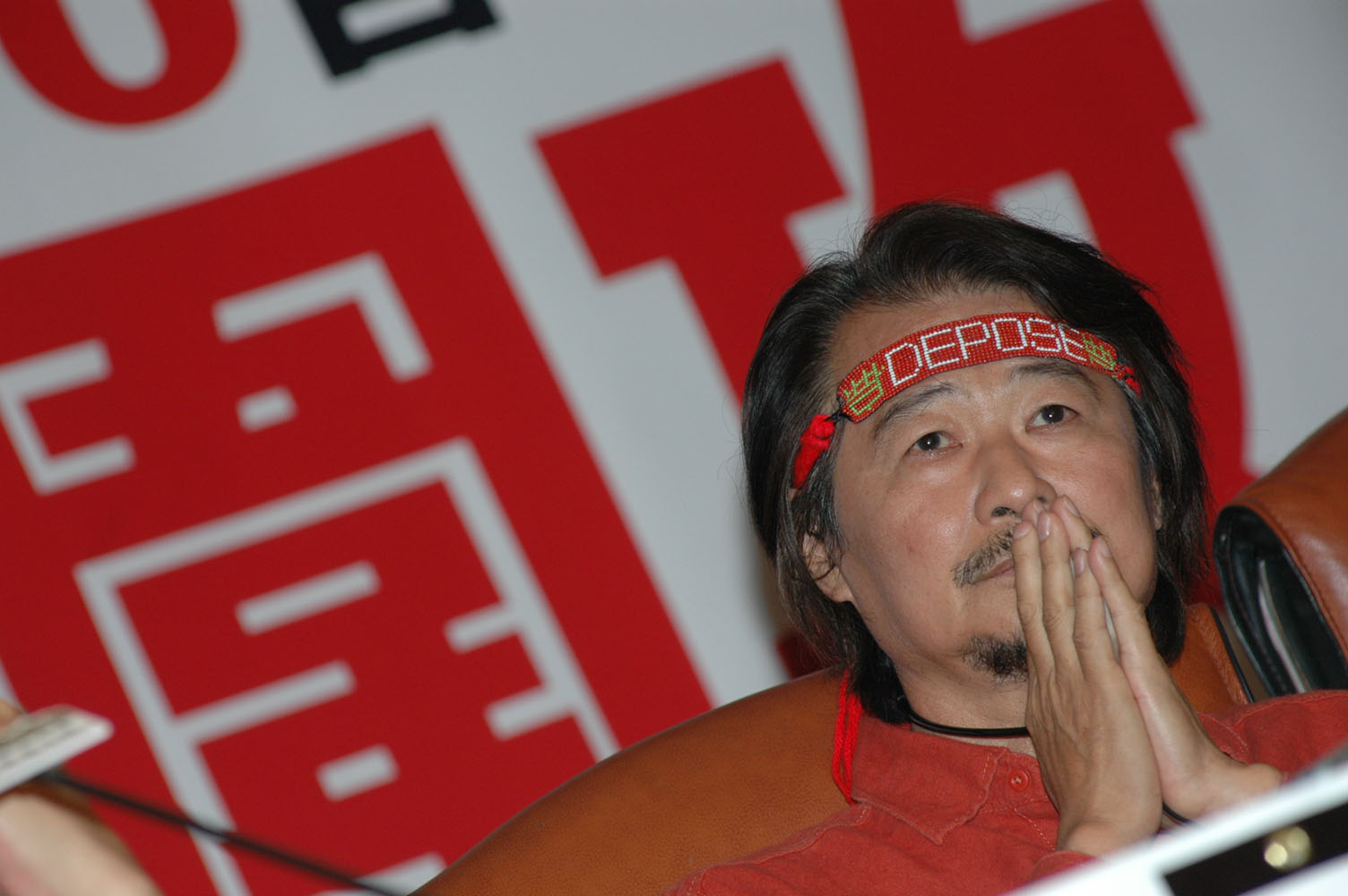
1.3 million people had already sent in their money. The public was waiting to see when he would take his seat on Ketagalan Boulevard. And he postponed, again and again.

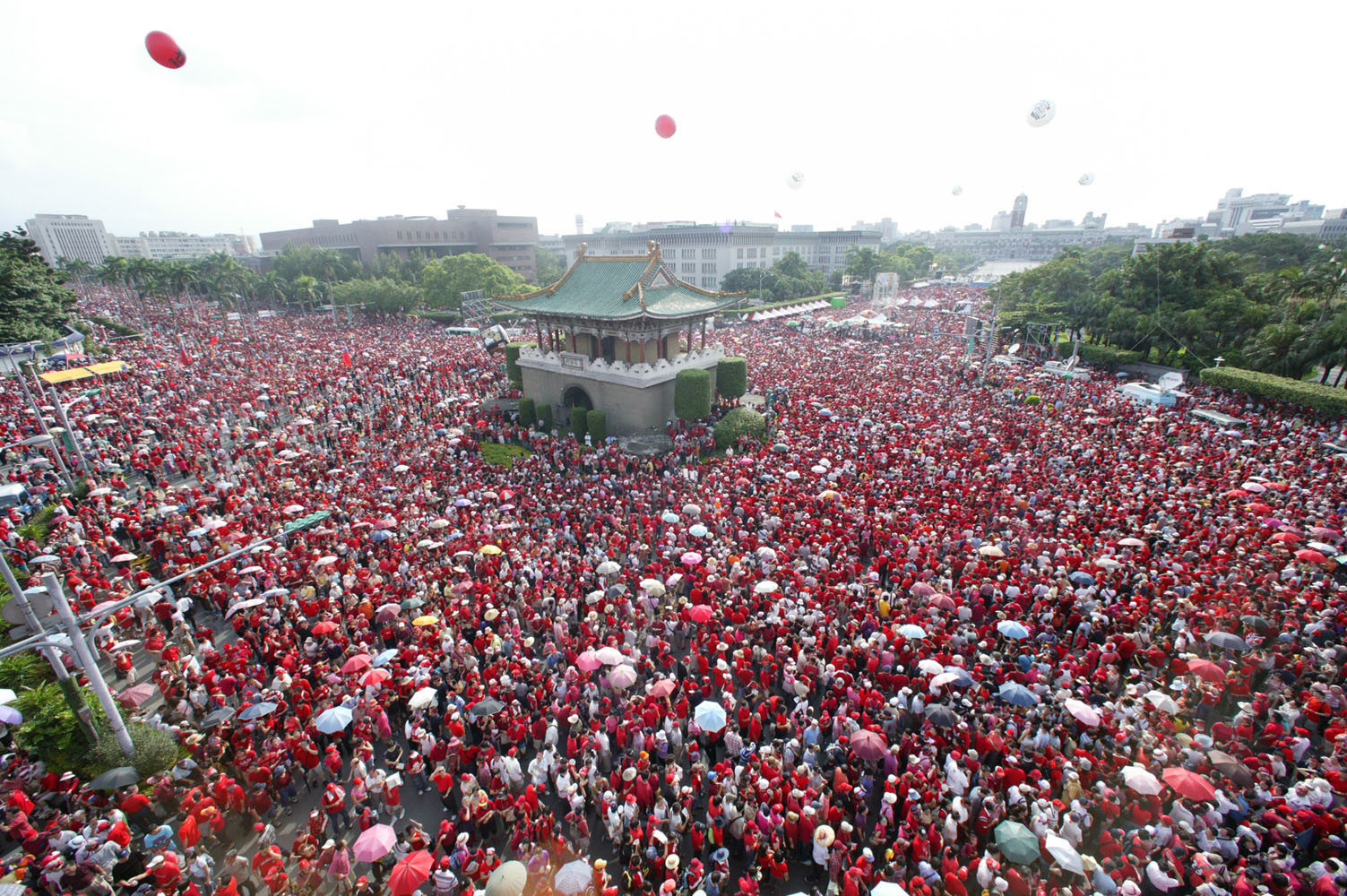
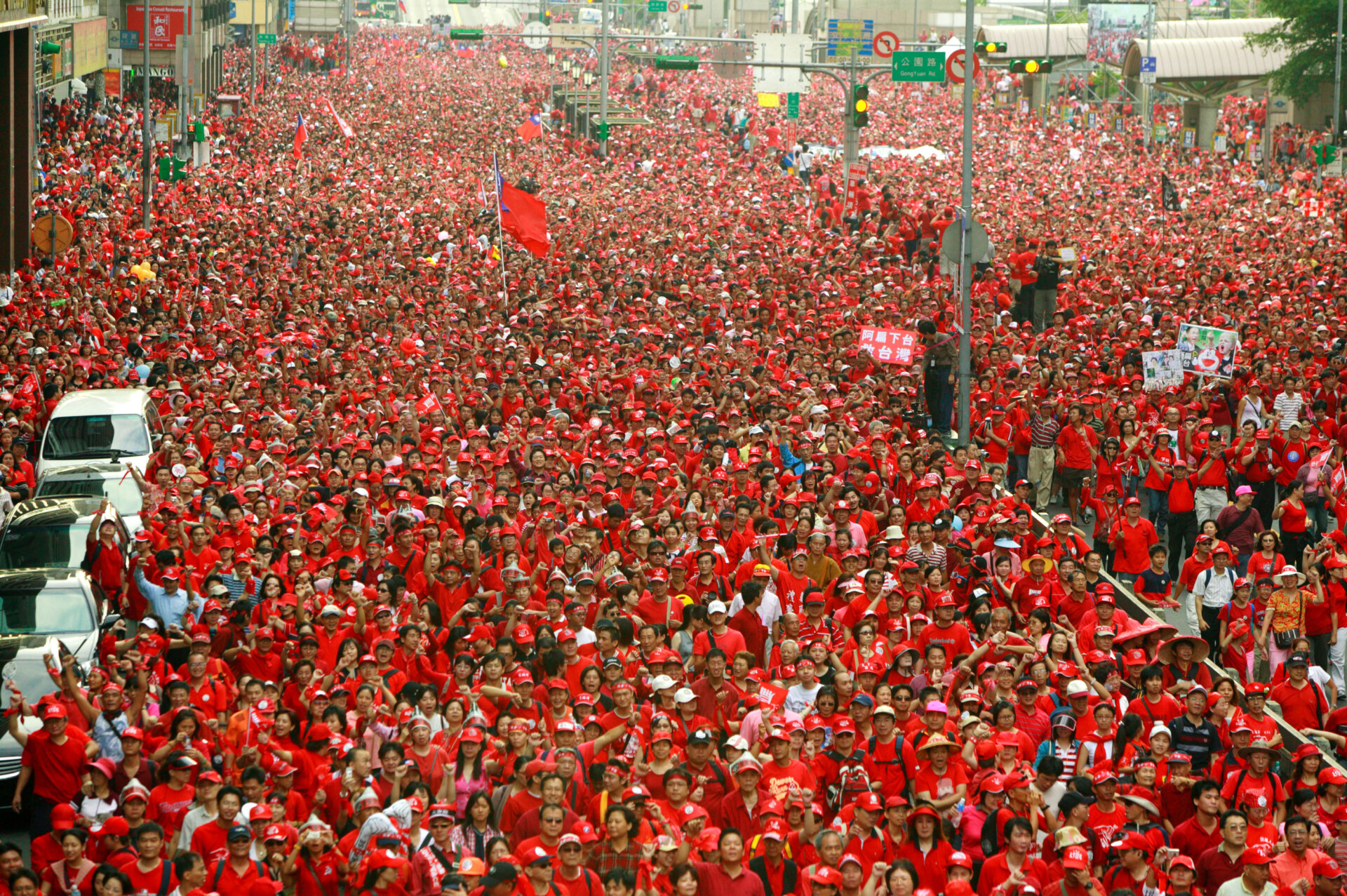
September 9, 2006, Ketagalan Boulevard. The crowd lifted a sixty-five-year-old man high into the air. Just two months after surgery for liver cancer, he stood at the center of the sea of people and raised his right fist.

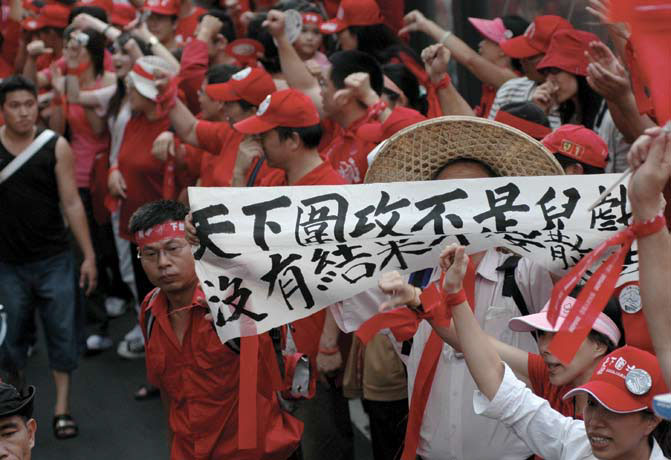
August 12, 2006, 228 Peace Memorial Park. A group of people raised their fists; beside them, someone held up a placard bearing three account numbers — a postal giro account, Chang Hwa Bank, and Union Bank of Taiwan — all in the name of Shih Ming Te.