
Highlights
Dr. Hung-Mao Tien
Senior Advisor to the President of the Republic of China (Taiwan)
President and Chairman, Institute for National Policy Research
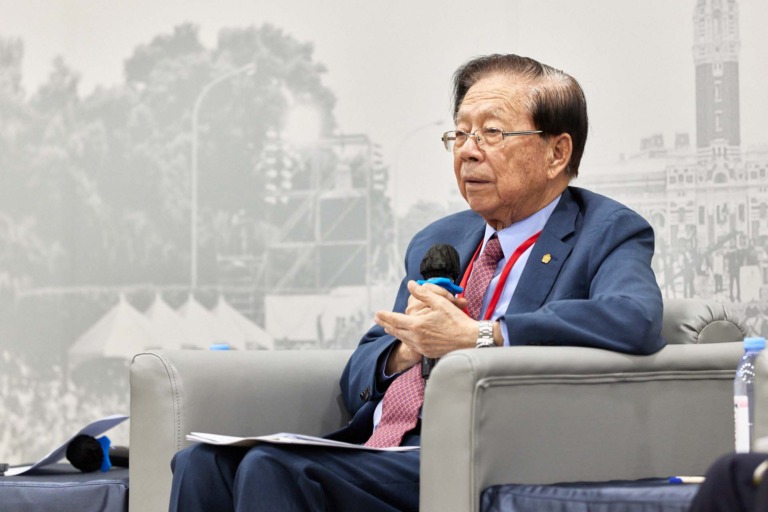
Prof. Robert Scalapino once saying,
‘Democracy is a mess, but we have to have it.’
I remember Professor Robert Scalapino of UC Berkeley once saying, ‘Democracy is a mess, but we have to have it.’ We are facing serious problems. The democratic society we have today has taken 40 years to build. I go back to 1986, when the first meaningful opposition party was formed without being suppressed; I personally see that as the beginning of Taiwan’s democratic development. Many things have happened since then, and it has not always been easy.
But one thing one needs to keep in mind, that a democratic development or transition from a former authoritarian system to a democracy in our country, in the Republic of China, in Taiwan, is very unique. It is very unique. May I submit to say that it is the only country in Asia, in the course of democratic transition, that has not experienced a violent armed confrontation, a major political breakdown. It is the only country. Am I right, Professor Diamond? So, for that matter, I always feel very fortunate to be able to live in a country like ours. But yet, the country we now see is facing enormous challenges and threats from across the Taiwan Strait.
Adm. James O. Ellis Jr.
Annenberg Distinguished Fellow, Hoover Institution, Stanford University
Co-Chair, Project on Taiwan in the Indo-Pacific Region
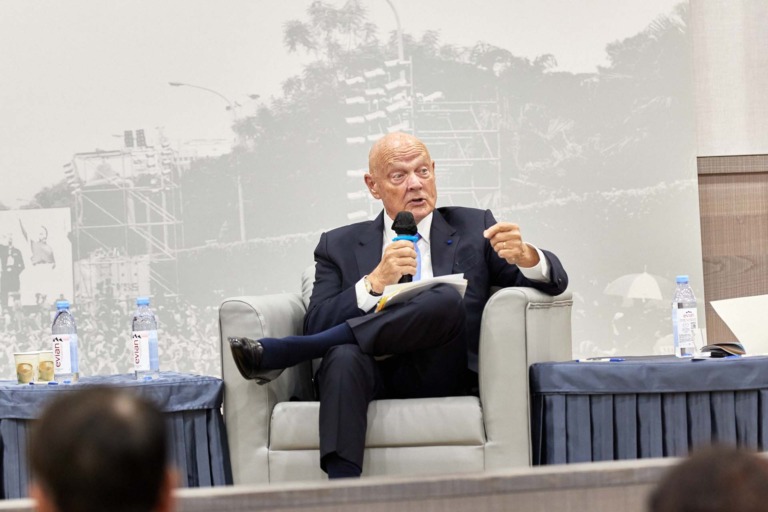
It teaches that a society’s will, the civil resilience, is a military capability.
Ukraine teaches that the deterrence of a determined adversary can fail, even when the morning warnings are explicit. And that once it fails, the defender’s survival depends on what was stockpiled, trained, and hardened beforehand, and on the speed with which friends can deliver what was not. It teaches that cheap, numerous, and adaptable beats expensive, few, and exquisite. It teaches that energy infrastructure is a target of first resort on both sides. And it teaches that a society’s will—the civil resilience—is a military capability.
The task of our generation, yours and ours, is to make certain that nothing ever does prevent the people of Taiwan from making their choice—not a landing, not a blockade, not a darkened grid, and not our own divisions.
Hon. Marise Payne
Distinguished Visiting Fellow, Hoover Institution, Stanford University
International Global Advisory Board, Observer Research Foundation
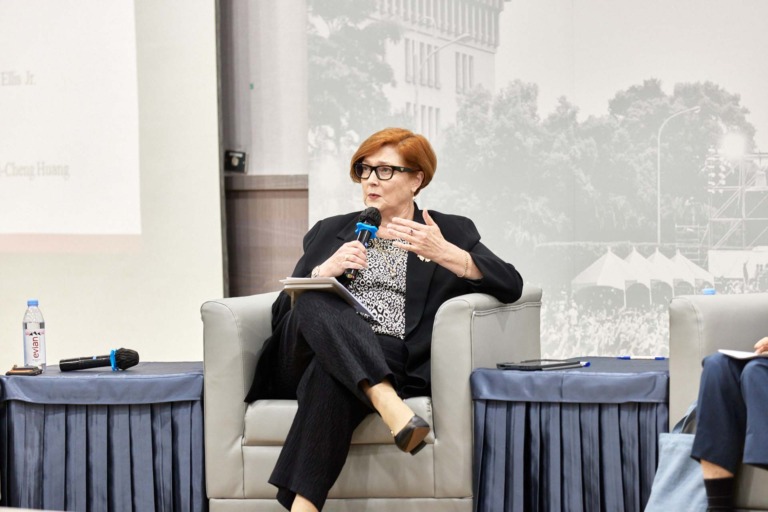
An elected government that chooses not to communicate with its people will suffer the consequences significantly.
I have to say, after more than two and a half decades as a legislator, the one thing I know does not work is not talking to your people. In Australian parlance, and I’m going to teach you all a great phrase today, in Australian parlance, it’s called treating people like mugs. And that is expecting them to just do what you say because you say it, not because you’d bother to inform them the consequences of what is happening around them. And so, an elected government that chooses not to communicate with its people will suffer the consequences significantly. That absence of effective communication of the why, the where, the how, the what is happening to us as a nation, as a people, is absolutely critically important to avoid that absence.
Prof. Hseik-Wen Soong
Institute of Strategic and International Affairs, National Chung Cheng University
President of Prospect Association
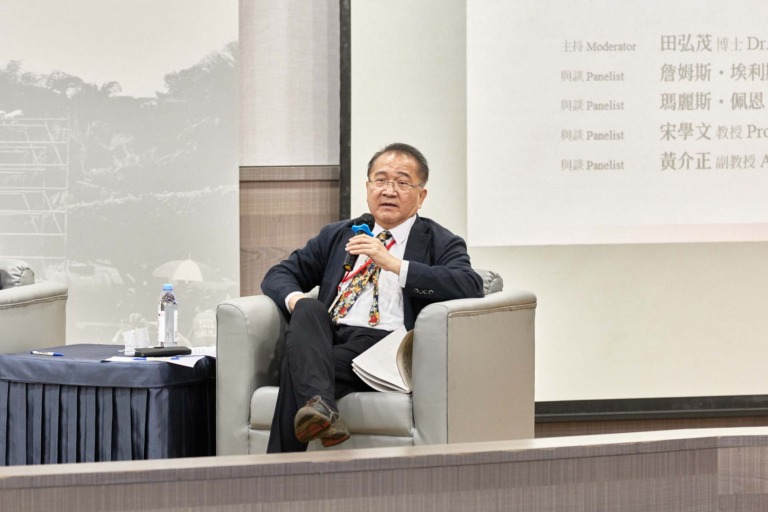
We need to depend on our democracy, the resilience. We need to make these two wings of one bird. Both sides need each other.
National security need the support, need to have the ground root in the social resilience. Without that, the national security will be very shaky and even very dangerous.
Then we need to depend on our democracy, the resilience. We need to make these two wings of one bird. Both sides need each other. By only one side, I think it will be equal. Now the point is to integrate these two different forces of power together.
So how to communicate? How to be together? How to unite it and to support the outside threat? But I don’t think that China will use only the outside threat. The threat is already in Taiwan, like the information warfare. It’s already happening in Taiwan every day.
Assoc. Prof. Alexander Chieh-Cheng Huang
Chairman, Council on Strategic and Wargaming Studies
Adjunct Associate Professor, Graduate Institute of International Affairs and Strategic Studies, Tamkang University
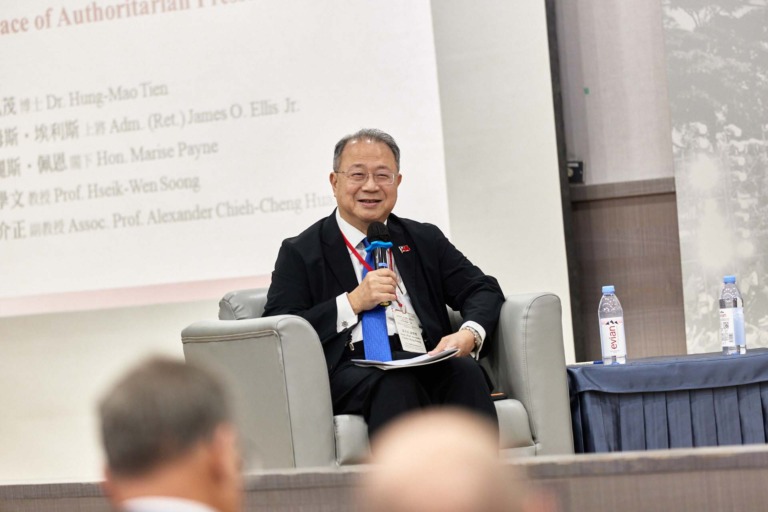
China cares more—and fears more—about our constitutional and institutional democracy: that people are willing to vote, people are willing to express their views, and people are interested in being involved in public policy debates.
And I would raise three factors that challenge Taiwan’s resilience.
The first one is time—the time factor. In terms of defense procurement and military modernization, we all need time. The delayed delivery of the systems that we procure, and the delayed decisions on arms sales that we currently experience, are continuing challenges.
The second factor is manpower. Taiwan is probably one of the three countries with the lowest birth rates in the world. And we are losing our manpower, especially young manpower, for our future economic development.
The third one, with all due respect, I would say, is that our resilience is challenged by the quality of leadership.It’s very important for what I call good leadership to communicate with society, giving people not only trust, competence, but also purpose.
I think China cares more—and fears more—about our constitutional and institutional democracy: that people are willing to vote, people are willing to express their views, and people are interested in being involved in public policy debates.