
“Only the sound of footsteps could be heard in the air.” — The Commander’s Confessions, p. 38
It was late at night. A column of more than ten thousand people walked from Taipei Main Station back to the front of the Presidential Office Building. Headquarters had issued a single instruction: silence.
And so, along the entire route, ten thousand people walked with no slogans, no songs, no conversation. Only footsteps.
This was not a mood; it was a system.
The Red Shirts had no party discipline, no salaries, no means of coercion whatsoever. Their only instrument of discipline was an oath. Every day, every hour, the deputy commander led the entire crowd in reciting the peace oath of “peace and non-violence,” followed by three minutes of silence. However many tens of thousands were present, all fell silent. For more than three months, day after day, it was the same.
Shih Ming Te later said the oath worked like a spell, shaping the soul of the entire movement.
When he lectured abroad, the question he was asked most often was: How did you do it? Was there ever a precedent for so many people staying so long in front of a presidential office without shedding a drop of blood? He thought about it for a long time and could find only one analogy — the Muslim pilgrimage to Mecca. Only faith of that intensity could bring so many people together without conflict.
The contrast is stark. In mass movements around the world, three to five thousand people are enough for clashes and shouting matches with the police; with ten thousand, the gasoline bombs, rocks, and bottles start flying. In Korea, Japan, Thailand, the Philippines, France, Germany, Italy, India, and the United States, this is commonplace. Yet a million Red Shirts, their hearts full of anger, resentment, and hatred, never threw a single tile or brick from beginning to end.
How many people around the world sat before their televisions then, holding their breath for the moment the crowd would storm the Presidential Office. That moment never came.
Passion is easy; restraint is hard. Silence was never the absence of strength. Quite the opposite: the road those ten thousand people walked without a sound was a display of strength. They had the power to do something else, and they chose not to.
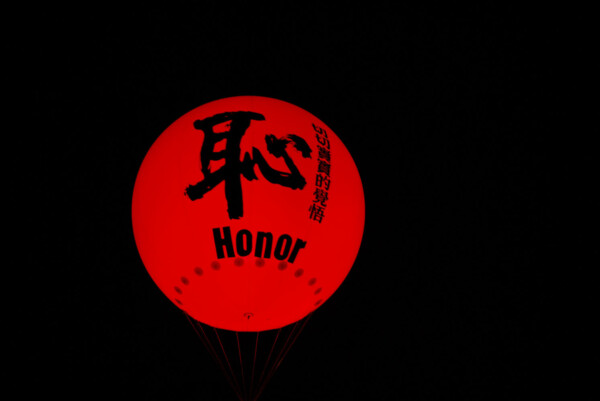

An unarmed army: the power of silent discipline.
Source: Shih Ming Te, The Commander’s Confessions, 2009, pp. 38–39, 70–71, 112–113.

Want to learn more about the Red Shirt Movement and the innermost confessions of its commander-in-chief, Shih Ming Te?
Click here to read more about The Commander’s Confessions and get your copy.
The primary sources of the Red Shirt Movement — decision records, the original oath, images, and financial records — are being preserved and catalogued by the Shih Ming Te Foundation. These materials are an important foundation for the study of Taiwan’s democratic transition, and the core of the Foundation’s archival work.
The Shih Ming Te Foundation needs your support.