
“I had to find the road I must take between ‘private love’ and ‘the height of history.’” — The Commander’s Confessions, pp. 144–145
November 28, 2008, Taipei District Court: the closing arguments in the Red Shirt trial.
Sixteen people sat in the dock, among them Commander-in-Chief Shih Ming Te. One other person in the courtroom was not a defendant: under the Code of Criminal Procedure, a defendant’s spouse may notify the court that she will appear as the defendant’s “assistant.” That seat belonged to Jessica Gina Chen.
That morning, she had told her husband on her own initiative: I want to speak in court.
What she intended to say was not a legal argument. She opened with a question: the “ringleader” standing in court today — what kind of man is he?
When he was sixteen, he told his mother that there were five brothers in the family and one fewer would not matter; he had decided to apply to military academy, to overthrow the Chiang family dictatorship by force. … For Taiwan’s democracy, freedom, and human rights he was imprisoned for a total of twenty-five years and four months; and in 1997, for the DPP’s campaign for direct presidential elections, he served more than forty days in prison.
In his whole life, he has never held any job other than working for social justice.
And today, for having opposed the corruption of President Chen Shui-bian and his family two years ago, he sits here on trial.
Then she gave the real reason she had asked to speak. She could not answer a simple question from her children: What did Daddy do wrong, that he has to stand trial and be punished?
Is it wrong to oppose corruption? Is it wrong to express one’s convictions? Is it wrong to do what is right?
I have no answer to give…
And that “anguish” was not rhetoric. It had concrete legal substance.
Shih Ming Te had stated publicly more than once that if the court of first instance found him guilty, he would waive his right to appeal and would not pay a fine in lieu of imprisonment. As in 1997, he would walk straight into prison and pay the price for his convictions.
Defense attorney Nigel N. T. Li reminded her of one thing: as the defendant’s spouse, she had an independent legal right to file an appeal.
In other words, if the verdict was guilty, she could go against her husband’s will, appeal on his behalf, and pull him back out of prison. Whether to exercise that right was her decision alone.
Private love, or the height of history.
She gave no answer in court. She said only:
If we always “act according to the law” and never “do what is right,” I think the world will remain forever at a standstill; perhaps we would all still be living under dictatorship today. … I believe a judge should not be a machine that applies the law, but the embodiment of justice and the symbol of right.
Three months later, on February 20, 2009, he sat before the Memorial to the Political Victims of the White Terror and waited for the verdict.
That afternoon, the Taipei District Court announced its judgment: all sixteen defendants were acquitted. The court held that although the assembly on Ketagalan Boulevard had not been authorized and had caused the public some inconvenience, its demands had met with broad public response, the police had kept the situation fully under control, and no clear and present danger had arisen; weighing the two, the inconvenience remained within what the people of a democratic society can tolerate, and the state should respect it. The court further found that the police order to disperse, displayed four times in succession within one hour, violated the principle of proportionality.
The prosecutors appealed; the High Court dismissed the appeal, and the judgment became final.
Eight years later, the same presiding judge invoked the same reasoning in another case, acquitting the participants in the 318 occupation of the Legislative Yuan at first instance.
That anguish never came. She never had to choose between private love and the height of history.
The cost of a movement is never borne only by the one who stands on the stage. And this statement deserves to be preserved not because it is moving, but because, before a law left over from the martial-law era, it raised a question the law could not answer at the time — and later had no choice but to answer.
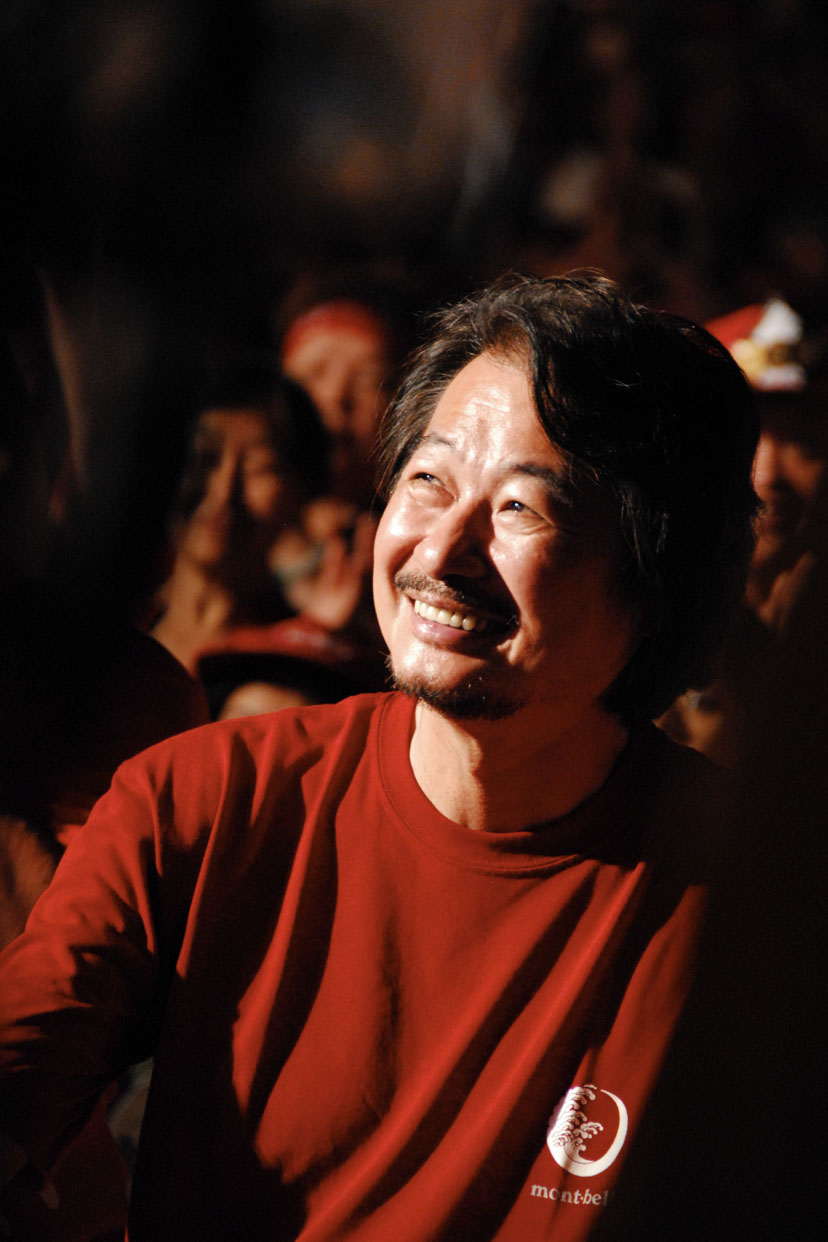

February 20, 2009: waiting for the verdict before the Memorial to the Political Victims of the White Terror.
Source: Shih Ming Te, The Commander’s Confessions, 2009, pp. 143–147. The quoted passages are excerpts from the full statement made by Jessica Gina Chen before the Taipei District Court at the closing arguments of the Red Shirt trial on November 28, 2008. The verdict and the subsequent appeal do not appear in the original book; they were separately verified and added.

Want to learn more about the Red Shirt Movement and the innermost confessions of its commander-in-chief, Shih Ming Te?
Click here to read more about The Commander’s Confessions and get your copy.
The complete trial record, defense filings, and judgments of the Red Shirt trial are important sources for the legal history of assembly and protest in Taiwan, and are being preserved and catalogued by the Shih Ming Te Foundation.
The Shih Ming Te Foundation needs your support.