| Year | Age | Events |
|---|---|---|
| 1941 | Birth | Born at the beginning of the sixteenth year of Shōwa(昭和), in the closing days of the gengchen (庚辰)year, under the sign of the dragon. On January 15, 1941, Shih Ming Te was born on Dayong Road in Yancheng District, Kaohsiung Prefecture, in a Baroque-style building whose façade bore the character “Shih” — a Chinese-medicine clinic. His father, Shih Kuo-tsui, was fifty-seven; his mother, Shih Chen Ying, twenty-seven. The family was prosperous, holding extensive land and property. His father was a well-known general practitioner of Chinese medicine in southern Taiwan and, in the Japanese era, an examiner for the Chinese-medicine licensing examinations. The father had five daughters by his first wife; the mother was his second wife, married after he was widowed. Before Shih Ming Te she had borne three sons: the eldest, Shih Ming-cheng (then six); the second, Shih Ming-ho (four); and the third, Shih Ming-hsiung (two). Shih Ming Te was the fourth son. The Shih family were devout Catholics who had given funds to build the Holy Rosary Cathedral beside the Love River; Shih Ming Te was baptized there, taking the Christian name John. At home he was called by the Japanese name Aki-Nori. On December 7, Japanese forces launched a surprise attack on the U.S. naval base at Pearl Harbor, Hawaii, igniting the Pacific War — a turning point of the Second World War. 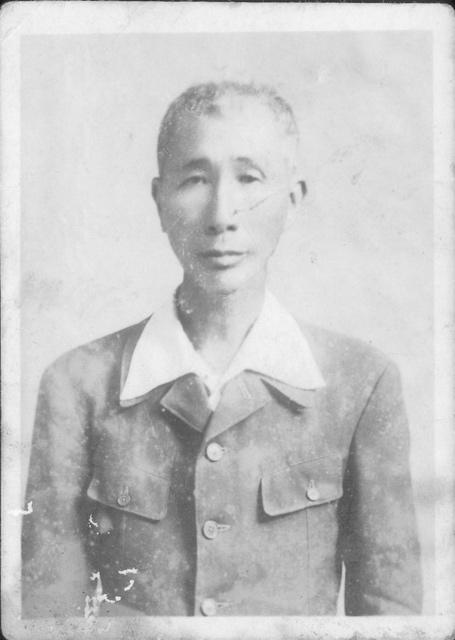 His father, Shih Kuo-tsui (1884–1953) 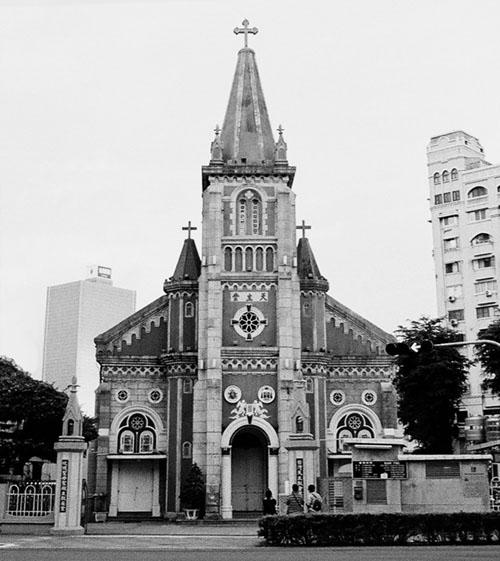 Holy Rosary Cathedral, Kaohsiung |
| 1943 | Age 2 | His younger sister, Shih Ming-chu (施明珠), was born. |
| 1944 | Age 3 | As the Pacific War intensified, it reached the Japanese colony of Taiwan. After shells fell on Kaohsiung and Pingtung, the family and their servants evacuated in winter to Tiancaopu, in the countryside outside Kaohsiung, to escape the American bombing. Inside the air-raid shelter, Shih Ming Te prayed and recited prayers with his mother and the rest of the family; outside it, he asked his father why Taiwan was being bombed. His father answered that it was because Taiwan was a Japanese colony. It was the first time Shih Ming Te heard the word “colony” — a word that would mark him for the rest of his life. |
| 1945 | Age 4 | After the war’s end, in midsummer the family moved back to Kaohsiung, into a Japanese-style garden mansion of more than four hundred ping beside the small traffic circle. The road there was later renamed Zhongzheng Road, and the mansion became the Chang Hwa Bank. His father had a tailor make Western suits and leather shoes for the brothers; dressed neatly, Shih Ming Te began attending the children’s class led by nuns at the Holy Rosary Cathedral, where he listened to Bible stories. |
| 1946 | Age 5 | His father, Shih Kuo-tsui(施闊嘴), completed four buildings in front of Kaohsiung Railway Station; the family moved into one and rented out the other three. With the constant flow of people before the station and always something new happening, the curious Shih Ming Te had a lively childhood and saw the full range of human affairs. He lived here until his first arrest. |
| 1947 | Age 6 | In the deep cold of that early year, looking out from the family home in front of the railway station, Shih Ming Te witnessed the bloody scenes of the February 28 massacre. Students from Kaohsiung Middle School and from the fishery and industrial vocational schools, rifles in hand, faced the machine guns of the Nationalist government troops before the station; though vastly outnumbered, they pressed forward one after another, resisting to the death. In the fitful cold of March, the people burned banknotes in anger; executed resisters, name-placards thrust into their backs, were paraded through the streets and shot on the spot, their corpses left exposed in the roads. His father too was arrested, but — having once treated the driver of Peng Meng-chi(彭孟緝), commander of the Kaohsiung Fortress — was recognized and released, narrowly escaping disaster. |
| 1948 | Age 7 | He entered the first grade at Sanmin Elementary School. Shih Ming Te, who went to school in leather shoes, envied his classmates who ran free and barefoot yet were masters at catching loaches, birds, and frogs. |
| 1949 | Age 8 | Defeated in the Chinese Civil War, Chiang Kai-shek’s regime fled into exile in Taiwan. The troops that landed at Kaohsiung Harbor advanced along Zhongshan Road toward the railway station; ragged soldiers carrying pots and pans left the children — who had known only the clean, orderly, imposing Japanese soldiers — filled with bewilderment, as if beholding the proverbial emperor in his new clothes. Taiwan declared martial law. |
| 1950 | Age 9 | Taiwan entered the era of the White Terror. In summer, the Korean War broke out. |
| 1951 | Age 10 | His father, a bonesetter, each morning summoned his sons and neighborhood friends to practice boxing together for fitness; but under the White Terror he was falsely accused of “gathering a crowd to practice martial arts” and arrested. His mother, frantic, sold family property to raise cash and bribe officials to secure the release of Shih Kuo-tsui; but after months of severe torture he returned home unable to walk, bedridden until his death. Shih Ming Te was acknowledged by the family as a devoted son: after school he always sat by his father’s sickbed, grinding apple purée for him, reading the newspaper aloud, and listening as his father explained the Korean War and the international situation point by point. |
| 1952 | Age 11 | His father ordered the Shih brothers to rise at five every morning and run five hundred meters with lead weights bound to their legs. |
| 1953 | Age 12 | On July 14, his father died at the age of sixty-nine. “My father had passed through the baptism of the Second World War and had also suffered the terror of the February 28 Incident; he cared especially for peace, even when war was as far away as the Korean Peninsula. Of course I did not understand many of the unfamiliar proper terms, nor necessarily the connections between events. As I read the papers, I listened to my father explain and analyze them for me. This was the origin of the concern for, and understanding of, international affairs that I have held since childhood.” — Memoirs of Shih Ming Te. 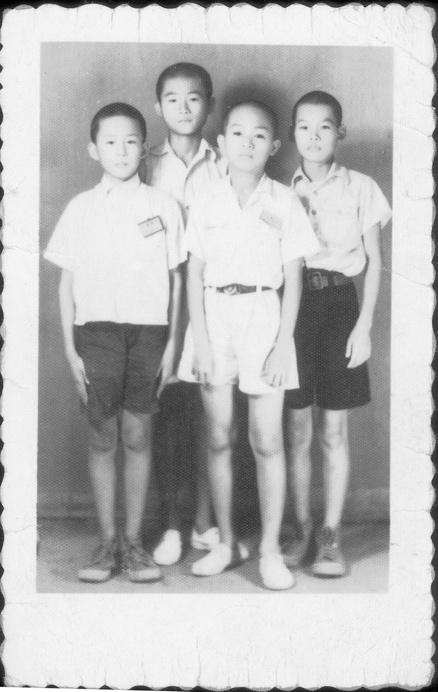 1953 - Sanmin Elementary School |
| 1954 | Age 13 | Shih Ming Te was admitted to the junior-high division of Kaohsiung Middle School. He pried open a case of banned books that his eldest brother, Shih Ming-cheng(施明正), had deliberately hidden under the bed-boards years before — all world classics of 1930s literature and of Russia and the West — and gathered classmates to divide the books and read them in turn. |
| 1957 | Age 16 | On a summer evening he solemnly told his mother that he intended to enroll in a military academy, organize an army, stage an armed mutiny, and overthrow the dictatorial Chiang regime. His mother wept on hearing this; Shih comforted her: “You have five sons; one fewer will not matter.” He was admitted to the senior-high division of Kaohsiung Zhongzheng Middle School. |
| 1958 | Age 17 | At Zhongzheng Senior High he befriended Yu Ching, and together they edited Xingyue (“Stars and Moon”) magazine — its name alluding to toiling from before dawn until after dark. (披星戴月)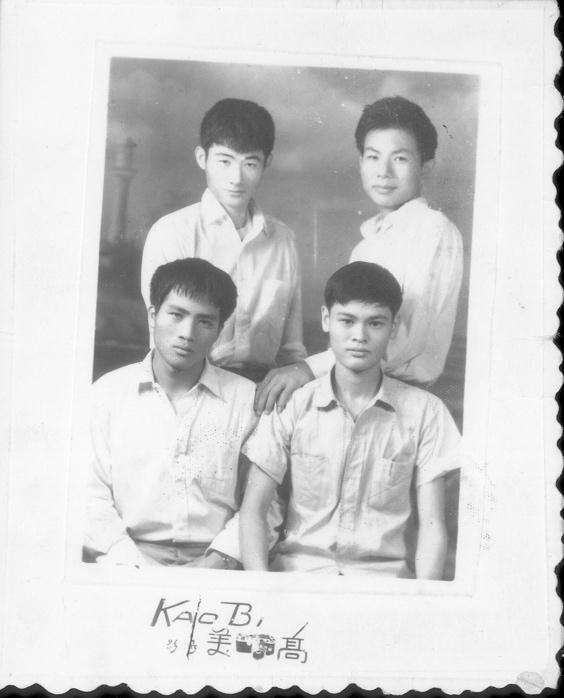 1958 - Kaohsiung Senior High School |
| 1959 | Age 18 | He entered the Army Artillery School.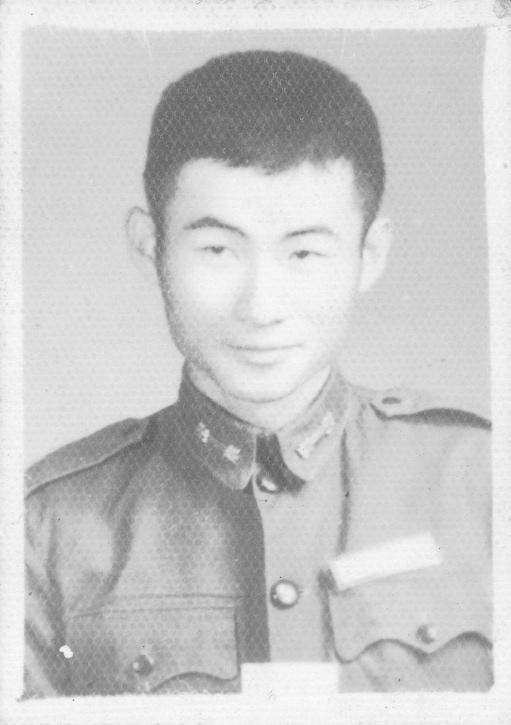 1959 - Army Artillery School |
| 1960 | Age 19 | In autumn, the “Free China” Lei Chen case erupted. Lei Chen(雷震), who in truth sought democracy, freedom, and the formation of a party, was framed by the authorities for “harboring Communist spies and inciting rebellion” and sentenced to ten years’ imprisonment. Shih Ming Te has said that the Free China magazine of those years deeply influenced him as a young man. |
| 1961 | Age 20 | He was posted to the front line on Lesser Kinmen as an artillery observation officer, coming to understand the ruthlessness of war and the pricelessness of peace. During this time he learned firsthand the truth of the August 23 artillery bombardment of Kinmen: “Kinmen and Matsu cannot defend Taiwan; Taiwan cannot protect Kinmen and Matsu.” Had it not been for American military aid, Kinmen’s ammunition and provisions would long since have been exhausted. On September 19, Su Tung-chi (蘇東啟)was arrested; the case implicated Taiwanese military officers, with more than three hundred people arrested in all. |
| 1962 | Age 21 | On June 16, just as he was about to be promoted to first lieutenant, he was arrested on Lesser Kinmen in connection with the “Taiwan Independence League case” and sent for interrogation to the “Third Guest House,” a counterintelligence unit of the Ministry of National Defense on Greater Kinmen. Within a month he was transferred to the counterintelligence section of the Army General Headquarters; days later, to the military-law detention center of the Army General Headquarters at Mamingtan, Muzha, Taipei; and then into the hands of Chiang Kai-shek’s “Eastern Depot” — the Security Section of the Taiwan Garrison Command — concealed in the Higashi Honganji temple in Ximending, where Shih Ming Te was tortured until all his teeth were pulled out, triggering the hereditary disease ankylosing spondylitis. Only after his dentures had been made was he sent to the Taiwan Garrison Command detention center at No. 3 Qingdao East Road. His eldest brother Shih Ming-cheng(施明正) and third brother Shih Ming-hsiung (施明雄)were both arrested, implicated without cause. 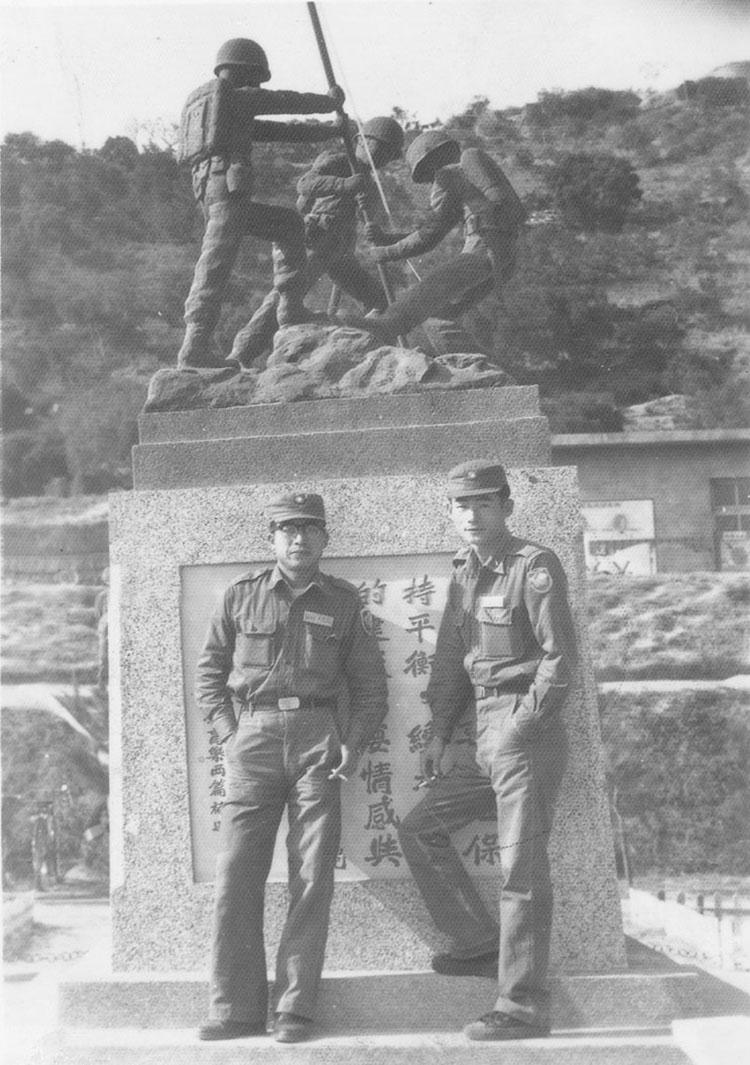 1962 - Shih Ming Te as an artillery second lieutenant and forward observer on Lesser Kinmen |
| 1963 | Age 22 | In May the interrogation concluded, and he was indicted for “organizing the ‘Asia League’ with intent to commit rebellion and taking steps to carry it out” — a charge carrying a mandatory death sentence. Transferred to the Taiwan Garrison Command detention center at No. 3 Qingdao East Road, he was imprisoned together with death-row inmates: Han Jo-chun(韓若春), Chen Chih-hsiung(陳智雄), Huang Tsu-yao(黃祖堯), Kai Tien-yu(蓋天予), Tsai Ping-kun(蔡秉堃), Sung Ching-sung(宋景松), Pai Ke(白克), Chung Ying-chun(鍾盈春), and Yen Chun-chuan(嚴君川). Observing closely the many kinds of the falsely accused, the absurdly condemned, and the prisoners of conscience in their final hours, Shih Ming Te reflected, awakened, and grew; these days lived in intimate company with the condemned profoundly shaped the whole of his life. Shih Ming Te has repeatedly recalled that Toynbee’s monumental A Study of History, which he read closely in this period, was deeply imprinted on his mind. After martial law was imposed, the books the Garrison Command had seized and confiscated from the public all ended up in the prison library — a paradox of history, whereby the least free of places became the place where one could read most freely. |
| 1964 | Age 23 | The full set of dentures he had worn at twenty-one became precious, irrefutable evidence of “torture,” and unexpectedly spared Shih Ming Te from the death penalty. On April 1 he was sentenced to life imprisonment without commutation or parole, his property confiscated; the whole prison cheered for him. His eldest and third brothers were each sentenced to five years, and together they urged him: “Do not appeal.” The crude, ill-fitting dentures tormented him constantly in prison; from then on, if in the cells one heard the clink of a stone tapping against an aluminum bowl, one knew Shih Ming Te was eating. During exercise time he would search the ground for suitable sharp objects to carry back and carefully grind down his own dentures. 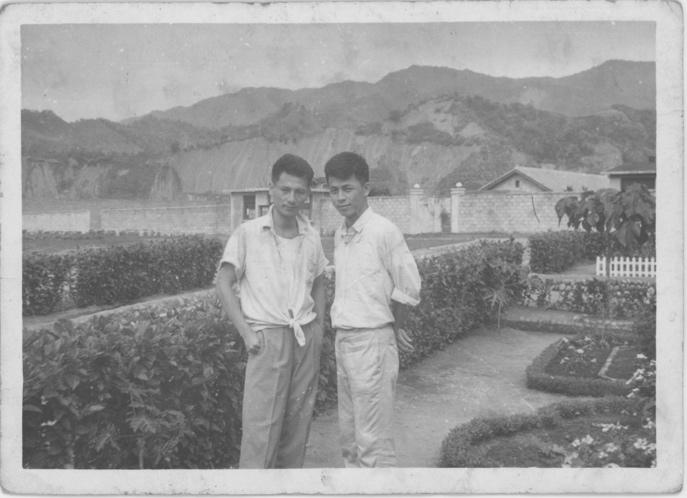 1964 - His eldest brother, Shih Ming-cheng (left), and third brother, Shih Ming-hsiung, at Taiyuan Prison 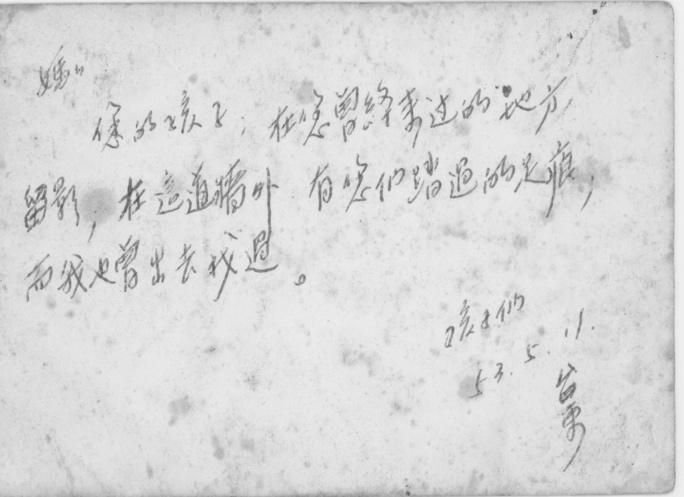 1964 — Shih Ming-cheng and Shih Ming-hsiung, Taiyuan Prison (inscription on the reverse) |
| 1965 | Age 24 | He was transferred to Taiyuan Prison in Taitung — Shih Ming Te’s first time setting foot on Taiwan’s eastern coast. In this prison for political inmates he met many outstanding figures: Mei Chi-min, author of The Great Northern Wilderness and a fine writer; Ko Chi-hua(柯旗化), author of A New English Grammar, fluent in English and Japanese; and Chen Chi-chang(陳其昌), a graduate of the University of Tokyo, who later became Shih Ming Te’s Japanese teacher. He also came to know like-minded revolutionary comrades — Chiang Ping-hsing(江炳興), Chen Liang(陳良), Cheng Chin-ho(鄭金河), Hsieh Tung-jung(謝東榮), and Chan Tien-tseng(詹天增) — and, of course, many who would later prove to be informers, betrayers, and stool pigeons. He began a systematic study of international law, reading widely in Chinese, English, and Japanese. |
| 1966 | Age 25 | The question of the People’s Republic of China’s efforts, from 1950 onward, to claim China’s seat at the United Nations was a constant topic in the political prison. Shih Ming Te and the pro-independence political prisoners held the position of “accommodating Mao without excluding Chiang,” believing that Taiwan could accept “One China, One Taiwan” or “Two Chinas” so long as Taiwan could remain in the United Nations; Taiwan’s problem, they held, was one of internal political liberalization. |
| 1967 | Age 26 | Ko Chi-hua’s First Publishing House published The True, the Good, and the Beautiful, a work Shih had translated from Japanese into Chinese. |
| 1968 | Age 27 | On February 29, his mother died at the age of fifty-three. Shih Ming Te was not permitted to attend the funeral. Severely depressed, he developed an acute gastric illness and was sent under guard to the Taitung military hospital for treatment. |
| 1970 | Age 29 | After long planning, it was resolved that on February 8, the third day of the Lunar New Year, political prisoners serving as outside laborers would rise in revolt: seizing weapons, freeing the entire prison, buying off a fishing boat to smuggle Ko Chi-hua — fluent in Japanese and English — alone to the Ryukyus, then commandeering a vehicle to seize the Taitung radio station and broadcast to the world the Taiwanese people’s aspiration for independence and for remaining in the United Nations. It was, in essence, a kamikaze-style suicidal act of proclamation. Unexpectedly, the uprising failed. That day, Shih Ming Te felt that he had grown old. On May 30, the Five Martyrs of Taiyuan — Chiang Ping-hsing, Chen Liang, Hsieh Tung-jung, Chan Tien-tseng, and Cheng Chin-ho — were shot. After the failure, Shih Ming Te was held in solitary confinement in a small “dark cell” three feet by six for as long as thirteen months, denied all visits. Months later, alarmed to find that he was losing the power of speech, he began each day to read aloud to himself, reciting Tang poetry, Song ci, and the Gettysburg Address he had memorized in his youth. |
| 1972 | Age 31 | Japan established diplomatic relations with the People’s Republic of China; Chiang Kai-shek severed all exchange with Japan, including cultural exchange, banning Japanese films and books, while the prison simultaneously forbade the reading of Japanese-language books. The second foreign language Shih Ming Te had acquired over these years was thus cut off; his Japanese books had all to be sent home or else be confiscated. On May 2, through “Exercise Dong-an,” the Taiwan Garrison General Headquarters transferred the 306 sedition convicts serving sentences at Taiyuan to Green Island in three batches. In autumn, an acute appendicitis on National Day, its treatment delayed, turned into peritonitis; three days later a military aircraft carried him to the Taitung hospital for emergency surgery, and his life was saved. He published a critical analysis, “Foundations of International Law,” in a magazine. On October 25, UN Resolution 2758 recognized the government of the People’s Republic of China as the lawful representative of China at the United Nations, and the Republic of China withdrew from the UN. |
| 1973 | Age 32 | He undertook research on the design of a new Taiwanese script, producing Design Principles and Practical Rules for a New Taiwanese Script; the manuscript vanished after the Kaohsiung Incident. |
| 1974 | Age 33 | His girlfriend transferred her affections to a recently released political prisoner. With no one left to sustain Shih Ming Te in prison — his brothers and sister likewise unaware — for more than a year he was so destitute as to lack even toilet paper and soap. Recalling those solitary, forsaken days, Shih Ming Te sighed: “Cold and cheerless, bleak and desolate, wretched and forlorn.” |
| 1975 | Age 34 | In spring, the dictator Chiang Kai-shek died; a nationwide commutation of sentences was carried out, and Shih Ming Te’s life sentence was reduced to fifteen years. On September 30 he wrote “Inspirations from Sprouting Beans,” an essay that later inspired a scientist at Academia Sinica to conduct experiments demonstrating that bean sprouts, when subjected to pressure, release ethylene and grow thicker and sturdier. |
| 1976 | Age 35 | He was transferred to the Ren’ai Educational Institute in Tucheng, the site of ideological reform for political prisoners before release. In October, the Hsieh Tung-min mail-bomb case occurred. |
| 1977 | Age 36 | In January, Wang Hsing-nan(王幸男), who had carried out the mail bombing, was arrested at Taipei Songshan Airport by Kao Ming-hui, deputy director of the Taipei Investigation Station. After his arrest he knelt and begged for mercy, disclosing Taiwan-independence secrets in exchange for exemption from death — details that were all used as teaching material by the instructors at the Ren’ai Institute. On June 16, having completed fifteen years’ imprisonment, he was released. In winter, at the invitation of Su Tung-chi(蘇東啟), he took the alias Hsu I-wen(許一文) and went to Yunlin to serve as campaign manager for Su Hung Yueh-chiao (蘇洪月嬌)— wife of the political prisoner Su Tung-chi and a candidate for the Provincial Assembly. Using the campaign as a form of social investigation, he had Su Tung-chi parade through the streets in the prison uniform Shih had brought out of prison, and had Su’s children canvass in hemp garments reading “Is my father guilty?” — waging a brilliant and much-talked-of campaign. During the campaign he met Bettine, an American Princeton graduate student who had come to observe and study in Taiwan; they began seeing each other after the election. 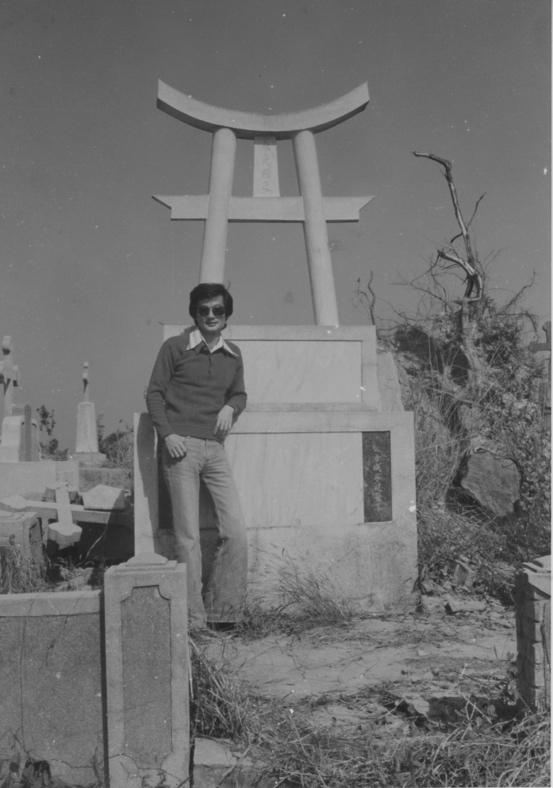 1977 - Shih Ming Te at his father’s grave |
| 1978 | Age 37 | In January he wrote the essay “My Philosophy as a Prisoner.” On the recommendation of Su Hung Yueh-chiao, he became a reporter at the Taiwan Times in Taichung, covering social news. In April, under the pen name Hsu I-wen, he published A Proposal for a Fourth National Assembly, coining the term “eternal parliament” to attack the Chiang family’s dictatorial regime and its anti-democratic, anti–human-rights measures; he narrowly escaped arrest. He promptly entered into a political marriage with his American girlfriend Linda Gail Arrigo, prompting American concern and intervention that safeguarded his personal safety. On October 15, he and Linda Gail Arrigo held their wedding banquet at the China Hotel, presided over by Lei Chen(雷震), with Tangwai (黨外)figures gathered together — a large political assembly rare in the martial-law era, and Lei Chen’s sole and final public appearance after his release from prison. On November 24, the National Tangwai Campaign Assistance Corps was established, operating around the clock with its office as its home; receiving telephone links from Ms. Chang Yang I-i (張揚宜宜)of the American “Voice of Taiwan” broadcast, it opened a bridge of direct communication with the outside world, so that the Tangwai movement was no longer isolated within the island. On December 5, it held the “National Tangwai Candidates’ Symposium” at Zhongshan Hall. On December 16, U.S. President Carter announced that the United States would establish diplomatic relations with China. President Chiang Ching-kuo announced the suspension of election activities. Tangwai figures jointly signed the “Statement of Public Figures on the Postponement of Elections,” drafted by Shih Ming Te. On December 25, at the Assistance Corps headquarters, Tangwai figures jointly signed the “Tangwai Statement on National Affairs” composed by Shih Ming Te; there Huang Hsin-chieh designated five persons — Hsu Hsin-liang(許信良), Chang Chun-hung(張俊宏), Lin I-hsiung(林義雄), Yao Chia-wen(姚嘉文), and Shih Ming Te — to work out the future course of the Tangwai movement, gradually becoming the five-member decision-making core of the Formosa political group. 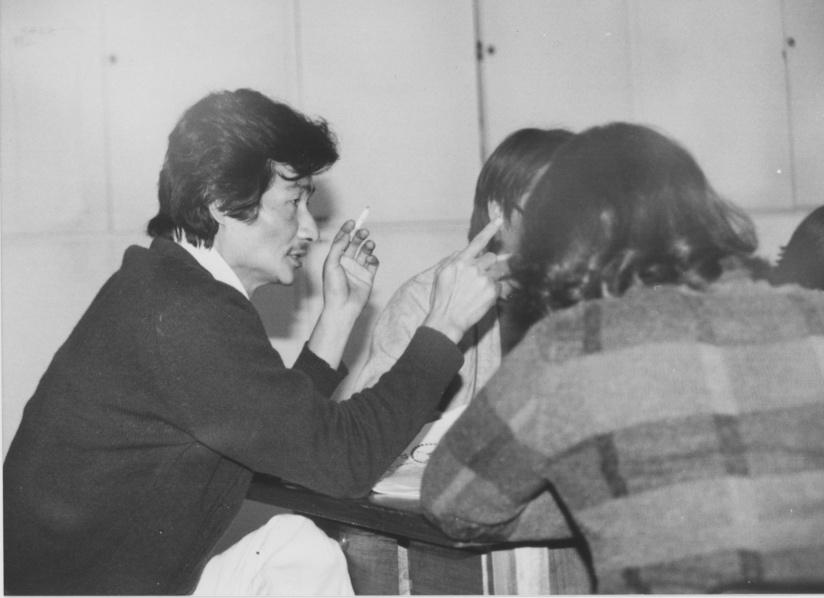 1978 - Staff meeting at the Tangwai headquarters |
| 1979 | Age 38 | On January 21, Yu Teng-fa (余登發)and his son were arrested; on January 22, the first political demonstration in postwar Taiwan was launched to protest the Kuomintang’s persecution of the Yu father and son. On March 9, when the “Yu case” opened in court, Shih, in the capacity of “campaign manager,” rallied Tangwai figures to the military court to support the Yu father and son. Huang Hsin-chieh announced that day his intention to run a Tangwai party organ, and Shih Ming Te began to conceive the workings of “a party without a party name.” In April, U.S. President Carter signed the Taiwan Relations Act. Tangwai figures nationwide issued the “Tangwai Statement on National Affairs” drafted by Shih Ming Te, advocating an active return to the United Nations. In May, the “Yu Teng-fa case” verdict became final, and the fabricated “Communist spy” Wu Tai-an was shot — absurdly becoming the last such farcical figure to be executed in the White Terror era. In May, a ninth-floor space was secured in the Bailing Building at No. 3, Section 3, Ren’ai Road, Taipei, and Formosa Magazine was formally established. On June 1, the “Taiwan Tangwai Elected Representatives’ Joint Liaison Office” (that is, the Tangwai headquarters) was established. The Tangwai headquarters and Formosa Magazine served as each other’s cover, so that if one were banned, the other could continue to operate. In August, it was resolved with the five-member group that if the Kuomintang did not release Chen Po-wen(陳博文) and Wu Che-lang(吳哲朗) of the underground paper “Undercurrent,” they would announce the founding of the “Taiwan Democratic Party” at the Formosa inaugural reception; Shih was responsible for preparing the party platform and charter. On August 24, the inaugural issue of Formosa Magazine was published. In September, Formosa Magazine held its inaugural reception at the Mandarin Hotel. It then established “Formosa Magazine service offices” throughout Taiwan; Shih Ming Te said that what he was building was “a party without a party name.” In November, he took over as director of the Taiwan center of the International League for Human Rights, and it was resolved to hold “World Human Rights Day activities” in Kaohsiung on December 10. On December 9, the “Gushan Incident” occurred. On December 10, Shih Ming Te served as commander-in-chief of a mass rally held before the Kaohsiung service office of Formosa Magazine. Professional thugs hired by the Kuomintang infiltrated the crowd to create disorder, and the rally was finally suppressed with tear gas — the Kaohsiung Incident that shocked Taiwan and the world. On December 11, he remained silent all day. On December 12, that night he handed Linda Gail Arrigo divorce papers, which she refused. On December 13, the Kuomintang launched mass arrests. In an inspired stroke, Shih Ming Te escaped from his own home in full view of all, vanishing without a trace and beginning a twenty-six-day flight. During this miraculous interval his American wife, Linda Gail Arrigo, campaigned internationally for his rescue, and his American mother-in-law, based in the United States, telephoned every member of the U.S. Congress to appeal for help — drawing international attention and forming public pressure that compelled the Chiang Ching-kuo regime, unable as before to try and sentence him swiftly and in secret, to hold a public trial open to media coverage. 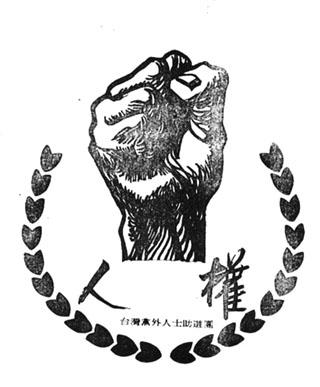 1979 - Human Rights |
| 1980 | Age 39 | On January 8, after a dramatic twenty-six-day flight, he was arrested at the home of his loyal friend Hsu Ching-fu in Ximending. On February 28, Kuomintang agents carried out the terrorist assassination of four members — three generations — of Lin I-hsiung’s family(林義雄); Lin’s mother and two young daughters were killed, and only the elder daughter survived after being stabbed several times. On March 18, the Kaohsiung Incident military tribunal opened its hearings. Shih Ming Te’s composed and open bearing, and his forceful articulation of his political convictions, became the focus of public attention. “Taiwan should be independent; in fact Taiwan has been independent for thirty years — its name is the Republic of China.” “The ban on parties, the ban on the press, martial law, and the eternal parliament are the four great harms to Taiwan’s democratization.” On March 28, at the final session of arguments in the Kaohsiung Incident trial, Shih Ming Te, grief-stricken by the annihilation of the Lin family on February 28, set aside “Shih Ming Te’s Political Will,” the final defense statement he had prepared for over a month, and wept: “Sentence me to death! Sentence me to death!” The entire court — judges, lawyers, and gallery alike — was in tears. On April 29, Shih Ming Te was sentenced to life imprisonment without commutation or parole, his property confiscated. In July, he was transferred alone to imprisonment on Green Island. 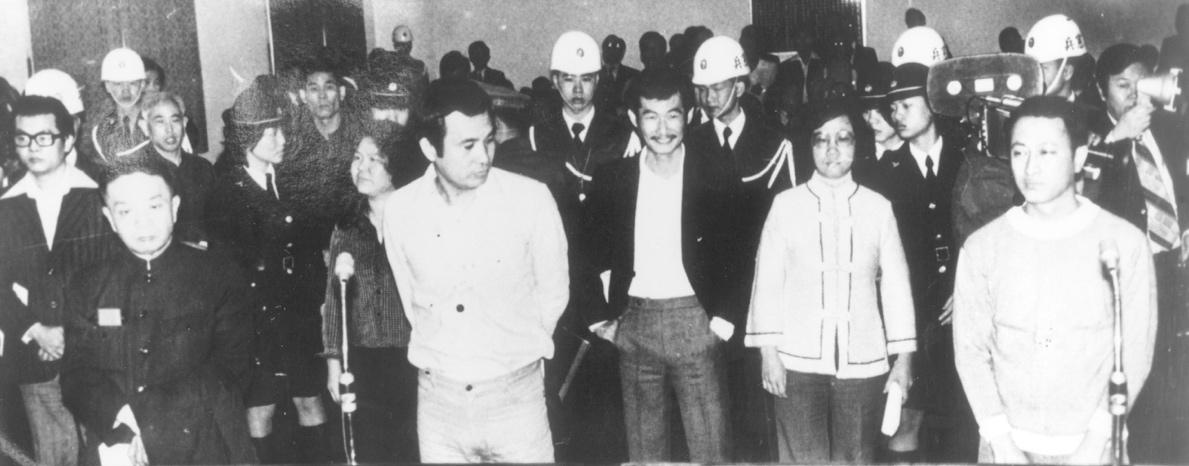 1980 - The Formosa Military Trial |
| 1981 | Age 40 | In prison Shih Ming Te learned of the Chen Wen-chen Incident (陳文成事件)— connected to the fact that Chen Wen-chen had once telephoned Shih Ming Te to make a donation to Formosa Magazine — and in indignation held a month-long hunger strike to protest the Kuomintang’s terror policies. |
| 1982 | Age 41 | His ankylosing spondylitis flared up; tormented by severe pain, he struggled against the prison authorities, demanding medical treatment at his own expense.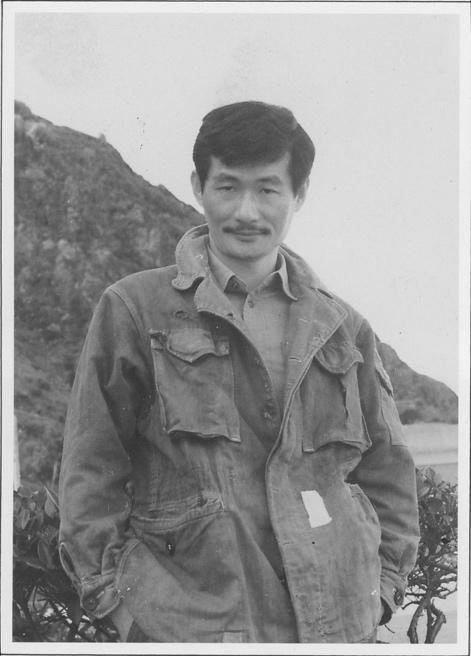 1982 - Shih Ming Te on Green Island (“Fire Island”) |
| 1983 | Age 42 | The Nobel Peace laureate Lech Wałęsa nominated Shih Ming Te for the Nobel Peace Prize. Lu Hsiu-yi was arrested and sentenced to three years of “reform through education.” On November 30 he wrote “Reflections on the Twentieth Year of Imprisonment.” |
| 1984 | Age 43 | Lin I-hsiung was released on parole. |
| 1985 | Age 44 | On January 15, it emerged that the U.S. CIA had uncovered the murder of the U.S.-based dissident writer Liu Yi-liang(劉宜良) (pen name “Chiang Nan”) — carried out on the orders of Chiang Ching-kuo, through Wang Hsi-ling, director of Taiwan’s Military Intelligence Bureau, and executed by Chen Chi-li and others — the first solved case of terrorist assassination in the White Terror era. Shih Ming Te announced an “indefinite hunger strike” beginning April 1, demanding the lifting of martial law; the release of all Kaohsiung Incident political prisoners other than himself; a halt to all terrorist assassinations; recognition of the lawful status of opposition forces; and the normalization and institutionalization of democratic politics in accordance with the constitution. He said that this was his own one-man war for peace, that the prison could not make a resister cease his action, and that the hunger strike was his final weapon. When the authorities sent Liang Su-jung (梁肅戎)to Green Island to persuade him, without success, he was — after more than twenty days of fasting — transferred to confinement at the Tri-Service General Hospital on Tingzhou Road and force-fed through a nasogastric tube twice daily for four years and seven months, the tube inserted more than three thousand times in all. Annette Lu (Lu Hsiu-lien呂秀蓮) was released on medical parole. The Kuomintang agreed to the demands to release prisoners and to permit the forming of a party; Shih set a deadline of February 28, 1986, for their fulfillment. After resuming eating, he was returned to the military-law prison. |
| 1986 | Age 45 | On January 6, Chen Chu(陳菊) was released. On February 28, only Chen Chu had been released. Liang Su-jung explained that releasing the other political prisoners would take time, and Shih agreed to a one-month extension. On March 28, the Kuomintang had still released no political prisoners. Shih resumed his hunger strike and was again sent to the Tri-Service General Hospital. On July 3, Shih’s hunger strike having exceeded three months, the Ministry of National Defense subjected him to forced nutrition. During the hunger strike he wrote letters urging Hsu Hsin-liang (許信良)to announce in the United States the establishment of the “Taiwan Democratic Party” and to move the party back to Taiwan; Hsu founded it in New York in May. The Kuomintang immediately set its own people in motion, and the so-called generation of defense lawyers founded the Democratic Progressive Party at Yuanshan on September 28. |
| 1987 | Age 46 | On January 20, Yao Chia-wen(姚嘉文) was released on parole. On May 30, Huang Hsin-chieh (黃信介)and Chang Chun-hung (張俊宏)were released on parole. On July 15, Taiwan formally lifted the martial law that had been in force for thirty-eight years since 1949. Shih Ming Te declared himself innocent and refused Chiang Ching-kuo’s amnesty. On July 19 Shih Ming Te said: “Chiang Ching-kuo is a schemer. On the very day the National Security Act was passed, he announced the restoration of rights and the reduction of sentences, using the National Security Act to strip political prisoners of the constitutional right to appeal after the lifting of martial law. Chiang Ching-kuo’s method is the rape of constitutional government!” He published Shih Ming Te’s Political Will: The Final Defense at the Kaohsiung Incident Military Trial, which was soon banned. |
| 1988 | Age 47 | In May, he again refused a commutation from President Lee Teng-hui (李登輝). On August 22, his eldest brother Shih Ming-cheng(施明正), who had quietly begun a hunger strike outside prison in support of Shih Ming Te, died four months later of cardiopulmonary failure brought on by malnutrition. |
| 1989 | Age 48 | He published Spring in the Prison Cell, giving the royalties to Ms. Linda Gail Arrigo in gratitude. On April 7, shocked by the self-immolation of Cheng Nan-jung (Nylon Cheng鄭南榕), he shaved off his beard in grief and indignation. |
| 1990 | Age 49 | On May 20, President Lee Teng-hui declared the “Kaohsiung Incident verdicts void,” and Shih Ming Te, restored to freedom as an innocent man, ended a hunger strike lasting four years and seven months. On his release he said to all the world’s suffering: “Endurance is not enough; there must be forgiveness.” On October 11, at the invitation of the U.S. Congress, he attended a hearing of the Foreign Affairs Committee and delivered testimony — I Bring Only Faith. He was awarded the Nylon Cheng Memorial Prize and the Kuo Yu-hsin Memorial Prize by the Formosan Association for Human Rights. In December, he became president of the Taiwan Association for Human Rights. On December 10, the eleventh anniversary of the Kaohsiung Incident, students from National Taiwan University and Soochow University staged a sit-in at the NTU gate protesting the Kuomintang government’s arrest of the political prisoner Huang Hua; in the crowd Shih Ming Te met Jessica Gina Chen, a student at Soochow University, and fell in love at first sight. He recalled: “In one glance, I knew she was the woman of my life.” |
| 1991 | Age 50 | In autumn he returned to Taiwan and ran in the election for chairman of the Democratic Progressive Party, specially bringing Jessica Gina Chen Shih to help campaign two weeks before the vote. In this indirect election Shih lost to Hsu Hsin-liang. |
| 1992 | Age 51 | On January 23, Jessica Gina Chen left to study in France, and the two began a long-distance relationship sustained by letters and the ordinary telephone. In spring, he advocated that the goal of building the nation was to make Taiwan into a welfare state. On April 19, Shih Ming Te, together with Huang Hsin-chieh, Hsu Hsin-liang, and Lin I-hsiung, led tens of thousands in a march and sit-in demanding direct presidential election. On May 10, the “New Taiwan Reconstruction Committee” was established to promote a new constitution, a new state, and direct presidential election. On December 19, he was elected in Tainan to the first fully re-elected Legislative Yuan. |
| 1993 | Age 52 | In spring, he served as the DPP caucus convener in the Legislative Yuan, with Chen Shui-bian as secretary-general. On April 26, he led DPP legislators to Singapore to observe the first Koo–Wang Talks, expressing to the international community the Taiwanese people’s opposition to unification. On December 10, he led a delegation to Thailand to attend the founding conference of the Council of Asian Liberals and Democrats. On December 4, Hsu Hsin-liang resigned to take responsibility for the party’s defeat in the local elections, and Shih Ming Te succeeded him as DPP chairman. |
| 1994 | Age 53 | In April, he was elected chairman of the DPP. On October 26, he announced a resolution of the DPP Central Standing Committee advocating the “demilitarization of Kinmen and Matsu.” On October 28, Shih took the front line himself, holding a press conference at the Legislative Yuan and answering reporters’ questions. |
| 1995 | Age 54 | In spring, he ended his seventeen-year political marriage with Linda Gail Arrigo. On September 14, he led the DPP’s “Taiwan National Security Delegation” on a visit to the United States, and at the “Taiwan National Security Conference” held by the East Asia research center of George Washington University stated that safeguarding the security of the Far East and Southeast Asia was not Taiwan’s responsibility alone. Shih emphasized: “If the DPP comes to power, it need not and will not declare Taiwan independent, because Taiwan has already been independent for half a century; next year’s (1996) election will amount to a public declaration to the whole world that Taiwan is already a sovereign, independent state.” On October 24, in his general interpellation of the premier during the sixth session of the second Legislative Yuan, he stated that the DPP was willing to view the future structure of government with “a mindset of grand reconciliation,” seeking to forge a reconciled structure of power for a divided and fractured society. As a victim of persecution and an opposition leader, Shih proposed “social grand reconciliation, political grand coalition.” In November, he was elected chairman of the Council of Asian Liberals and Democrats. On December 14, Shih Ming Te, Lin Cho-shui(林濁水), and Chou Po-lun(周伯倫) met historically with New Party conveners Chen Kuei-miao(陳癸淼), Jaw Shaw-kong(趙少康), and Chou Chuan(周荃) in the Legislative Yuan café, opening an “era of grand reconciliation” whereby the hitherto irreconcilable DPP and New Party could join hands to advance legislation, check the Kuomintang, and change the political structure of lawmaking. He was elected legislator for Tainan. 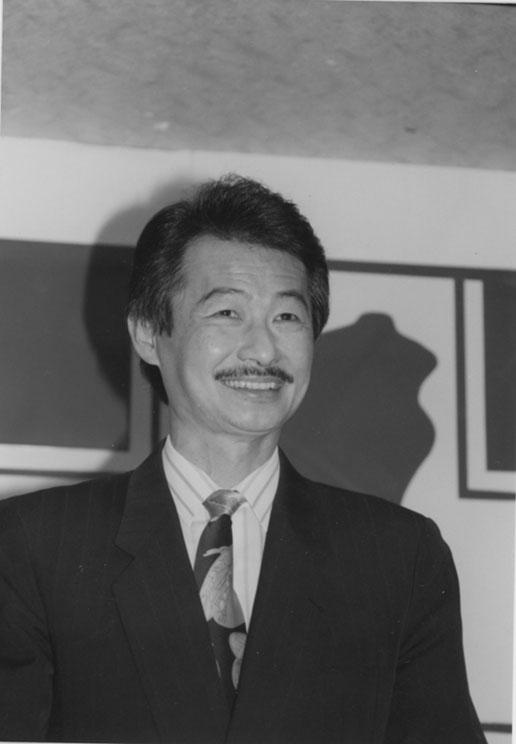 1995 - Shih Ming Te as Chairman of the Democratic Progressive Party |
| 1996 | Age 55 | In February, as grand reconciliation had altered the political ecology of the Legislative Yuan, the DPP and New Party jointly nominated Shih to run for Speaker of the Legislative Yuan; but because his own party’s Chen-faction legislators Chang Chin-cheng and Chu Hsing-yu, along with Li Ying-yuan, cast defecting votes, the effort failed at the last, losing by a single vote — eighty-one to eighty-two — to the Kuomintang’s nominee Liu Sung-pan, in what became known as the “February Reform.” On March 8, in response to China’s surface-to-surface missile exercises in Taiwan’s waters, he took a fishing boat to the firing zone to express his stance against intimidation and in pursuit of peace. On March 21, after the DPP’s defeat in the presidential election, he resigned as DPP chairman. On June 6, the anniversary of the Normandy landings of the Second World War, he married Jessica Gina Chen Shih. On December 26, he launched the “Kaohsiung Incident Oral History Project,” with the full support of his older friend Yu Chi-chung (余紀忠) of the China Times. |
| 1997 | Age 56 | On February 25, on the eve of the fiftieth anniversary of the February 28 massacre, under Shih’s leadership, legislators of three parties and one faction jointly proposed and passed the redesignation of February 28 Memorial Day as a national holiday — the only holiday established through legislative procedure. On April 1, for promoting direct presidential election he was sentenced to fifty days’ detention; refusing to pay a fine in lieu, he served the sentence as a sitting legislator. On the return of Hong Kong to China, Shih Ming Te said that he was not anti-China, still less anti-Communist; he was against war. So long as China did not renounce the use of force against Taiwan, he would not set foot on Chinese soil — avoiding even its airspace — not visiting Hong Kong after 1997, nor Macau after 1999. |
| 1998 | Age 57 | On March 16, his elder daughter Shih Mino was born. On May 28, seeking to heal the wounds of the White Terror, he led cross-party consultations to promote the “Compensation Act for Wrongful Trials for Sedition and Espionage During the Martial Law Period,” while recusing himself, on grounds of conflict of interest, from receiving any compensation. After the act passed, he immediately had someone seek out the wife and daughter of Han Jo-chun, a political prisoner shot thirty-six years earlier, and located in Vienna Han Jo-chun’s daughter — a pianist who had been renamed Ching-Ling Cheng — so that, wholly unaware, she might receive the compensation. In winter, he was elected legislator for Taipei. On December 10, the nineteenth anniversary of the Kaohsiung Incident, before the Green Island prison, Shih said: “Those in power have not asked the victims to relinquish their right to grief; yet the victims bear a noble duty they must perform — to light the fire of forgiveness!” |
| 1999 | Age 58 | In July, he served as convener of the National Alliance for the Abolition of the National Assembly. In autumn, he returned his party membership card to Lin I-hsiung, then DPP chairman, and was no longer a DPP member, though he agreed not to make this public. On September 30, his younger daughter Shih Chia was born. The “Kaohsiung Incident Oral History Project” completed nearly six million characters of oral-history transcripts and, distilling six hundred thousand characters, published through the China Times the four-volume Treasuring Formosa: Vol. I, Toward Formosa — The Postwar Awakening of Dissent; Vol. II, A Party Without a Name — The Rise of the Formosa Group; Vol. III, Violence and Poetry — The Kaohsiung Incident and the Military Trial; and Vol. IV, History Congealed — A Photographic History of Taiwan’s Democracy Movement, 1977–1979. On December 10, the twentieth anniversary of the Kaohsiung Incident, Shih said: “Forgiveness is the most beautiful full stop to the end of suffering.” |
| 2000 | Age 59 | On March 4, Lin I-hsiung (林義雄)and Yeh Chu-lan(葉菊蘭) accompanied presidential candidate Chen Shui-bian (陳水扁)to meet Shih Ming Te, reaching the following conclusions: Lin I-hsiung: Today there are perhaps a few conclusions. First, on the principle of upholding Taiwan as a sovereign, independent state, there can be absolutely no concession. Second, decisions on personnel and policy after the election should establish a consultative mechanism. Third, the party’s institutions should be reformed toward “internalization,” and the legislative caucus toward a “responsibility system” and a “seniority system.” Chen Shui-bian: After winning, we must form a majority governing coalition; if we cannot rely on Chairman Shih, how are we to negotiate with others? It cannot be done. Rely on Pao-ching? Impossible. Everything must be entrusted to the Chairman. On March 18, Shih Ming Te spoke at Chen Shui-bian’s election-eve rally in Kaohsiung. Chen Shui-bian was elected president — the first peaceful transfer of power in the Chinese-speaking world. That night he telephoned Chairman Lin I-hsiung, saying that his youthful dream of ending Taiwan’s fate as a colony had been realized; he therefore announced his departure from the DPP and his return to being simply Shih Ming Te of Taiwan. In June, he went to Warsaw, Poland, to attend the first World Forum for Democracy, exchanging views with those from around the world long devoted to democracy and human rights. On July 17, at the invitation of Japan’s Economic Security Research Association, he went to the Japanese House of Councillors to deliver an address, “Taiwan in the Taiwanese Mind — Taiwan Is a Sovereign, Independent State.” In December, he served as second-term president of the ROC–U.S. Inter-Parliamentary Amity Association. 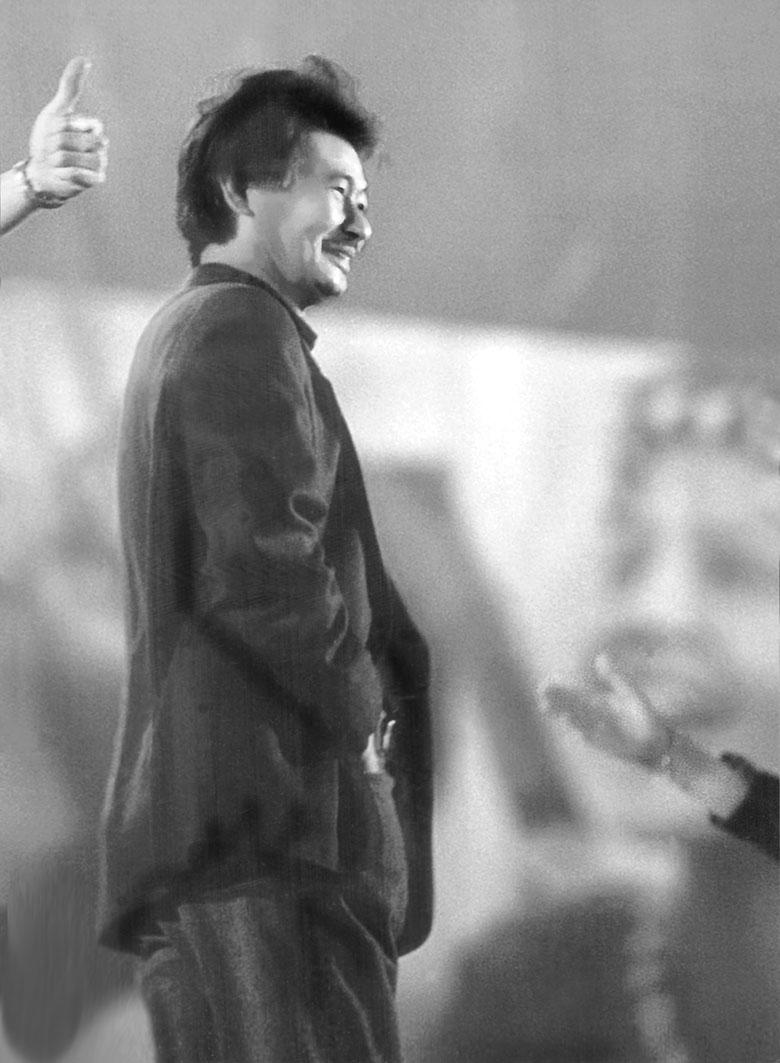 2000 - Shih Ming Te campaigning for Chen Shui-bian’s presidential bid |
| 2001 | Age 60 | On March 8, he received the Outstanding Democracy Award from the Chinese Democracy Education Foundation in California. On June 8, to meet the challenges of globalization he founded the “Mountain” Alliance and served as its convener. In summer, he met the visiting Chinese democracy activist Wei Jingsheng(魏京生), and the two spoke at length about the development of democracy and human rights on both sides of the Taiwan Strait. In winter, running as an independent for the Taipei City legislature, he polled first or second in the surveys yet lost — with a high vote — squeezed out in the two-party contest. |
| 2002 | Age 61 | He advocated that Kaohsiung should become a free port — Taiwan’s Hong Kong and Amsterdam — with direct sailings to major Chinese port cities, to meet the economic transformations of globalization. This was a far-sighted plan: at the time Kaohsiung was still the world’s third-largest port, and, facing China’s rapid rise, politics should return to Taipei and the free economy to Kaohsiung — Taipei becoming the Washington that maneuvered with China, and Kaohsiung the New York that dealt with the world. Running as an independent for mayor of Kaohsiung, he was defeated, squeezed between the two parties. In October, he published the essay collection The Selfless Devotee, the Ardent Revolutionary. In November, he published The Eternal Theme: Dialogues Between Shih Ming Te and Wei Jingsheng. |
| 2003 | Age 62 | In spring, in response to the Chen Shui-bian government’s use of the “Kaohsiung Incident Archives Exhibition” to wage a political struggle against Vice President Lu Hsiu-lien of the Kaohsiung Incident generation — its crude manner of display gravely violating the privacy and dignity of the political victims — he filed a state-compensation lawsuit asserting the victims’ right to be informed, with Li Nien-tsu serving as pro bono defense counsel. His wife, Jessica Gina Chen Shih, began her research into the White Terror national archives. In summer, he learned to drive and obtained his license. In autumn, at the invitation of George Mason University to serve as a visiting professor, the family moved to the United States. Shih Mino entered the first grade of elementary school there, and Shih Chia attended kindergarten. |
| 2004 | Age 63 | On February 28, he held a church wedding with Jessica Gina Chen in Washington, D.C. On March 19, the March 19 Shooting Incident occurred. In August, returning to Taiwan from the United States, Shih Ming Te put forward a new proposition on cross-strait affairs — the “EU-ization of One China” — hoping to break the cross-strait impasse, and founded the “Association for the Promotion of a Parliamentary System,” committing himself to the movement for constitutional reform. In winter, running as an independent for the Taipei City legislature on a platform of “the parliamentary system” and “blue–green reconciliation,” he again polled first or second yet again lost, with a high vote, squeezed out in the party contest. |
| 2005 | Age 64 | On October 6, the Department of Political Science of National Taiwan University, “in recognition of Mr. Shih Ming Te’s outstanding contributions to Taiwan’s democratic development,” specially established the “Shih Ming Te Lecture,” with the aims of promoting ethnic harmony, political reconciliation, and cross-strait peace. |
| 2006 | Age 65 | In May, he held a dialogue with the Nobel Peace laureate and former South African president F. W. de Klerk on “Reconciliation: The South African Experience, the Taiwanese Vision.” In July, an early health examination discovered a one-centimeter liver cancer, successfully treated by radiofrequency ablation. The corruption and abuse of power of the Chen Shui-bian administration, firmly evidenced, had roused public indignation to its height. On August 7, Shih published in the China Times “An Open Letter to President Chen Shui-bian,” which said: The president is the brightest beacon of the nation’s morality. The president is the bodily embodiment of national sovereignty. The president is the cornerstone of a stable regime. When the beacon is tarnished, when the body is defiled, when the cornerstone tilts, what can the people still hope for? Brother Bian, we were wrong. After coming to power, we did not lead this party well; we did not lead Taiwan toward an honest and capable society. We must courageously admit our error; we should bow and step down. To admit error frankly will earn the people’s understanding. Stubbornness and sophistry will only bring greater humiliation and retribution. The value of democratic politics lies in not fearing to change the nation’s helmsman! The gravest crisis of the nation lies in the people losing confidence and trust! Set an example! To show weakness is the virtue of the strong! Only the truly strong dare to admit error and dare to let go! On August 12, Shih launched the “Million Voices Against Corruption, President Chen Must Go” campaign, at one hundred NT dollars per person; within seven working days it drew a million pledges of support. On September 9, a peaceful sit-in demonstration formally began on Ketagalan Boulevard before the Presidential Office, demanding that the corruption-implicated President Chen Shui-bian step down. On September 15, the “Siege” action peacefully and successfully led a million people once around the Presidential Office; the crowd moved from Ketagalan Boulevard to the railway station to continue the peaceful sit-in. That night, having peacefully relocated and delivered his address, Shih knelt in emotion and said to heaven: “Thank you, dear people of Taiwan; we have the confidence to defend Taiwan’s democracy, freedom, human rights, and sovereignty.” On October 10, in the “Nationwide Siege,” the crowd peacefully and ardently encircled the National Day ceremony at the Presidential Office; fearing that the crowd might lose control, Shih led them away from the Presidential Office and marched eastward along Zhongxiao East Road. In December, as the anti-corruption headquarters hoped the crowd would return to normal life, commander-in-chief Shih Ming Te announced his “self-confinement” at the movement headquarters on Jinan Road. 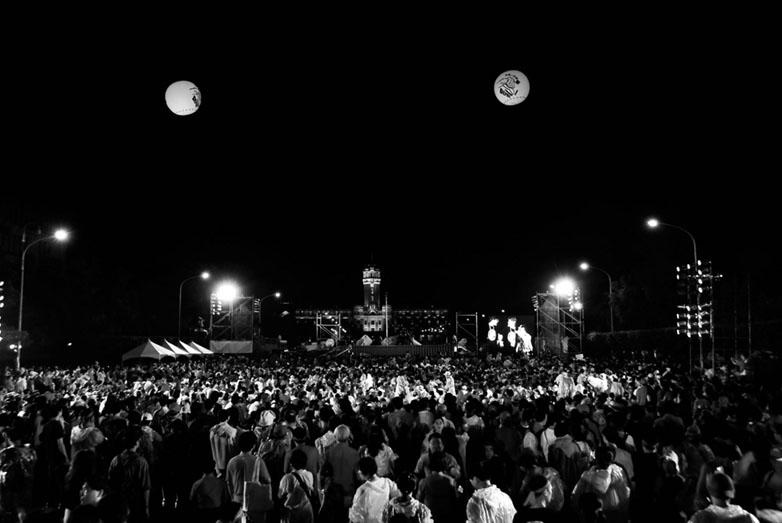 2006 - September 9: The opening of the “Million Voices Against Corruption, President Chen Must Go” campaign 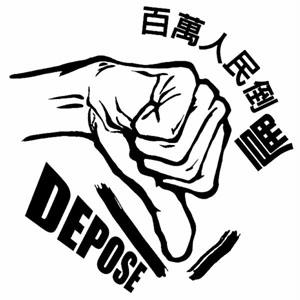 |
| 2007 | Age 66 | On April 1, he announced the end of his “self-confinement.” On August 3, Shih Ming Te and fifteen others — sixteen in all — were indicted by the Taipei District Prosecutors Office for violating the Assembly and Parade Act in leading the Red Shirt Movement’s Nationwide Siege. |
| 2008 | Age 67 | On September 5, the Reverend Kao Chun-ming(高俊明) apologized to Shih Ming Te for remarks attacking him during the Red Shirt period, repented of his improper words, and the two reconciled publicly. For publicly opposing the corrupt DPP president, he suffered the most merciless and venomous slander and abuse from former comrades and even kin — a Cultural-Revolution-style campaign of annihilating attack, which caused him profound anguish. |
| 2009 | Age 68 | In February, the sixteen Red Shirt figures charged with violating the Assembly and Parade Act were acquitted. On the third anniversary of the Red Shirt Movement, he published The Commander-in-Chief’s Confession. He protested that the Ma Ying-jeou(馬英九) government, at the thirtieth-anniversary commemoration of the Kaohsiung Incident, had honored Wang Hsi-ling (汪希苓) — the former Military Intelligence Bureau director who had masterminded the terrorist assassination in the Henry Liu case. |
| 2010 | Age 69 | On the thirtieth anniversary of the Kaohsiung Incident military trial, he published Sedition / Will. On August 10, Shih Ming Te solemnly warned the leaders on both sides of the strait, publishing in the United Daily News, the Liberty Times, the Apple Daily, and other papers “An Urgent Appeal from Shih Ming Te”: hoping to remind President Ma Ying-jeou, the Taiwanese people, and the government of the People’s Republic of China to face squarely the crisis of Taiwan’s destruction implicit in the People’s Republic’s “using commerce to coerce politics” against the Republic of China through the unilateral-termination clause of Article 16 of the ECFA. |
| 2011 | Age 70 | In summer, he published the work Common Sense: What Every Taiwanese Should Know. Its preface reads: This book of mine, Common Sense, is about the fact that we already live in a sovereign, independent state, and yet our countrymen still absurdly argue over whether “our country” is independent, and over which country’s people we are. So I can only, as if telling a story, tell everyone some common sense, so that Taiwan’s twenty-three million people may unite, know themselves clearly, meet the challenges of the twenty-first century, and no longer linger in the confrontation and hatred of the twentieth. |
| 2012 | Age 71 | In December he launched the “Taiwan Shrine of Remembrance and Tribute.” To honor the contributions of those who came before, Shih Ming Te, together with figures from the academic and cultural worlds, planned the founding of the Taiwan Shrine of Remembrance and Tribute, hoping to enshrine those worthy to stand as exemplars of the Taiwanese spirit. |
| 2013 | Age 72 | On June 21, Shih Ming Te held a ceremony “in homage to the martyrs” in the auditorium of the Legislative Yuan, the nation’s highest representative body, in distant memorial to the Five Martyrs shot in the Taiyuan revolutionary uprising of 1970 — Chiang Ping-hsing, Chen Liang, Cheng Chin-ho, Hsieh Tung-jung, and Chan Tien-tseng. Choking with emotion, Shih said: “Democracy and freedom are the spoils of those who resist — never the bestowal of rulers. In my own incapacity, it took forty-three years to carry the Five Martyrs of Taiyuan into the Legislative Yuan, so that they might rest in peace.” He published “Heritage and Vision: Taiwan, Please Love Everyone,” supporting the restitution to homosexuals of the natural human rights that are their due. |
| 2014 | Age 73 | On May 27, Shih Ming Te, together with figures from Taiwan’s blue and green camps experienced in international and cross-strait affairs — Cheng Chien-jen(程建人), Hung Chi-chang(洪奇昌), Chang Wu-yueh(張五岳), Su Chi(蘇起), Chen Ming-tong(陳明通), and Chiao Jen-ho (焦仁和) — after several months of discussion reached a consensus and issued “Our Appeal: Five Principles for Cross-Strait Relations,” to jointly defend Taiwan’s sovereignty. 1. Respect the status quo, and do not unilaterally change it. 2. The status quo is that the Republic of China and the People’s Republic of China have coexisted since 1949, and that the two governments have already shifted from “belligerent governments” to “governments of divided rule.” 3. The “One China Principle” has been narrowed and hardened by some into a synonym for “the People’s Republic of China”; it can neither represent the cross-strait status quo nor is it any longer acceptable to the twenty-three million people of the Republic of China on Taiwan. It is proposed that it be replaced by the “Greater One China” framework, so as to conform to the status quo and advance toward reconciliation. 4. The “Greater One China” framework is intended to have the “Republic of China” and the “People’s Republic of China” jointly constitute, above them, an incomplete international legal person that handles matters of mutual concern by consensus — a transitional arrangement for the present stage of cross-strait relations. 5. Under the “Greater One China” framework, the two sides should eliminate hostility and jointly safeguard the peace and security of the region. Both sides pledge not to use force against each other, and not to conclude with any state a military accord detrimental to the other; both enjoy the right to participate in the United Nations and other international organizations and to establish normal relations with other states. 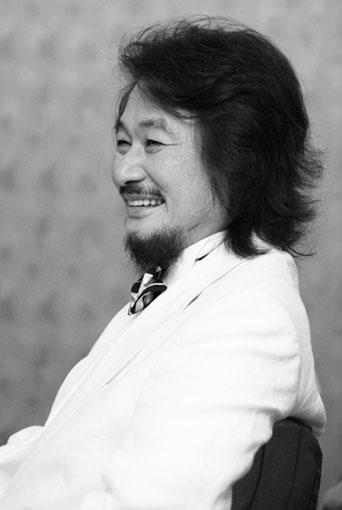 |
| 2016 | Age 75 | On May 21, Shih Ming Te announced that he would enter the citizens’ petition process as an independent candidate, raising high the banner “Reconciliation Is Taiwan’s Only Road,” putting forward the proposition of a “coalition government,” working to integrate all parties and factions, adopting the parliamentary system as the central governmental structure, and amending the constitution by referendum. Shih Ming Te advocated the “Greater One China” framework, whereby the Republic of China and the People’s Republic of China would jointly constitute, above them, an incomplete international legal person to handle matters of mutual concern by consensus. Shih Ming Te declared: “From the age of sixteen, when I resolved to sit the examination for the military academy and overthrow the dictatorial regime, I have not for a moment dared to forget ‘Country, Duty, Honor’; I have held ‘Liberty, Equality, Fraternity’ as a mirror, and dared not betray them.” As he was unable to gather sufficient petition signatures, he announced his withdrawal. |
| 2020 | Age 79 | He published Death Row — Memoirs of Shih Ming Te, Vol. I, 1962–1964. |
| 2021 | Age 80 | The two things Shih Ming Te most wished to accomplish in the last of his life were to build a Wailing Wall and the Taiwan Shrine of Remembrance and Tribute. On December 24 he disclosed that, when Chen Chu was secretary-general of the Presidential Office, President Tsai Ing-wen(蔡英文) had entrusted the construction of the Taiwan Shrine of Remembrance and Tribute to Premier Su Tseng-chang(蘇貞昌), but that Su Tseng-chang had shelved it. He republished Shih Ming Te’s Political Will: The Final Defense at the Kaohsiung Incident Military Trial. |
| 2022 | Age 81 | On January 8 — the same day on which, forty-two years earlier, Shih Ming Te had been arrested after his twenty-six-day flight following the Kaohsiung Incident — the Chinese Association for Human Rights, in recognition of his contributions to Taiwan’s human-rights movement, conferred on him the Lifetime Achievement Award for Human Rights. He published The Military Trial — Memoirs of Shih Ming Te, Vol. III, 1980. |
| 2023 | Age 82 | He published Kinmen and Matsu: Fuse or Bait? — An Olive Branch to General Secretary Xi. A one-centimeter tumor was again found in his liver; on November 13 he was again treated by radiofrequency ablation, which triggered a series of complications, and he was then admitted to intensive care for forty-seven days in all. In the ward he received the new book his wife, Jessica Gina Chen Shih, had published, brought over by the publisher — The Age of the Secret Agent and His Life — a book dedicated to him. |
| 2024 | Age 83 | On January 15, his eighty-third birthday, at 1:47 a.m., in the embrace of his wife and the company of his daughters, he departed this life. In accordance with his wishes, the family declined a funeral ceremony, a memorial service, and a commemorative gathering; his coffin lay in repose at home for one hundred days, after which he was cremated and given a flower burial, his ashes enshrined in the family shrine at home. |
