
“Counting heads in place of breaking heads.” — The Commander’s Confessions, pp. 128–129
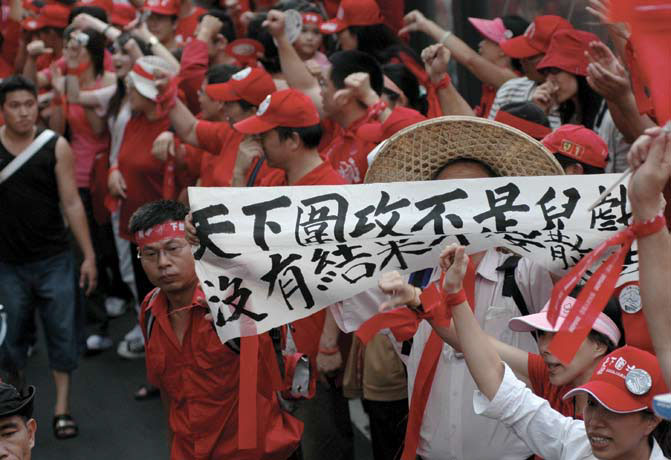
The hardest part of a mass movement is not the beginning. Beginning takes only anger, and Taiwan in 2006 was not short of anger. The hard part is the ending — especially when the movement’s demands have not yet been met.
On November 3, 2006, prosecutor Chen Jui-jen indicted First Lady Wu Shu-chen for corruption, naming Chen Shui-bian in the indictment as co-principal. Half a month earlier, the National Taiwan University Hospital administrative council had voted fifty-seven to one against allowing the president’s son-in-law, Chao Chien-ming, to return to practice there.
Shih Ming Te’s judgment was that the movement had already succeeded. The judiciary had moved. The rebuilding of values he sought had begun. Only one thing remained undone: Chen Shui-bian had not stepped down.
The problem was that a million people would not disperse just because the commander-in-chief declared success. In his own words: the play may be over, but the audience does not leave.
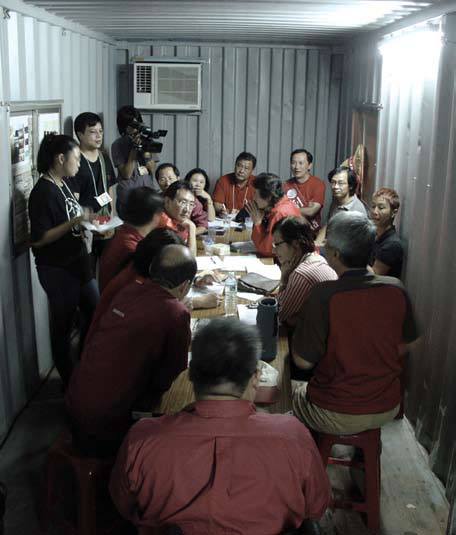
So he brought down the curtain in stages. First he moved the movement from the streets indoors, letting the crowd’s emotions gradually settle; then he announced his “self-imprisonment.” The movement was not dissolved; it was loosened, layer by layer.
And once loosened, where would all that anger, resentment, and hatred go?
He channeled it into the 2008 legislative and presidential elections. In his own words: to deal with the corruption of Chen Shui-bian and the DPP by counting heads, instead of by breaking heads.
The result is well known. In 2008, the DPP suffered an unprecedented defeat in both the legislative and presidential elections. The Red Shirts never stormed the Presidential Office, but the Presidential Office changed hands all the same — by ballot.
The price was infamy. For years afterward, people accused him of “a tiger’s head and a snake’s tail,” of having “no guts,” of “breaking his word” — among them the veteran diplomat Lu Yi-cheng, whom he had long respected. Deep-Blue supporters were especially aggrieved: with everyone already there, why not charge?
His answer was brief: to charge into the Presidential Office then would have been the easy reaction; restraint was the hard thing.
This is what the story means. The moral judgment of a mass movement usually rests on one question: did it bring the other side down? But a movement’s true maturity may lie in whether it knows how to hand the energy of the streets back to institutions — and to bear the twenty years of misunderstanding that follow.
Source: Shih Ming Te, The Commander’s Confessions, 2009, pp. 128–131, 54–57.

Want to learn more about the Red Shirt Movement and the innermost confessions of its commander-in-chief, Shih Ming Te?
Click here to read more about The Commander’s Confessions and get your copy.
The decision-making process behind the close of the Red Shirt Movement, and the related documents, are being preserved and catalogued by the Shih Ming Te Foundation.
The Shih Ming Te Foundation needs your support.