| 年份 | 歲數 | 記事 |
|---|---|---|
| 1941 | 誕生 Birth | 昭和一六年初,庚辰年末,生肖龍。 一月十五日,施明德誕生在高雄州鹽埕區大勇路上,一幢巴洛克風格樓房立面刻著「施」字的漢醫診所,父親施闊嘴五十七歲,母親施陳英二十七歲,家境富裕,擁大批土地與房產。父親是南台灣著名全科中醫,也是日本時代的漢醫考試官。父親先前與元配生育五女,母親是父親喪偶之後續絃,育有三子,大哥施明正六歲、二哥施明和四歲、三哥施明雄二歲,施明德排行老四。施家是虔誠的天主教家庭,捐錢興建愛河旁的玫瑰聖母堂,施明德在該堂受洗,聖名若望(John)。在家裡,家人喚他日本名Aki-Nori。 十二月七日,日軍發動偷襲美國夏威夷珍珠港海軍基地,引爆太平洋戰爭,是二次世界大戰的轉捩點。 Born at the beginning of the sixteenth year of Shōwa(昭和), in the closing days of the gengchen (庚辰)year, under the sign of the dragon. On January 15, 1941, Shih Ming Te was born on Dayong Road in Yancheng District, Kaohsiung Prefecture, in a Baroque-style building whose façade bore the character “Shih” — a Chinese-medicine clinic. His father, Shih Kuo-tsui, was fifty-seven; his mother, Shih Chen Ying, twenty-seven. The family was prosperous, holding extensive land and property. His father was a well-known general practitioner of Chinese medicine in southern Taiwan and, in the Japanese era, an examiner for the Chinese-medicine licensing examinations. The father had five daughters by his first wife; the mother was his second wife, married after he was widowed. Before Shih Ming Te she had borne three sons: the eldest, Shih Ming-cheng (then six); the second, Shih Ming-ho (four); and the third, Shih Ming-hsiung (two). Shih Ming Te was the fourth son. The Shih family were devout Catholics who had given funds to build the Holy Rosary Cathedral beside the Love River; Shih Ming Te was baptized there, taking the Christian name John. At home he was called by the Japanese name Aki-Nori. On December 7, Japanese forces launched a surprise attack on the U.S. naval base at Pearl Harbor, Hawaii, igniting the Pacific War — a turning point of the Second World War. 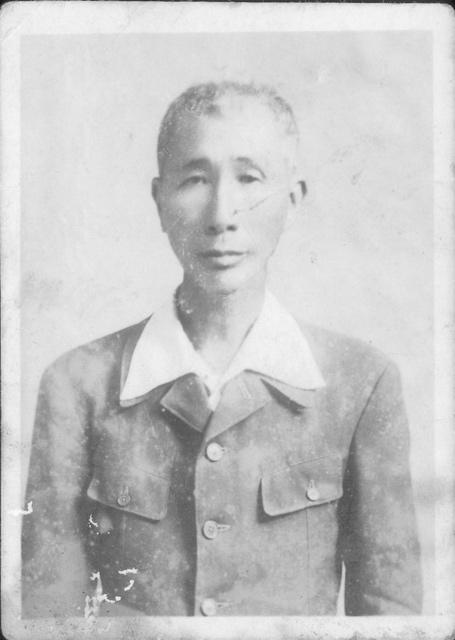 父親施閣嘴 1884-1953 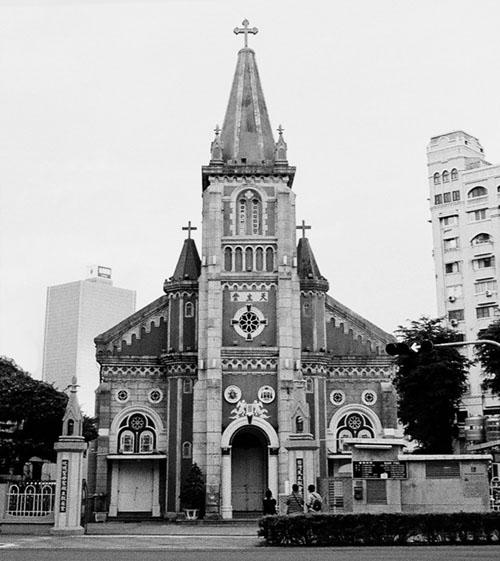 高雄玫瑰聖母堂 |
| 1943 | 二歲 (age 2) | 妹妹施明珠誕生。 His younger sister, Shih Ming-chu (施明珠), was born. |
| 1944 | 三歲 (age 3) | 太平洋戰事越演越烈,波及日本殖民地台灣,砲彈落到高雄、屏東之後,冬天時施明德隨家人與僕人一起疏開到高雄鄉野田草埔,躲避美軍轟炸。在防空洞內,施明德與母親家人一起禱告念經,在防空洞外他問父親台灣為何被轟炸?父親說因為台灣是日本殖民地。施明德第一次聽到「殖民地」這個影響他一生的詞。 As the Pacific War intensified, it reached the Japanese colony of Taiwan. After shells fell on Kaohsiung and Pingtung, the family and their servants evacuated in winter to Tiancaopu, in the countryside outside Kaohsiung, to escape the American bombing. Inside the air-raid shelter, Shih Ming Te prayed and recited prayers with his mother and the rest of the family; outside it, he asked his father why Taiwan was being bombed. His father answered that it was because Taiwan was a Japanese colony. It was the first time Shih Ming Te heard the word “colony” — a word that would mark him for the rest of his life. |
| 1945 | 四歲 (age 4) | 終戰後,仲夏舉家遷回高雄,搬進小圓環旁一幢四百多坪的日式庭園大宅。那裡後來改成「中正路」,大宅成為彰化銀行。父親請裁縫為兄弟們訂製西裝、皮鞋,施明德穿戴整齊,開始到玫瑰聖母堂上修女主持的兒童班,聽聖經故事。 After the war’s end, in midsummer the family moved back to Kaohsiung, into a Japanese-style garden mansion of more than four hundred ping beside the small traffic circle. The road there was later renamed Zhongzheng Road, and the mansion became the Chang Hwa Bank. His father had a tailor make Western suits and leather shoes for the brothers; dressed neatly, Shih Ming Te began attending the children’s class led by nuns at the Holy Rosary Cathedral, where he listened to Bible stories. |
| 1946 | 五歲 (age 5) | 父親施闊嘴在高雄火車站前蓋了四幢樓房落成,施明德全家搬進其一,餘三出租。火車站前人來人往,永遠有新鮮事發生,讓好奇的施明德有一個熱鬧的童年,看盡世間百態。施明德在這裡一直住到第一次被逮捕。 His father, Shih Kuo-tsui(施闊嘴), completed four buildings in front of Kaohsiung Railway Station; the family moved into one and rented out the other three. With the constant flow of people before the station and always something new happening, the curious Shih Ming Te had a lively childhood and saw the full range of human affairs. He lived here until his first arrest. |
| 1947 | 六歲 (age 6) | 歲初隆冬,從火車站前的自宅看出去,施明德目睹二二八大屠殺的血腥場景,高雄中學和水產、工業學校的學生,端著步槍在火車站前與國民政府軍的機關槍對峙,縱然敵眾我寡,仍前仆後繼奮勇抵抗至死。乍暖還寒的三月天,民眾憤怒燃燒紙幣,背後插著名牌遊街示眾當場被槍斃的反抗者,曝屍街頭的屍體。 父親亦遭逮捕,所幸曾救治過高雄要塞司令彭孟緝的司機,身份被認得後釋放,逃過一劫。 In the deep cold of that early year, looking out from the family home in front of the railway station, Shih Ming Te witnessed the bloody scenes of the February 28 massacre. Students from Kaohsiung Middle School and from the fishery and industrial vocational schools, rifles in hand, faced the machine guns of the Nationalist government troops before the station; though vastly outnumbered, they pressed forward one after another, resisting to the death. In the fitful cold of March, the people burned banknotes in anger; executed resisters, name-placards thrust into their backs, were paraded through the streets and shot on the spot, their corpses left exposed in the roads. His father too was arrested, but — having once treated the driver of Peng Meng-chi(彭孟緝), commander of the Kaohsiung Fortress — was recognized and released, narrowly escaping disaster. |
| 1948 | 七歲 (age 7) | 就讀三民國小一年級。穿皮鞋上學的施明德,羨慕起自由自在沒鞋穿,卻擁一身捉泥鰍小鳥和青蛙絕活的同學們。 He entered the first grade at Sanmin Elementary School. Shih Ming Te, who went to school in leather shoes, envied his classmates who ran free and barefoot yet were masters at catching loaches, birds, and frogs. |
| 1949 | 八歲 (age 8) | 國共內戰失利,蔣介石政權流亡到台灣。從高雄港登陸的軍隊,沿著中山路往高雄火車站前進,衣衫襤褸背著鍋碗瓢盆的軍人,讓見識過乾淨整齊威武日本軍人的孩子們心中無限納悶,像是見到所謂穿新衣的國王一般。 台灣宣布戒嚴。 Defeated in the Chinese Civil War, Chiang Kai-shek’s regime fled into exile in Taiwan. The troops that landed at Kaohsiung Harbor advanced along Zhongshan Road toward the railway station; ragged soldiers carrying pots and pans left the children — who had known only the clean, orderly, imposing Japanese soldiers — filled with bewilderment, as if beholding the proverbial emperor in his new clothes. Taiwan declared martial law. |
| 1950 | 九歲 (age 9) | 台灣進入白色恐怖時代。 夏,韓戰爆發。 Taiwan entered the era of the White Terror. In summer, the Korean War broke out. |
| 1951 | 十歲 (age 10) | 接骨師父親,每日清晨號召兒子、鄰居好友一同打拳健身,卻因白色恐怖被誣指「聚眾習武」,遭逮捕。母親心急如焚,變賣家產換取現金賄賂官方救回父親施闊嘴,但嚴刑拷打折騰數月,回家之後不良於行,終日臥床,直到離世。 施明德是家族公認的孝子,放學後總是陪在父親的病榻前,為父親研磨蘋果泥,讀報紙,聽父親一一解說韓戰和國際局勢。 His father, a bonesetter, each morning summoned his sons and neighborhood friends to practice boxing together for fitness; but under the White Terror he was falsely accused of “gathering a crowd to practice martial arts” and arrested. His mother, frantic, sold family property to raise cash and bribe officials to secure the release of Shih Kuo-tsui; but after months of severe torture he returned home unable to walk, bedridden until his death. Shih Ming Te was acknowledged by the family as a devoted son: after school he always sat by his father’s sickbed, grinding apple purée for him, reading the newspaper aloud, and listening as his father explained the Korean War and the international situation point by point. |
| 1952 | 十一歲 (age 11) | 父親命令施家兄弟每天五點都得起床,雙腿綁上鉛條跑上五百公尺。 His father ordered the Shih brothers to rise at five every morning and run five hundred meters with lead weights bound to their legs. |
| 1953 | 十二歲 (age 12) | 七月十四日,父親去世,得年六十九歲。 「父親經歷二次大戰的洗禮,也遭受二二八事變的驚恐,他對和平有格外關切,即使戰爭遠在朝鮮半島。我當然不懂得很多陌生的專有名詞,也不一定懂得事與事的關連性。我一邊讀報,一邊聽父親替我解釋、分析。這是我從小就對國際事務關心及暸解的濫觴。」——施明德回憶錄。 On July 14, his father died at the age of sixty-nine. “My father had passed through the baptism of the Second World War and had also suffered the terror of the February 28 Incident; he cared especially for peace, even when war was as far away as the Korean Peninsula. Of course I did not understand many of the unfamiliar proper terms, nor necessarily the connections between events. As I read the papers, I listened to my father explain and analyze them for me. This was the origin of the concern for, and understanding of, international affairs that I have held since childhood.” — Memoirs of Shih Ming Te. 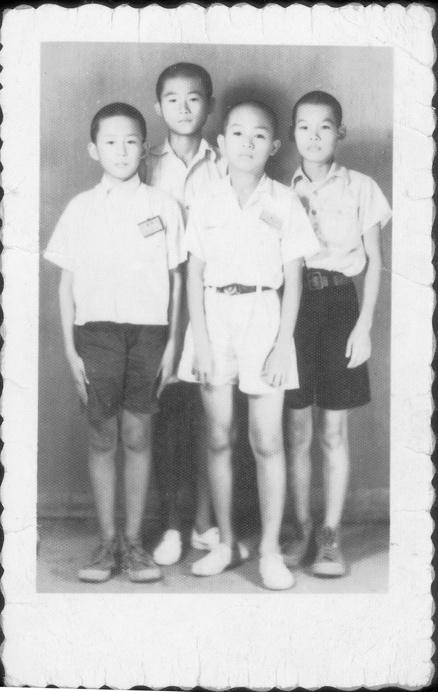 1953 三民小學 |
| 1954 | 十三歲 (age 13) | 施明德考入高雄中學初中部。 敲開大哥施明正幾年前特意為他藏在床板下的一箱禁書,全是三〇年代的文學和俄國和西方的世界名著,召集同學將書本分拆輪流閱讀。 Shih Ming Te was admitted to the junior-high division of Kaohsiung Middle School. He pried open a case of banned books that his eldest brother, Shih Ming-cheng(施明正), had deliberately hidden under the bed-boards years before — all world classics of 1930s literature and of Russia and the West — and gathered classmates to divide the books and read them in turn. |
| 1957 | 十六歲 (age 16) | 夏日黃昏時,嚴肅地告知母親,打算唸軍校,組織軍隊,武裝兵變,推翻蔣氏獨裁政權,母親聞後大哭,施安慰母親:「您有五個兒子,少一個沒關係。」 考入高雄中正中學高中部 On a summer evening he solemnly told his mother that he intended to enroll in a military academy, organize an army, stage an armed mutiny, and overthrow the dictatorial Chiang regime. His mother wept on hearing this; Shih comforted her: “You have five sons; one fewer will not matter.” He was admitted to the senior-high division of Kaohsiung Zhongzheng Middle School. |
| 1958 | 十七歲 (age 17) | 在中正高中結識尤清,一起編輯〈星月〉雜誌。命名典故披星戴月。 At Zhongzheng Senior High he befriended Yu Ching, and together they edited Xingyue (“Stars and Moon”) magazine — its name alluding to toiling from before dawn until after dark. (披星戴月) 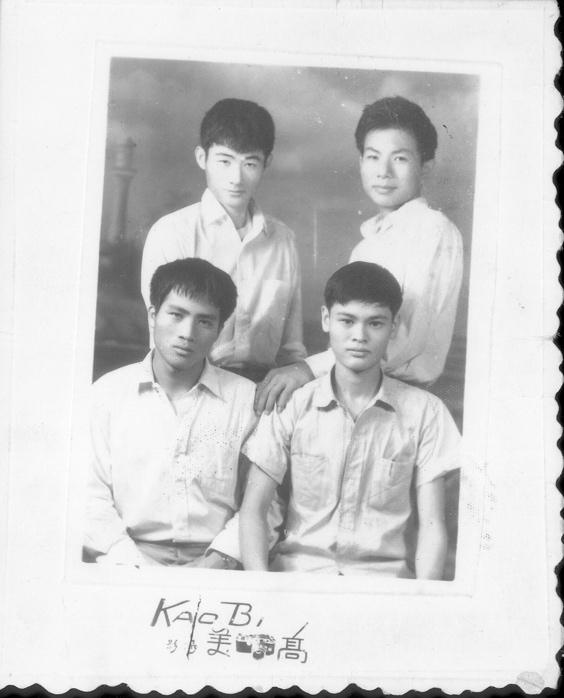 1958 高雄中學 |
| 1959 | 十八歲 (age 18) | 進入陸軍砲兵專科學校就讀。 He entered the Army Artillery School. 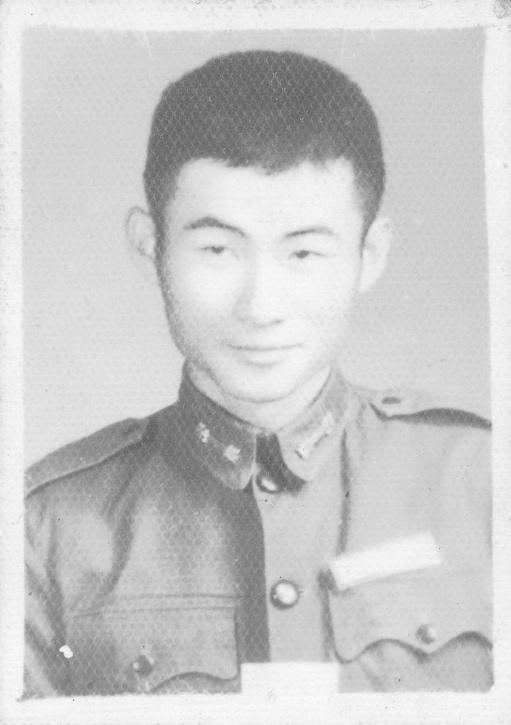 1959 陸軍砲兵專科學校 |
| 1960 | 十九歲 (age 19) | 秋,爆發「自由中國」雷震案。雷震實為追求民主、自由、組黨,卻被當局誣陷為「包庇匪諜、煽動叛亂」判處十年徒刑。 施明德自陳當年自由中國雜誌對青年的他影響很深。 In autumn, the “Free China” Lei Chen case erupted. Lei Chen(雷震), who in truth sought democracy, freedom, and the formation of a party, was framed by the authorities for “harboring Communist spies and inciting rebellion” and sentenced to ten years’ imprisonment. Shih Ming Te has said that the Free China magazine of those years deeply influenced him as a young man. |
| 1961 | 二十歲 (age 20) | 派駐小金門前線擔任砲兵觀測官,體認戰爭無情,和平無價。 期間實地了解八二三金門炮戰的真相:「金馬防衛不了台灣,台灣保護不了金馬。」若非美國軍援,金門早已彈盡糧絕。 九月十九日,蘇東啟被捕,該案牽涉台籍軍官共逮捕三百多人。 He was posted to the front line on Lesser Kinmen as an artillery observation officer, coming to understand the ruthlessness of war and the pricelessness of peace. During this time he learned firsthand the truth of the August 23 artillery bombardment of Kinmen: “Kinmen and Matsu cannot defend Taiwan; Taiwan cannot protect Kinmen and Matsu.” Had it not been for American military aid, Kinmen’s ammunition and provisions would long since have been exhausted. On September 19, Su Tung-chi (蘇東啟)was arrested; the case implicated Taiwanese military officers, with more than three hundred people arrested in all. |
| 1962 | 二十一歲 (age 21) | 六月十六日即將晉升為中尉之時,因「台灣獨立聯盟案」於小金門被逮捕,送往大金門的國防部反情報單位「第三招待所」偵訊,不到一個月又被移送陸軍總司令部反情報組,沒幾天又被移送台北木柵馬明潭陸軍總司令部軍法處看守所,接著落入蔣介石的「東廠」警備總部保安處,隱藏在西門町的東本願寺裡,施明德在此地遭刑求拔光所有牙齒,誘發遺傳性疾病僵直性脊椎炎,待到假牙裝好才被送到青島東路三號警備總部看守所。 大哥施明正和三哥施明雄都遭無故牽連逮捕。 On June 16, just as he was about to be promoted to first lieutenant, he was arrested on Lesser Kinmen in connection with the “Taiwan Independence League case” and sent for interrogation to the “Third Guest House,” a counterintelligence unit of the Ministry of National Defense on Greater Kinmen. Within a month he was transferred to the counterintelligence section of the Army General Headquarters; days later, to the military-law detention center of the Army General Headquarters at Mamingtan, Muzha, Taipei; and then into the hands of Chiang Kai-shek’s “Eastern Depot” — the Security Section of the Taiwan Garrison Command — concealed in the Higashi Honganji temple in Ximending, where Shih Ming Te was tortured until all his teeth were pulled out, triggering the hereditary disease ankylosing spondylitis. Only after his dentures had been made was he sent to the Taiwan Garrison Command detention center at No. 3 Qingdao East Road. His eldest brother Shih Ming-cheng(施明正) and third brother Shih Ming-hsiung (施明雄)were both arrested, implicated without cause. 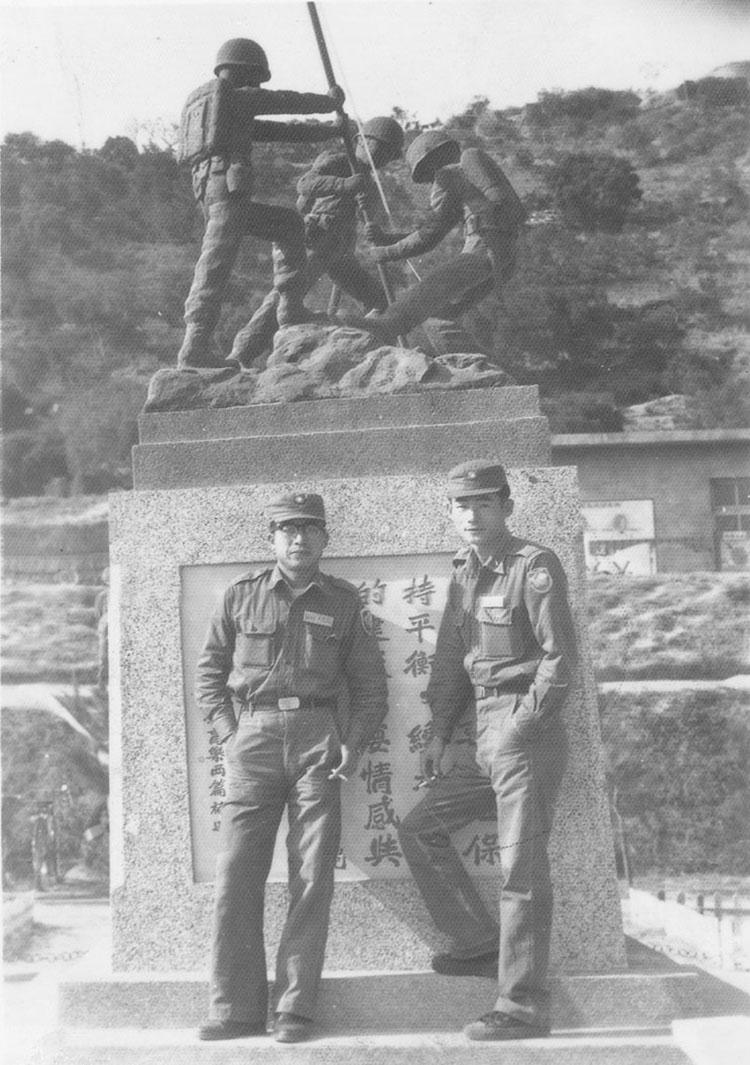 1962 砲兵少尉觀測官施明德在小金門 |
| 1963 | 二十二歲 (age 22) | 五月偵訊結束,以「籌組『亞細亞同盟』意圖叛亂著手實施」起訴唯一死刑。移送青島東路三號警備總部看守所,與死刑犯同囚,他們是韓若春、陳智雄、黃祖堯、蓋天宇、蔡秉堃、宋景松、白克、鍾盈春、嚴君川。透過仔細觀察形形色色的被誣陷者、無故的荒謬犯,和良心犯臨死前的樣態,施明德反思悟道,成長學習,這一段與死囚貼身相處的歲月影響他一生甚巨。 施明德反覆提起這一段時間精讀的湯恩比巨著《歷史之研究》深深烙印在他心中。戒嚴之後,警備總部從民間搜刮沒收的書籍,都在監獄裡的圖書館裡,這是歷史的弔詭,最不自由的地方,倒成了最能自由閱讀的地方。 In May the interrogation concluded, and he was indicted for “organizing the ‘Asia League’ with intent to commit rebellion and taking steps to carry it out” — a charge carrying a mandatory death sentence. Transferred to the Taiwan Garrison Command detention center at No. 3 Qingdao East Road, he was imprisoned together with death-row inmates: Han Jo-chun(韓若春), Chen Chih-hsiung(陳智雄), Huang Tsu-yao(黃祖堯), Kai Tien-yu(蓋天予), Tsai Ping-kun(蔡秉堃), Sung Ching-sung(宋景松), Pai Ke(白克), Chung Ying-chun(鍾盈春), and Yen Chun-chuan(嚴君川). Observing closely the many kinds of the falsely accused, the absurdly condemned, and the prisoners of conscience in their final hours, Shih Ming Te reflected, awakened, and grew; these days lived in intimate company with the condemned profoundly shaped the whole of his life. Shih Ming Te has repeatedly recalled that Toynbee’s monumental A Study of History, which he read closely in this period, was deeply imprinted on his mind. After martial law was imposed, the books the Garrison Command had seized and confiscated from the public all ended up in the prison library — a paradox of history, whereby the least free of places became the place where one could read most freely. |
| 1964 | 二十三歲 (age 23) | 二十一歲頂著一副全口假牙,倒成了難能可貴的「刑求」鐵證,意外地讓施明德躲過死刑,四月一日被判處無期徒刑,不得減刑假釋,沒收財產,整座監獄都為他歡呼,大哥和三哥皆被判處五年有期徒刑,一起叮嚀他:「不要上訴。」 粗製濫造拗口的假牙在牢獄裡一直折磨著他,從此在囚房裡,若聽見石塊敲打著鋁碗的鏗鏗聲,便知道施明德在吃飯了。放風時,施明德得在地上尋覓些適合的尖銳物,好回牢房裡小心仔細地打磨自己的假牙。 The full set of dentures he had worn at twenty-one became precious, irrefutable evidence of “torture,” and unexpectedly spared Shih Ming Te from the death penalty. On April 1 he was sentenced to life imprisonment without commutation or parole, his property confiscated; the whole prison cheered for him. His eldest and third brothers were each sentenced to five years, and together they urged him: “Do not appeal.” The crude, ill-fitting dentures tormented him constantly in prison; from then on, if in the cells one heard the clink of a stone tapping against an aluminum bowl, one knew Shih Ming Te was eating. During exercise time he would search the ground for suitable sharp objects to carry back and carefully grind down his own dentures. 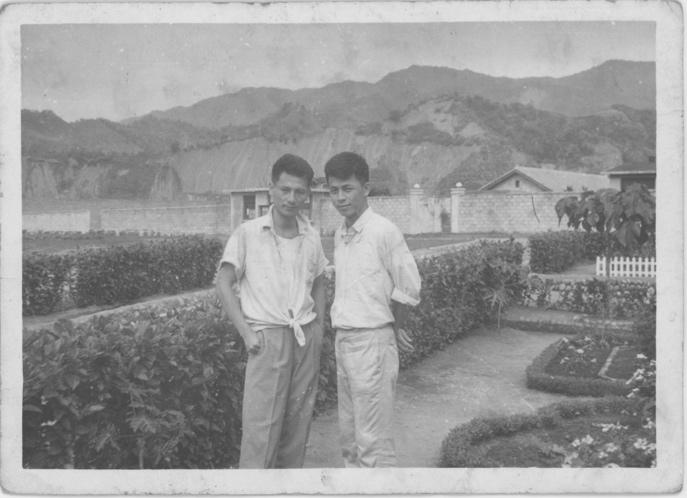 1964大哥施明正(左)和三哥施明雄在泰源監獄 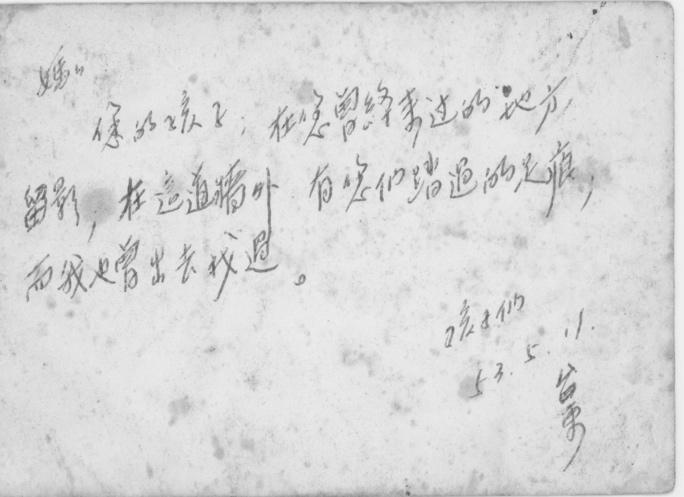 1964施明正施明雄泰源監獄 背面文字 |
| 1965 | 二十四歲 (age 24) | 移囚台東泰源監獄,施明德第一次踏上台灣東岸。 在這一座囚禁政治犯的監獄裡,他認識了許多菁英,北大荒的作者梅濟民文筆非常好、新英文法作者柯旗化精通英日語、日本東京大學出身的陳其昌後來成為施明德的日文老師。也結識志同道合的革命同志江炳興、陳良、鄭金河、謝東榮和詹天增。當然也遇到許許多多日後的抓耙子、出賣者和告密者。 開始有系統地專攻國際法,遍讀中文、英文、日文相關書籍。 He was transferred to Taiyuan Prison in Taitung — Shih Ming Te’s first time setting foot on Taiwan’s eastern coast. In this prison for political inmates he met many outstanding figures: Mei Chi-min, author of The Great Northern Wilderness and a fine writer; Ko Chi-hua(柯旗化), author of A New English Grammar, fluent in English and Japanese; and Chen Chi-chang(陳其昌), a graduate of the University of Tokyo, who later became Shih Ming Te’s Japanese teacher. He also came to know like-minded revolutionary comrades — Chiang Ping-hsing(江炳興), Chen Liang(陳良), Cheng Chin-ho(鄭金河), Hsieh Tung-jung(謝東榮), and Chan Tien-tseng(詹天增) — and, of course, many who would later prove to be informers, betrayers, and stool pigeons. He began a systematic study of international law, reading widely in Chinese, English, and Japanese. |
| 1966 | 二十五歲 (age 25) | 中華人民共和國自一九五〇年以來欲爭取聯合國中國代表權議題,一直都是政治犯監獄裡的熱門話題。施明德與獨派政治犯的主張是「容毛不排蔣」,認為台灣可以接受「一中一台」或「兩個中國」,只要台灣能留在聯合國,台灣的問題是內部政治開放的問題。 The question of the People’s Republic of China’s efforts, from 1950 onward, to claim China’s seat at the United Nations was a constant topic in the political prison. Shih Ming Te and the pro-independence political prisoners held the position of “accommodating Mao without excluding Chiang,” believing that Taiwan could accept “One China, One Taiwan” or “Two Chinas” so long as Taiwan could remain in the United Nations; Taiwan’s problem, they held, was one of internal political liberalization. |
| 1967 | 二十六歲 (age 26) | 政治犯柯旗化的第一出版社出版施日文翻譯中文《真善美》一書。 Ko Chi-hua’s First Publishing House published The True, the Good, and the Beautiful, a work Shih had translated from Japanese into Chinese. |
| 1968 | 二十七歲 (age 27) | 二月二十九日,母親去世,得年五十三歲。施明德不得奔喪。嚴重抑鬱,爆發嚴重胃病,被送至台東軍醫院戒護就醫。 On February 29, his mother died at the age of fifty-three. Shih Ming Te was not permitted to attend the funeral. Severely depressed, he developed an acute gastric illness and was sent under guard to the Taitung military hospital for treatment. |
| 1970 | 二十九歲 (age 29) | 籌謀已久,決議二月八日大年初三,由擔任外役的政治犯起義,奪去槍械後解放全監獄,買通漁船將精通日語和英語的柯旗化一人偷渡至琉球,再駕車佔領台東電台,向世界廣播,表達台灣人獨立以及留在聯合國的心聲,這基本上是一起「神風特攻隊」型態自殺式的宣示行動。不料,起義失敗。那一天,施明德感覺自己老了。 五月三十日,泰源五烈士江炳興、陳良、謝東榮、詹天增、鄭金河被槍斃。 事敗後施明德被獨囚於三尺乘六尺的小「黯房」長達十三個月,不得接見。數月後施明德驚覺喪失語言能力,於是開始每日為自己朗讀背誦唐詩宋詞和年輕時背誦的蓋茲堡演講。 After long planning, it was resolved that on February 8, the third day of the Lunar New Year, political prisoners serving as outside laborers would rise in revolt: seizing weapons, freeing the entire prison, buying off a fishing boat to smuggle Ko Chi-hua — fluent in Japanese and English — alone to the Ryukyus, then commandeering a vehicle to seize the Taitung radio station and broadcast to the world the Taiwanese people’s aspiration for independence and for remaining in the United Nations. It was, in essence, a kamikaze-style suicidal act of proclamation. Unexpectedly, the uprising failed. That day, Shih Ming Te felt that he had grown old. On May 30, the Five Martyrs of Taiyuan — Chiang Ping-hsing, Chen Liang, Hsieh Tung-jung, Chan Tien-tseng, and Cheng Chin-ho — were shot. After the failure, Shih Ming Te was held in solitary confinement in a small “dark cell” three feet by six for as long as thirteen months, denied all visits. Months later, alarmed to find that he was losing the power of speech, he began each day to read aloud to himself, reciting Tang poetry, Song ci, and the Gettysburg Address he had memorized in his youth. |
| 1972 | 三十一歲 (age 31) | 日本和中華人民共和國建交,蔣介石切斷和日本的一切交流,包括文化交流,禁止日本電影和書籍進口,監獄也同時禁止閱讀日文書籍。施明德這幾年學會的第二外語被迫中斷,原有的日文書,全部寄回家否則就沒收。 五月二日臺灣警備總司令部透過「東安演習」,將在泰源服刑的306名叛亂犯分3梯次送至綠島。 秋,國慶日急性盲腸炎延誤就醫轉成腹膜炎,三日後等到軍機送台東醫院緊急開刀,撿回一條命。 發表〈國際法基礎〉分析評論於雜誌。 十月二十五日,聯合國第2758號決議,承認中華人民共和國政府代表是中國駐聯合國唯一合法代表,中華民國退出聯合國。 Japan established diplomatic relations with the People’s Republic of China; Chiang Kai-shek severed all exchange with Japan, including cultural exchange, banning Japanese films and books, while the prison simultaneously forbade the reading of Japanese-language books. The second foreign language Shih Ming Te had acquired over these years was thus cut off; his Japanese books had all to be sent home or else be confiscated. On May 2, through “Exercise Dong-an,” the Taiwan Garrison General Headquarters transferred the 306 sedition convicts serving sentences at Taiyuan to Green Island in three batches. In autumn, an acute appendicitis on National Day, its treatment delayed, turned into peritonitis; three days later a military aircraft carried him to the Taitung hospital for emergency surgery, and his life was saved. He published a critical analysis, “Foundations of International Law,” in a magazine. On October 25, UN Resolution 2758 recognized the government of the People’s Republic of China as the lawful representative of China at the United Nations, and the Republic of China withdrew from the UN. |
| 1973 | 三十二歲 (age 32) | 從事新台文設計研究,寫成《新台文的設計原理和實用規則》,手稿在美麗島事件後不知去向! He undertook research on the design of a new Taiwanese script, producing Design Principles and Practical Rules for a New Taiwanese Script; the manuscript vanished after the Kaohsiung Incident. |
| 1974 | 三十三歲 (age 33) | 女友移情別戀剛出獄的政治犯,致施明德在牢獄中無人接繼,兄妹亦不知情,長達一年多窮到沒有衛生紙和肥皂。施明德回憶起這段孤苦零丁無人聞問的日子嘆道:「冷冷清清,淒淒慘慘戚戚。」 His girlfriend transferred her affections to a recently released political prisoner. With no one left to sustain Shih Ming Te in prison — his brothers and sister likewise unaware — for more than a year he was so destitute as to lack even toilet paper and soap. Recalling those solitary, forsaken days, Shih Ming Te sighed: “Cold and cheerless, bleak and desolate, wretched and forlorn.” |
| 1975 | 三十四歲 (age 34) | 春,獨裁者蔣介石逝世,實施全國減刑,施明德的無期徒刑獲減刑為十五年。 九月三十日著述〈孵豆芽的啟示〉,該文後來啟發了中研院科學家做實驗,證明豆芽受壓迫會釋放乙烯,促長得更粗壯。 In spring, the dictator Chiang Kai-shek died; a nationwide commutation of sentences was carried out, and Shih Ming Te’s life sentence was reduced to fifteen years. On September 30 he wrote “Inspirations from Sprouting Beans,” an essay that later inspired a scientist at Academia Sinica to conduct experiments demonstrating that bean sprouts, when subjected to pressure, release ethylene and grow thicker and sturdier. |
| 1976 | 三十五歲 (age 35) | 移囚土城仁愛教育所,接受出獄前的思想改造。 十月,發生謝東閔郵包爆炸案。 He was transferred to the Ren’ai Educational Institute in Tucheng, the site of ideological reform for political prisoners before release. In October, the Hsieh Tung-min mail-bomb case occurred. |
| 1977 | 三十六歲 (age 36) | 一月,郵包爆炸案行動者王幸男在台北松山機場被台北調查站副局長高明輝逮捕。逮捕後下跪求饒供出台獨機密已換取免死等等情節,全被仁教所導師拿來當作教材。 六月十六日囚滿十五年出獄。 冬,接受蘇東啟邀請,化名許一文,到雲林擔任政治犯蘇東啟之妻省議員候選人蘇洪月嬌的競選總幹事。運用選舉作社會調查,讓蘇東啟穿上自己從監獄帶出來的囚衣遊街,讓蘇東啟的孩子穿上寫著「我爸爸有罪嗎?」的麻布衣掃街拜票,成功地打了一場漂亮轟動的選戰。 選舉期間認識來台灣觀察學習的美國普林斯頓女研究生Bettine,選後開始交往。 In January, Wang Hsing-nan(王幸男), who had carried out the mail bombing, was arrested at Taipei Songshan Airport by Kao Ming-hui, deputy director of the Taipei Investigation Station. After his arrest he knelt and begged for mercy, disclosing Taiwan-independence secrets in exchange for exemption from death — details that were all used as teaching material by the instructors at the Ren’ai Institute. On June 16, having completed fifteen years’ imprisonment, he was released. In winter, at the invitation of Su Tung-chi(蘇東啟), he took the alias Hsu I-wen(許一文) and went to Yunlin to serve as campaign manager for Su Hung Yueh-chiao (蘇洪月嬌)— wife of the political prisoner Su Tung-chi and a candidate for the Provincial Assembly. Using the campaign as a form of social investigation, he had Su Tung-chi parade through the streets in the prison uniform Shih had brought out of prison, and had Su’s children canvass in hemp garments reading “Is my father guilty?” — waging a brilliant and much-talked-of campaign. During the campaign he met Bettine, an American Princeton graduate student who had come to observe and study in Taiwan; they began seeing each other after the election. 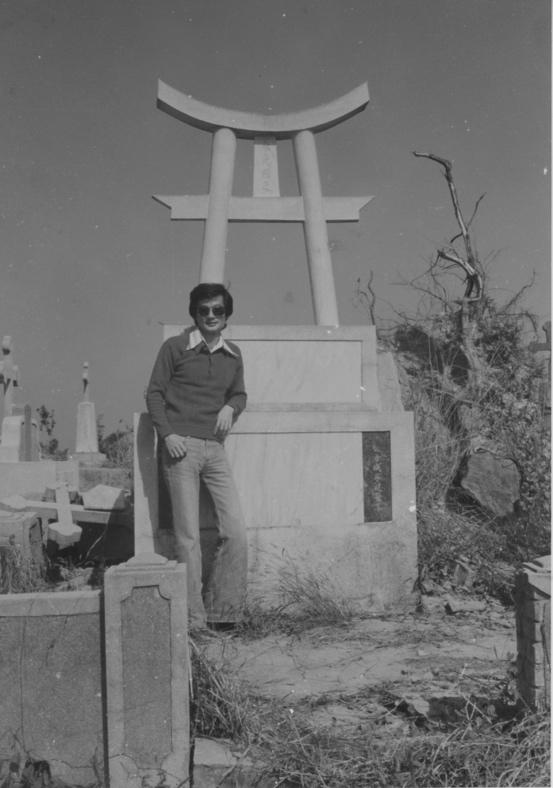 1977 施明德在父親墳前 |
| 1978 | 三十七歲 (age 37) | 一月著述〈我的囚犯哲學〉一文。 受蘇洪月嬌推薦,在台中市台灣時報任記者,跑社會新聞。 四月以筆名許一文發表《增設中央第四國會芻議》一書,創「萬年國會」一詞,抨擊蔣家獨裁政權,反民主、反人權的措施,險遭逮捕。迅即與美籍女友艾琳達政治聯姻,促成美方介入關切,保住人身安全。 十月十五日與艾琳達在中國飯店舉行婚宴,由雷震主持,黨外人士齊聚一堂,成為戒嚴時代難得一見的大型政治聚會。也是雷震出獄後唯一和最後一次公開露面。 十一月二十四日,全國黨外助選團成立,開始以辦公室為家,二十四小時待命中,接受美國「台灣之音」張楊宜宜小姐電話連線,開啟與海外直接溝通的橋樑,黨外運動不在孤立於島內。 十二月五日,在中山堂舉辦「全國黨外候選人座談會」。 十二月十六日,美國總統卡特宣布將與中國建交。蔣經國總統宣布停止選舉活動。黨外人士共同簽署施明德所擬之「社會人士對延期選舉的聲明」。 十二月二十五日,黨外人士在助選團總部聯合簽署,施明德所撰述的「黨外人士國是聲明」,由黃信介當場指定許信良、張俊宏、林義雄、姚嘉文和施明德五人研擬日後黨外運動進程,漸成為美麗島政團決策核心五人小組。 In January he wrote the essay “My Philosophy as a Prisoner.” On the recommendation of Su Hung Yueh-chiao, he became a reporter at the Taiwan Times in Taichung, covering social news. In April, under the pen name Hsu I-wen, he published A Proposal for a Fourth National Assembly, coining the term “eternal parliament” to attack the Chiang family’s dictatorial regime and its anti-democratic, anti–human-rights measures; he narrowly escaped arrest. He promptly entered into a political marriage with his American girlfriend Linda Gail Arrigo, prompting American concern and intervention that safeguarded his personal safety. On October 15, he and Linda Gail Arrigo held their wedding banquet at the China Hotel, presided over by Lei Chen(雷震), with Tangwai (黨外)figures gathered together — a large political assembly rare in the martial-law era, and Lei Chen’s sole and final public appearance after his release from prison. On November 24, the National Tangwai Campaign Assistance Corps was established, operating around the clock with its office as its home; receiving telephone links from Ms. Chang Yang I-i (張揚宜宜)of the American “Voice of Taiwan” broadcast, it opened a bridge of direct communication with the outside world, so that the Tangwai movement was no longer isolated within the island. On December 5, it held the “National Tangwai Candidates’ Symposium” at Zhongshan Hall. On December 16, U.S. President Carter announced that the United States would establish diplomatic relations with China. President Chiang Ching-kuo announced the suspension of election activities. Tangwai figures jointly signed the “Statement of Public Figures on the Postponement of Elections,” drafted by Shih Ming Te. On December 25, at the Assistance Corps headquarters, Tangwai figures jointly signed the “Tangwai Statement on National Affairs” composed by Shih Ming Te; there Huang Hsin-chieh designated five persons — Hsu Hsin-liang(許信良), Chang Chun-hung(張俊宏), Lin I-hsiung(林義雄), Yao Chia-wen(姚嘉文), and Shih Ming Te — to work out the future course of the Tangwai movement, gradually becoming the five-member decision-making core of the Formosa political group. 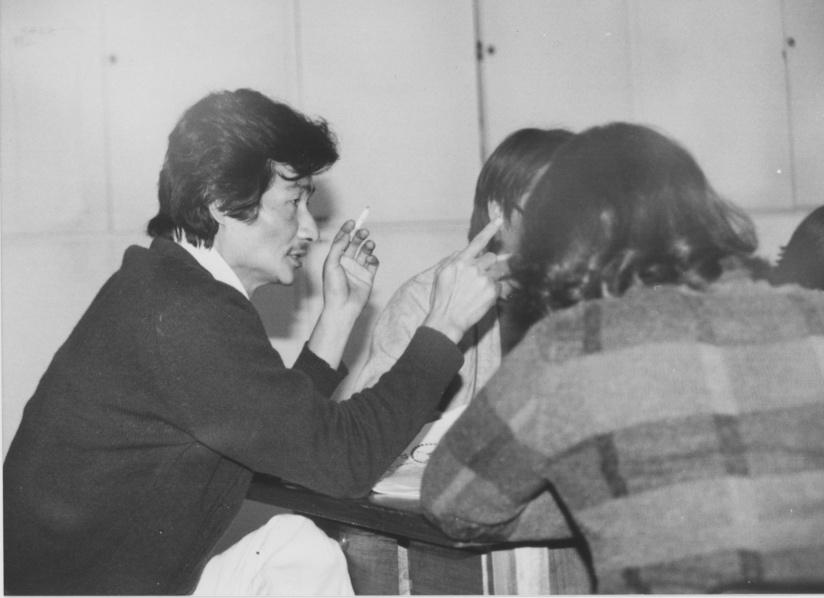 1978 黨外總部幹部會議 |
| 1979 | 三十八歲 (age 38) | 一月二十一日,余登發父子被捕,一月二十二日發動台灣戰後第一次的政治性示威遊行,抗議國民黨迫害余氏父子。 三月九日,「余案」開庭,施以「總幹事」身份邀集黨外人士至軍法處聲援余氏父子。黃信介當日表示擬辦一份黨外機關報,施明德開始構思運作「一個沒有黨名的黨」。 四月,美國總統卡特簽署「台灣關係法」。全國黨外人士發表施明德所擬之「黨外國是聲明」,主張積極重返聯合國。 五月,「余登發案」判決定讞,人造匪諜吳泰安被槍決,荒謬地成為白色恐怖時代最後一個遭槍決的丑角。 五月,覓得台北市仁愛路三段百齡大樓九樓,「美麗島」雜誌社正式成立。 六月一日,「台灣黨外民意代表聯合辦事處」(即黨外總部)成立。黨外總部與美麗島雜誌社互為虛實,如一方被取締,另一方仍可繼續運作。 八月,與五人小組決議,如國民黨不釋放「潮流」地下報的陳博文和吳哲朗先生,即在美麗島創刊酒會中宣布成立「台灣民主黨」,施負責備妥黨綱黨章。 八月二十四日,美麗島雜誌創刊號出版。 九月,美麗島雜誌社於中泰賓館舉行創刊酒會。隨後在全台各地到處成立「美麗島雜誌社服務處」,施明德說他在做的是「一個沒有黨名的黨」。 十一月,接任國際人權聯盟台灣中心主任,決議於十二月十日於高雄舉行「世界人權紀念日活動」。 十二月九日,發生「鼓山事件」。 十二月十日,施明德擔任總指揮,在美麗島雜誌社高雄服務處前,舉行群眾大會,遭國民黨雇用職業流氓打手混入群眾裡作亂,最後以催淚瓦斯鎮暴,即震驚國內外的「美麗島事件」。 十二月十一日,終日沈默。 十二月十二日,夜將離婚協議書予艾琳達,為艾所拒。 十二月十三日,國民黨展開大逮捕,施明德神來一筆竟在眾目睽睽之下從自宅逃脫成功,無影無蹤,展開二十六日大逃亡,這段奇蹟般時間美籍妻子艾琳達在國際奔走救援,美籍岳母坐鎮美國給每一個美國國會議員打電話救援,引發國際矚目,形成輿論壓力,迫使蔣經國政權,不能也無法如以往一般秘密地速審速決,必須舉行公開審判並開放媒體採訪。 On January 21, Yu Teng-fa (余登發)and his son were arrested; on January 22, the first political demonstration in postwar Taiwan was launched to protest the Kuomintang’s persecution of the Yu father and son. On March 9, when the “Yu case” opened in court, Shih, in the capacity of “campaign manager,” rallied Tangwai figures to the military court to support the Yu father and son. Huang Hsin-chieh announced that day his intention to run a Tangwai party organ, and Shih Ming Te began to conceive the workings of “a party without a party name.” In April, U.S. President Carter signed the Taiwan Relations Act. Tangwai figures nationwide issued the “Tangwai Statement on National Affairs” drafted by Shih Ming Te, advocating an active return to the United Nations. In May, the “Yu Teng-fa case” verdict became final, and the fabricated “Communist spy” Wu Tai-an was shot — absurdly becoming the last such farcical figure to be executed in the White Terror era. In May, a ninth-floor space was secured in the Bailing Building at No. 3, Section 3, Ren’ai Road, Taipei, and Formosa Magazine was formally established. On June 1, the “Taiwan Tangwai Elected Representatives’ Joint Liaison Office” (that is, the Tangwai headquarters) was established. The Tangwai headquarters and Formosa Magazine served as each other’s cover, so that if one were banned, the other could continue to operate. In August, it was resolved with the five-member group that if the Kuomintang did not release Chen Po-wen(陳博文) and Wu Che-lang(吳哲朗) of the underground paper “Undercurrent,” they would announce the founding of the “Taiwan Democratic Party” at the Formosa inaugural reception; Shih was responsible for preparing the party platform and charter. On August 24, the inaugural issue of Formosa Magazine was published. In September, Formosa Magazine held its inaugural reception at the Mandarin Hotel. It then established “Formosa Magazine service offices” throughout Taiwan; Shih Ming Te said that what he was building was “a party without a party name.” In November, he took over as director of the Taiwan center of the International League for Human Rights, and it was resolved to hold “World Human Rights Day activities” in Kaohsiung on December 10. On December 9, the “Gushan Incident” occurred. On December 10, Shih Ming Te served as commander-in-chief of a mass rally held before the Kaohsiung service office of Formosa Magazine. Professional thugs hired by the Kuomintang infiltrated the crowd to create disorder, and the rally was finally suppressed with tear gas — the Kaohsiung Incident that shocked Taiwan and the world. On December 11, he remained silent all day. On December 12, that night he handed Linda Gail Arrigo divorce papers, which she refused. On December 13, the Kuomintang launched mass arrests. In an inspired stroke, Shih Ming Te escaped from his own home in full view of all, vanishing without a trace and beginning a twenty-six-day flight. During this miraculous interval his American wife, Linda Gail Arrigo, campaigned internationally for his rescue, and his American mother-in-law, based in the United States, telephoned every member of the U.S. Congress to appeal for help — drawing international attention and forming public pressure that compelled the Chiang Ching-kuo regime, unable as before to try and sentence him swiftly and in secret, to hold a public trial open to media coverage. 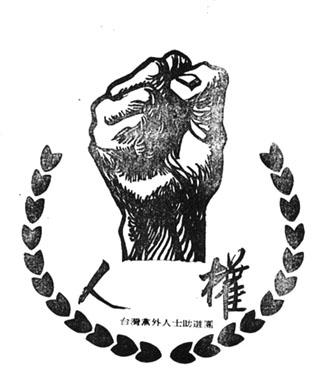 1979人權 |
| 1980 | 三十九歲 (age 39) | 一月八日,戲劇性逃亡二十六天後在義友許晴富西門町住處被捕。 二月二十八日,國民黨特務派人恐怖暗殺林義雄祖孫四人,林義雄之母與兩名幼女亡,僅大女兒身中數刀後被救活。 三月十八日,美麗島軍法大審開審理庭。施明德從容坦蕩的神情,擲地有聲地論述政治主張,成為輿論焦點。「台灣應該獨立,事實上台灣已經獨立三十年,她的名字叫做中華民國。」「黨禁、報禁、戒嚴令、萬年國會是台灣民主化的四大害。」 三月二十八日,美麗島大審最後辯論庭。施明德驚慟二二八滅門血案,放棄宣讀準備了一個多月的「施明德政治遺囑」最後答辯狀,哭泣道:「請判我死刑!判我死刑!」整個法庭從法官、律師、旁聽席都在流淚。 四月二十九日,施明德被判處無期徒刑,不得減刑假釋,沒收財產。 七月,獨自一人被移送綠島囚禁。 On January 8, after a dramatic twenty-six-day flight, he was arrested at the home of his loyal friend Hsu Ching-fu in Ximending. On February 28, Kuomintang agents carried out the terrorist assassination of four members — three generations — of Lin I-hsiung’s family(林義雄); Lin’s mother and two young daughters were killed, and only the elder daughter survived after being stabbed several times. On March 18, the Kaohsiung Incident military tribunal opened its hearings. Shih Ming Te’s composed and open bearing, and his forceful articulation of his political convictions, became the focus of public attention. “Taiwan should be independent; in fact Taiwan has been independent for thirty years — its name is the Republic of China.” “The ban on parties, the ban on the press, martial law, and the eternal parliament are the four great harms to Taiwan’s democratization.” On March 28, at the final session of arguments in the Kaohsiung Incident trial, Shih Ming Te, grief-stricken by the annihilation of the Lin family on February 28, set aside “Shih Ming Te’s Political Will,” the final defense statement he had prepared for over a month, and wept: “Sentence me to death! Sentence me to death!” The entire court — judges, lawyers, and gallery alike — was in tears. On April 29, Shih Ming Te was sentenced to life imprisonment without commutation or parole, his property confiscated. In July, he was transferred alone to imprisonment on Green Island. 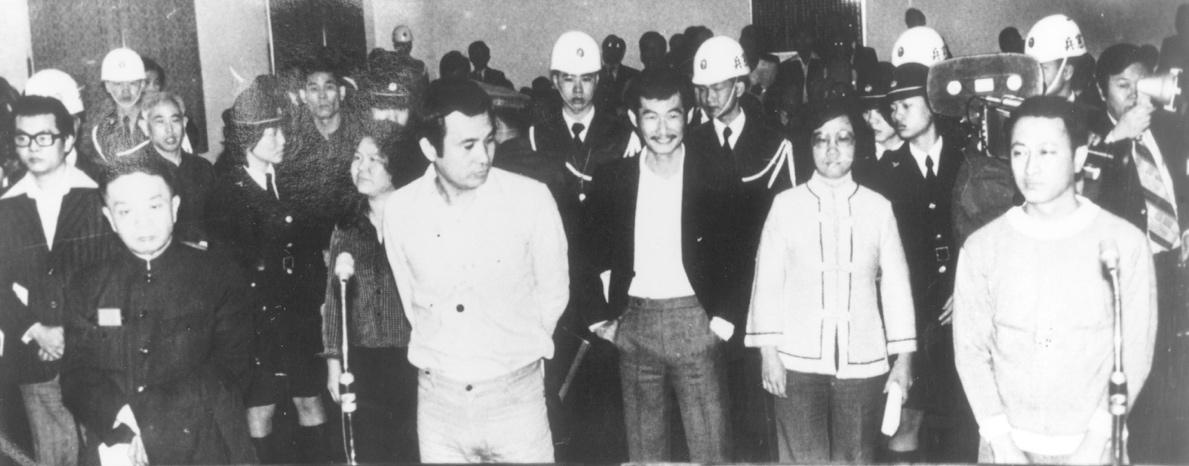 1980 美麗島軍法大審 |
| 1981 | 四十歲 (age 40) | 施明德在獄中聽聞陳文成事件,與陳文成曾打電話給施明德要捐款給美麗島雜誌社有關,憤而絕食抗議一個月抗議國民黨的恐怖政策。 In prison Shih Ming Te learned of the Chen Wen-chen Incident (陳文成事件)— connected to the fact that Chen Wen-chen had once telephoned Shih Ming Te to make a donation to Formosa Magazine — and in indignation held a month-long hunger strike to protest the Kuomintang’s terror policies. |
| 1982 | 四十一歲 (age 41) | 僵直性脊椎炎發作,劇痛困擾,與獄方抗爭,要求自費延醫。 His ankylosing spondylitis flared up; tormented by severe pain, he struggled against the prison authorities, demanding medical treatment at his own expense. 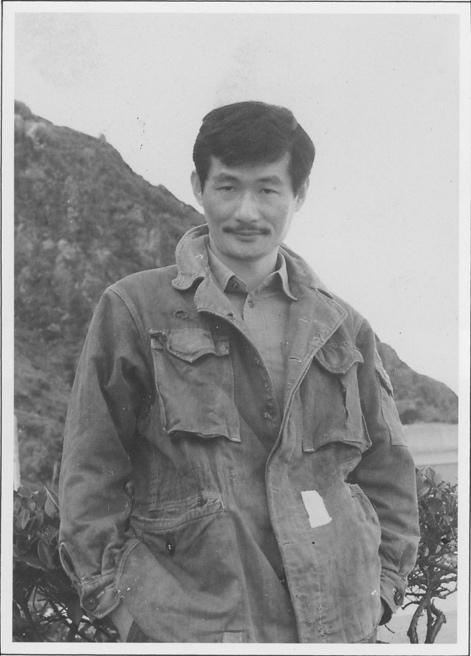 1982 施明德火燒島 |
| 1983 | 四十二歲 (age 42) | 諾貝爾和平獎得主華樂沙提名施明德為諾貝爾和平獎候選人。 盧修一被捕,判感化三年。 十一月三十日著述〈蒙難第二十年感言〉 The Nobel Peace laureate Lech Wałęsa nominated Shih Ming Te for the Nobel Peace Prize. Lu Hsiu-yi was arrested and sentenced to three years of “reform through education.” On November 30 he wrote “Reflections on the Twentieth Year of Imprisonment.” |
| 1984 | 四十三歲 (age 43) | 林義雄假釋出獄。 Lin I-hsiung was released on parole. |
| 1985 | 四十四歲 (age 44) | 一月十五日,得知美國中情局破獲旅美異議作家劉宜良(江南)命案,是蔣經國命台灣軍情局局長汪希苓交代陳啟禮等所為,是白色恐怖時代第一樁破案的恐怖暗殺。施明德宣布自四月一日起「無限期絕食」,要求戒除戒嚴、釋放出了他以外的所有美麗島政治犯、停止所有恐怖暗殺行動、承認在野勢力的合法地位、依據憲法使民主政治正常化、制度化。他說這是他一個人的和平戰爭,監獄不能讓反抗者停止行動,絕食是最後的武器。 當局派出梁肅戎到綠島勸說不成,絕食二十多日後被移送汀州路三軍總醫院監禁、強制鼻胃管灌食,每日兩次,前後四年七個月,插管約三千多次。 呂秀蓮獲保外就醫。 國民黨同意放人、組黨的要求,施訂出一九八六年二月二十八日期限完成。恢復進食後,送軍法處囚。 On January 15, it emerged that the U.S. CIA had uncovered the murder of the U.S.-based dissident writer Liu Yi-liang(劉宜良) (pen name “Chiang Nan”) — carried out on the orders of Chiang Ching-kuo, through Wang Hsi-ling, director of Taiwan’s Military Intelligence Bureau, and executed by Chen Chi-li and others — the first solved case of terrorist assassination in the White Terror era. Shih Ming Te announced an “indefinite hunger strike” beginning April 1, demanding the lifting of martial law; the release of all Kaohsiung Incident political prisoners other than himself; a halt to all terrorist assassinations; recognition of the lawful status of opposition forces; and the normalization and institutionalization of democratic politics in accordance with the constitution. He said that this was his own one-man war for peace, that the prison could not make a resister cease his action, and that the hunger strike was his final weapon. When the authorities sent Liang Su-jung (梁肅戎)to Green Island to persuade him, without success, he was — after more than twenty days of fasting — transferred to confinement at the Tri-Service General Hospital on Tingzhou Road and force-fed through a nasogastric tube twice daily for four years and seven months, the tube inserted more than three thousand times in all. Annette Lu (Lu Hsiu-lien呂秀蓮) was released on medical parole. The Kuomintang agreed to the demands to release prisoners and to permit the forming of a party; Shih set a deadline of February 28, 1986, for their fulfillment. After resuming eating, he was returned to the military-law prison. |
| 1986 | 四十五歲 (age 45) | 一月六日,陳菊被釋放。 二月二十八日,只有陳菊被釋放。梁肅戎解釋,釋放其他政治犯需要時間才做得到,施同意寬限一個月。 三月二十八日,國民黨並沒有釋放任何政治犯。施回復絕食,再度被送三軍總醫院。 七月三日,施絕食逾三個月,國防部施以強制營養。 絕食期間寫信要求許信良在美國宣佈成立「台灣民主黨」遷黨回台,五月許在紐約成立,國民黨立刻運作他們的人,所謂辯護律師世代於九月二十八日在圓山成立「民主進步黨」。 On January 6, Chen Chu(陳菊) was released. On February 28, only Chen Chu had been released. Liang Su-jung explained that releasing the other political prisoners would take time, and Shih agreed to a one-month extension. On March 28, the Kuomintang had still released no political prisoners. Shih resumed his hunger strike and was again sent to the Tri-Service General Hospital. On July 3, Shih’s hunger strike having exceeded three months, the Ministry of National Defense subjected him to forced nutrition. During the hunger strike he wrote letters urging Hsu Hsin-liang (許信良)to announce in the United States the establishment of the “Taiwan Democratic Party” and to move the party back to Taiwan; Hsu founded it in New York in May. The Kuomintang immediately set its own people in motion, and the so-called generation of defense lawyers founded the Democratic Progressive Party at Yuanshan on September 28. |
| 1987 | 四十六歲 (age 46) | 一月二十日,姚嘉文假釋出獄。 五月三十日,黃信介、張俊宏假釋出獄。 七月十五日,台灣正式解除自一九四九年來實施三十八年的戒嚴令。 施明德宣示自己是無罪的,拒絕蔣經國的特赦, 七月十九日施明德說:「蔣經國是個陰謀家,在國安法通過的那天宣布復權、減刑,用國安法剝奪憲法規定政治犯解嚴後上訴的權利。蔣經國的作法是強暴憲政!」 出版《施明德的政治遺囑——美麗島大審最後答辯狀》,不久旋即被查禁。 On January 20, Yao Chia-wen(姚嘉文) was released on parole. On May 30, Huang Hsin-chieh (黃信介)and Chang Chun-hung (張俊宏)were released on parole. On July 15, Taiwan formally lifted the martial law that had been in force for thirty-eight years since 1949. Shih Ming Te declared himself innocent and refused Chiang Ching-kuo’s amnesty. On July 19 Shih Ming Te said: “Chiang Ching-kuo is a schemer. On the very day the National Security Act was passed, he announced the restoration of rights and the reduction of sentences, using the National Security Act to strip political prisoners of the constitutional right to appeal after the lifting of martial law. Chiang Ching-kuo’s method is the rape of constitutional government!” He published Shih Ming Te’s Political Will: The Final Defense at the Kaohsiung Incident Military Trial, which was soon banned. |
| 1988 | 四十七歲 (age 47) | 五月,再次拒絕總統李登輝減刑。 八月二十二日,大哥施明正在獄外為聲援施明德默默展開絕食,四個月後,營養不良心肺衰竭而死。 In May, he again refused a commutation from President Lee Teng-hui (李登輝). On August 22, his eldest brother Shih Ming-cheng(施明正), who had quietly begun a hunger strike outside prison in support of Shih Ming Te, died four months later of cardiopulmonary failure brought on by malnutrition. |
| 1989 | 四十八歲 (age 48) | 出版《囚室之春》所得版稅予艾琳達女士,表達感激。 四月七日,驚聞鄭南榕自焚,悲憤得剃了鬍子。 He published Spring in the Prison Cell, giving the royalties to Ms. Linda Gail Arrigo in gratitude. On April 7, shocked by the self-immolation of Cheng Nan-jung (Nylon Cheng鄭南榕), he shaved off his beard in grief and indignation. |
| 1990 | 四十九歲 (age 49) | 五月二十日,李登輝總統宣布「美麗島事件判決無效」,施明德以無罪之身恢復自由,結束長達四年七個月的絕食。出獄時,他對全世界受苦的人說:「忍耐是不夠的,必須寬恕。」 十月十一日應美國國會之邀出席外交委員會聽證會,發表證詞——《我只帶來信心》。 獲頒全美台灣人權協會鄭南榕紀念獎、郭雨新紀念獎。 十二月,出任台灣人權促進會長。 十二月十日,美麗島事件十一週年紀念日,台大與東吳學生在台大校門口靜坐示威抗議國民黨政府逮捕政治犯黃華,人群中施明德邂逅東吳大學學生陳嘉君,一見鐘情。他回憶:「一眼,我就知道她是我此生的女人。」 On May 20, President Lee Teng-hui declared the “Kaohsiung Incident verdicts void,” and Shih Ming Te, restored to freedom as an innocent man, ended a hunger strike lasting four years and seven months. On his release he said to all the world’s suffering: “Endurance is not enough; there must be forgiveness.” On October 11, at the invitation of the U.S. Congress, he attended a hearing of the Foreign Affairs Committee and delivered testimony — I Bring Only Faith. He was awarded the Nylon Cheng Memorial Prize and the Kuo Yu-hsin Memorial Prize by the Formosan Association for Human Rights. In December, he became president of the Taiwan Association for Human Rights. On December 10, the eleventh anniversary of the Kaohsiung Incident, students from National Taiwan University and Soochow University staged a sit-in at the NTU gate protesting the Kuomintang government’s arrest of the political prisoner Huang Hua; in the crowd Shih Ming Te met Jessica Gina Chen, a student at Soochow University, and fell in love at first sight. He recalled: “In one glance, I knew she was the woman of my life.” |
| 1991 | 五十歲 (age 50) | 秋天返台,參選民主進步黨黨主席選舉,選前兩週特意找陳嘉君來助選。這次間接選舉施敗給許信良。 In autumn he returned to Taiwan and ran in the election for chairman of the Democratic Progressive Party, specially bringing Jessica Gina Chen Shih to help campaign two weeks before the vote. In this indirect election Shih lost to Hsu Hsin-liang. |
| 1992 | 五十一歲 (age 51) | 一月二十三日,陳嘉君赴法留學,兩人展開靠信件和傳統電話維繫的異地戀。 春,主張建設國家的目標是要把台灣建設為一個福利國家。 四月十九日,施明德與黃信介、許信良、林義雄率領數萬群眾遊行與靜坐要求「總統直選」。 五月十日,成立「新台灣重建委員會」,推動新憲法、新國家和總統直選。 十二月十九日,在台南市當選首屆全面改選的立法委員。 On January 23, Jessica Gina Chen left to study in France, and the two began a long-distance relationship sustained by letters and the ordinary telephone. In spring, he advocated that the goal of building the nation was to make Taiwan into a welfare state. On April 19, Shih Ming Te, together with Huang Hsin-chieh, Hsu Hsin-liang, and Lin I-hsiung, led tens of thousands in a march and sit-in demanding direct presidential election. On May 10, the “New Taiwan Reconstruction Committee” was established to promote a new constitution, a new state, and direct presidential election. On December 19, he was elected in Tainan to the first fully re-elected Legislative Yuan. |
| 1993 | 五十二歲 (age 52) | 春,在立法院任民進黨黨團總召,陳水扁任幹事長。 四月二十六日,帶領民進黨立法委員赴新加坡監督第一次辜汪會談,對國際社會表達台灣人民反對統一的聲音。 十二月十日,率團至泰國參加「亞洲自由民主政黨聯盟」成立大會。 十二月四日,許信良因縣市長選舉失利引咎辭職,施明德繼任民進黨主席。 In spring, he served as the DPP caucus convener in the Legislative Yuan, with Chen Shui-bian as secretary-general. On April 26, he led DPP legislators to Singapore to observe the first Koo–Wang Talks, expressing to the international community the Taiwanese people’s opposition to unification. On December 10, he led a delegation to Thailand to attend the founding conference of the Council of Asian Liberals and Democrats. On December 4, Hsu Hsin-liang resigned to take responsibility for the party’s defeat in the local elections, and Shih Ming Te succeeded him as DPP chairman. |
| 1994 | 五十三歲 (age 53) | 四月,當選民進黨黨主席。 十月二十六日,宣布民進黨中常委決議,主張「金門馬祖非軍事區化」。 十月二十八日,施親上火線,於立法院召開記者發表演說,回覆記者提問。 In April, he was elected chairman of the DPP. On October 26, he announced a resolution of the DPP Central Standing Committee advocating the “demilitarization of Kinmen and Matsu.” On October 28, Shih took the front line himself, holding a press conference at the Legislative Yuan and answering reporters’ questions. |
| 1995 | 五十四歲 (age 54) | 春,與艾琳達結束長達十七年的政治婚姻。 九月十四日,率民進黨「台灣國家安全訪問團」赴美訪問,參加美國喬治華盛頓大學東亞研究中心舉辦之「台灣國家安全會議」研討會中表示:維護台灣極東南亞安全,不是台灣單獨的責任,施強調:「民進黨如果執政,不必也不會宣布台灣獨立,因為台灣已經獨立了半個世紀了,透國明年(1996)大選就等於向全世界公開宣示台灣已經是個主權獨立的國家了。」 十月二十四日,在第二屆第六會期對行政院長的總質詢中指出:民進黨願以「大和解的心態」來看待未來政府結構,為分裂、分歧的社會,尋找凝聚一個大和解的權力結構。 作為受難者暨在野黨領袖,施提出「社會大和解,政治大聯合」。 十一月,當選「亞洲自由民主政黨聯盟」主席。 十二月十四日,施明德、林濁水、周伯倫與新黨召集人陳癸淼、趙少康、周荃在立法院咖啡廳進行歷史性的會晤,開啟了「大和解時代」使以往老死不相往來的民、新兩黨,可以聯手堆動法案,制衡國民黨,改變立法的政治結構。 當選台南市立法委員。 In spring, he ended his seventeen-year political marriage with Linda Gail Arrigo. On September 14, he led the DPP’s “Taiwan National Security Delegation” on a visit to the United States, and at the “Taiwan National Security Conference” held by the East Asia research center of George Washington University stated that safeguarding the security of the Far East and Southeast Asia was not Taiwan’s responsibility alone. Shih emphasized: “If the DPP comes to power, it need not and will not declare Taiwan independent, because Taiwan has already been independent for half a century; next year’s (1996) election will amount to a public declaration to the whole world that Taiwan is already a sovereign, independent state.” On October 24, in his general interpellation of the premier during the sixth session of the second Legislative Yuan, he stated that the DPP was willing to view the future structure of government with “a mindset of grand reconciliation,” seeking to forge a reconciled structure of power for a divided and fractured society. As a victim of persecution and an opposition leader, Shih proposed “social grand reconciliation, political grand coalition.” In November, he was elected chairman of the Council of Asian Liberals and Democrats. On December 14, Shih Ming Te, Lin Cho-shui(林濁水), and Chou Po-lun(周伯倫) met historically with New Party conveners Chen Kuei-miao(陳癸淼), Jaw Shaw-kong(趙少康), and Chou Chuan(周荃) in the Legislative Yuan café, opening an “era of grand reconciliation” whereby the hitherto irreconcilable DPP and New Party could join hands to advance legislation, check the Kuomintang, and change the political structure of lawmaking. He was elected legislator for Tainan. 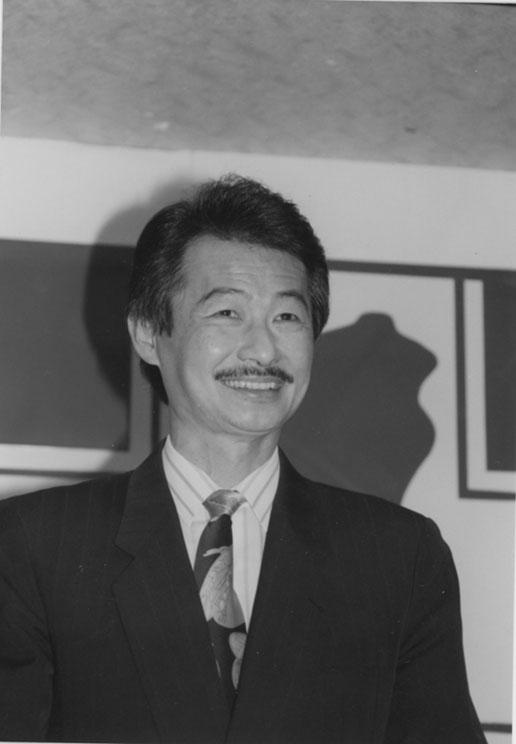 1995 施明德民進黨主席 |
| 1996 | 五十五歲 (age 55) | 二月,由於大和解改變了立法院政治生態,民、新兩黨一致推舉施競選立法院院長,卻因同黨扁系立委張晉城和朱星羽、李應元跑票,功敗垂成,以八十一票對八十二票一票之差敗給國民黨提名的劉松藩,俗稱「二月政改」。 三月八日,針對中國對台灣海域進行地對地導彈發射演習,乘坐漁船至射擊區,表達反威脅和追求和平的立場。 三月二十一日,民進黨總統大選失利後,辭去民進黨黨主席一職。 六月六日,二戰諾曼第登陸紀念日,與陳嘉君結婚。 十二月二十六日,推動「美麗島口述歷史研究」,獲忘年之交中國時報余紀忠先生全力資助。 In February, as grand reconciliation had altered the political ecology of the Legislative Yuan, the DPP and New Party jointly nominated Shih to run for Speaker of the Legislative Yuan; but because his own party’s Chen-faction legislators Chang Chin-cheng and Chu Hsing-yu, along with Li Ying-yuan, cast defecting votes, the effort failed at the last, losing by a single vote — eighty-one to eighty-two — to the Kuomintang’s nominee Liu Sung-pan, in what became known as the “February Reform.” On March 8, in response to China’s surface-to-surface missile exercises in Taiwan’s waters, he took a fishing boat to the firing zone to express his stance against intimidation and in pursuit of peace. On March 21, after the DPP’s defeat in the presidential election, he resigned as DPP chairman. On June 6, the anniversary of the Normandy landings of the Second World War, he married Jessica Gina Chen Shih. On December 26, he launched the “Kaohsiung Incident Oral History Project,” with the full support of his older friend Yu Chi-chung (余紀忠) of the China Times. |
| 1997 | 五十六歲 (age 56) | 二月二十五日,二二八大屠殺五十週年前夕,在施的主導之下,聯手促成三黨一派立法委員共同提案推動通過二二八紀念日改定為國定假日,此乃惟一經立法程序訂定的假日。 四月一日,為推動「總統直選」而被判處五十日拘役,拒絕易科罰金,以立法委員身份入監服刑。 香港回歸中國,施明德說他不反中,更不反共產黨,他反對戰爭,只要中國一天不放棄武力攻打台灣,他就不踏上中國領土,連領空也避過,九七之後不到香港,九九之後不到澳門。 On February 25, on the eve of the fiftieth anniversary of the February 28 massacre, under Shih’s leadership, legislators of three parties and one faction jointly proposed and passed the redesignation of February 28 Memorial Day as a national holiday — the only holiday established through legislative procedure. On April 1, for promoting direct presidential election he was sentenced to fifty days’ detention; refusing to pay a fine in lieu, he served the sentence as a sitting legislator. On the return of Hong Kong to China, Shih Ming Te said that he was not anti-China, still less anti-Communist; he was against war. So long as China did not renounce the use of force against Taiwan, he would not set foot on Chinese soil — avoiding even its airspace — not visiting Hong Kong after 1997, nor Macau after 1999. |
| 1998 | 五十七歲 (age 57) | 三月十六日女兒施蜜娜誕生。 五月二十八日,基於縫合白色恐怖所造成的創傷,主導朝野協商,推動制定「戒嚴時期不當叛亂暨匪諜審判案件補償條例」,施自己則利益迴避不領補償金。法案通過後立刻託人尋覓三十六年前被槍決的政治犯韓若春之妻女,順利在維也納找到已經改名為成慶齡的韓若春之女,是一名的鋼琴家,好讓完全不知情的她領取補償金。 冬,當選台北市立法委員。 十二月十日美麗島事件十九年紀念日,於綠島監獄前,施說:「當權者沒有要求被害者放棄悲情的權利;受難者卻有一種高貴的義務必須執行,那就是點燃寬恕之火!」 On March 16, his elder daughter Shih Mino was born. On May 28, seeking to heal the wounds of the White Terror, he led cross-party consultations to promote the “Compensation Act for Wrongful Trials for Sedition and Espionage During the Martial Law Period,” while recusing himself, on grounds of conflict of interest, from receiving any compensation. After the act passed, he immediately had someone seek out the wife and daughter of Han Jo-chun, a political prisoner shot thirty-six years earlier, and located in Vienna Han Jo-chun’s daughter — a pianist who had been renamed Ching-Ling Cheng — so that, wholly unaware, she might receive the compensation. In winter, he was elected legislator for Taipei. On December 10, the nineteenth anniversary of the Kaohsiung Incident, before the Green Island prison, Shih said: “Those in power have not asked the victims to relinquish their right to grief; yet the victims bear a noble duty they must perform — to light the fire of forgiveness!” |
| 1999 | 五十八歲 (age 58) | 七月,擔任全民廢除國大行動聯盟召集人。 秋,把黨證寄還給時任民進黨主席林義雄,不再是民進黨黨員,但是答應不對外公布。 九月三十日小女兒施笳誕生。 「美麗島口述歷史研究」完成近六百萬字口述訪談稿,整理出六十萬字,由時報出版《珍藏美麗島》一套四冊:《I走向美麗島——戰後反對意識的萌芽》《II沒有黨名的黨——美麗島政團的發展》《III暴力與詩歌——高雄事件與美麗島大審》《IV歷史的凝結——1977-1979台灣民主運動影像史》 十二月十日美麗島事件二十週年紀念,施說:「寬恕是結束苦痛最美麗的句點。」 In July, he served as convener of the National Alliance for the Abolition of the National Assembly. In autumn, he returned his party membership card to Lin I-hsiung, then DPP chairman, and was no longer a DPP member, though he agreed not to make this public. On September 30, his younger daughter Shih Chia was born. The “Kaohsiung Incident Oral History Project” completed nearly six million characters of oral-history transcripts and, distilling six hundred thousand characters, published through the China Times the four-volume Treasuring Formosa: Vol. I, Toward Formosa — The Postwar Awakening of Dissent; Vol. II, A Party Without a Name — The Rise of the Formosa Group; Vol. III, Violence and Poetry — The Kaohsiung Incident and the Military Trial; and Vol. IV, History Congealed — A Photographic History of Taiwan’s Democracy Movement, 1977–1979. On December 10, the twentieth anniversary of the Kaohsiung Incident, Shih said: “Forgiveness is the most beautiful full stop to the end of suffering.” |
| 2000 | 五十九歲 (age 59) | 三月四日,林義雄、葉菊蘭陪同總統參選人陳水扁與施明德見面,達成結論如下: 「林義雄:今天大概有幾個結論:第一、堅持台灣作為主權獨立國家的原則,絕對不可以讓步。第二、當選後人事與政策的決定,應該建立諮詢機制。第三、黨的制度應該朝向『內造化』改造,國會黨團應朝向『責任制』與『資深制』方向改造。 陳水扁:當選之後,我們要成立多數執政聯盟,如果不靠(施)主席,我們要怎樣去和人家談?沒辦法實現。靠寶清嗎?不可能。一切都要拜託主席了。」 三月十八日,施明德在高雄為陳水扁的選前之夜站台。 陳水扁當選總統,是華人世界第一次政權和平移轉。當夜致電林義雄主席,表示年少時的終結台灣作為殖民地的命運的夢想以實現,故宣布離開民進黨,回歸做台灣的施明德。 六月,前往波蘭華沙參加第一屆「世界民主論壇」,與世界各國長期致力民主及人權的工作者交換意見。 七月十七日,接受日本「經濟安保研究會」之邀前往日本參議院,以「台灣人心目中的台灣——台灣是一個主權獨立的國家」發表演說。 十二月,擔任「中美國會議員聯誼會」第二屆會長。 On March 4, Lin I-hsiung (林義雄)and Yeh Chu-lan(葉菊蘭) accompanied presidential candidate Chen Shui-bian (陳水扁)to meet Shih Ming Te, reaching the following conclusions: Lin I-hsiung: Today there are perhaps a few conclusions. First, on the principle of upholding Taiwan as a sovereign, independent state, there can be absolutely no concession. Second, decisions on personnel and policy after the election should establish a consultative mechanism. Third, the party’s institutions should be reformed toward “internalization,” and the legislative caucus toward a “responsibility system” and a “seniority system.” Chen Shui-bian: After winning, we must form a majority governing coalition; if we cannot rely on Chairman Shih, how are we to negotiate with others? It cannot be done. Rely on Pao-ching? Impossible. Everything must be entrusted to the Chairman. On March 18, Shih Ming Te spoke at Chen Shui-bian’s election-eve rally in Kaohsiung. Chen Shui-bian was elected president — the first peaceful transfer of power in the Chinese-speaking world. That night he telephoned Chairman Lin I-hsiung, saying that his youthful dream of ending Taiwan’s fate as a colony had been realized; he therefore announced his departure from the DPP and his return to being simply Shih Ming Te of Taiwan. In June, he went to Warsaw, Poland, to attend the first World Forum for Democracy, exchanging views with those from around the world long devoted to democracy and human rights. On July 17, at the invitation of Japan’s Economic Security Research Association, he went to the Japanese House of Councillors to deliver an address, “Taiwan in the Taiwanese Mind — Taiwan Is a Sovereign, Independent State.” In December, he served as second-term president of the ROC–U.S. Inter-Parliamentary Amity Association. 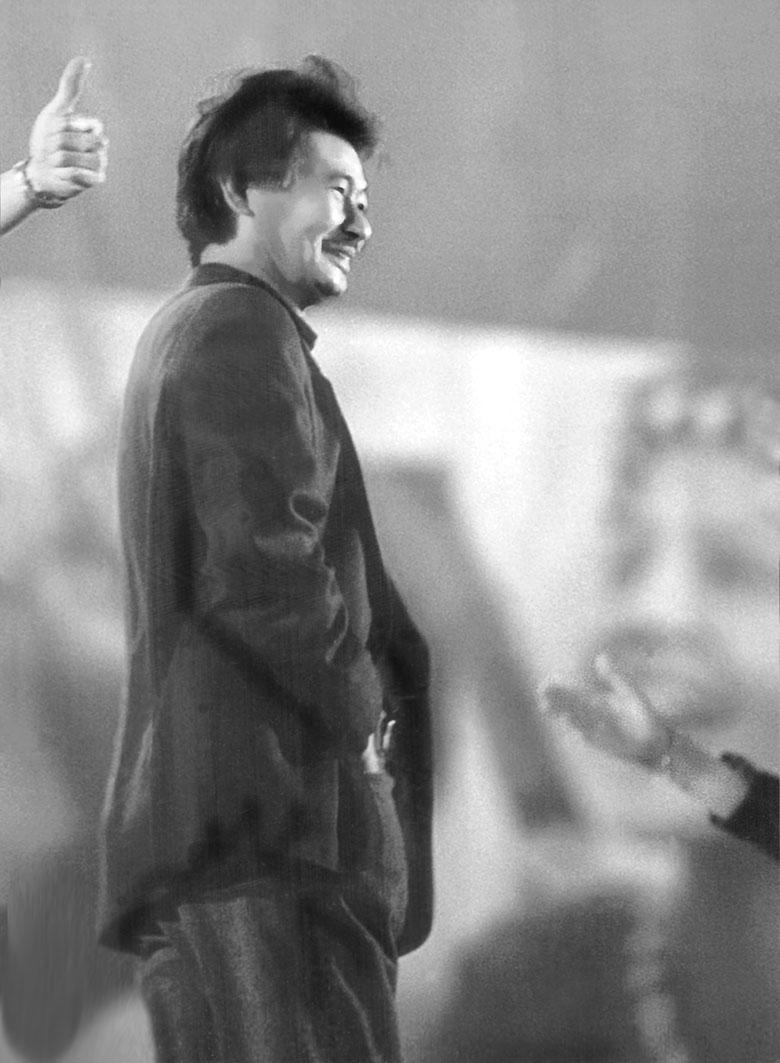 2000 施明德為陳水扁競選總統站台 |
| 2001 | 六十歲 (age 60) | 三月八日,獲頒美國加州「中國民主教育基金會」傑出民主人士獎。 六月八日,為因應全球化之挑戰成立「山」盟,擔任召集人。 夏,會見來台訪問的中國民運人士魏京生,兩人暢談海峽兩岸民主與人權的發展。 冬,獨立參選台北市立法委員,民調高居第一、二,卻在政黨夾殺中高票落選。 On March 8, he received the Outstanding Democracy Award from the Chinese Democracy Education Foundation in California. On June 8, to meet the challenges of globalization he founded the “Mountain” Alliance and served as its convener. In summer, he met the visiting Chinese democracy activist Wei Jingsheng(魏京生), and the two spoke at length about the development of democracy and human rights on both sides of the Taiwan Strait. In winter, running as an independent for the Taipei City legislature, he polled first or second in the surveys yet lost — with a high vote — squeezed out in the two-party contest. |
| 2002 | 六十一歲 (age 61) | 主張高雄應成為自由港,作為台灣的香港與阿姆斯特丹,與中國重要港市直航,以因應全球化的經濟變革。這是一個未雨綢繆的計畫,當時高雄仍是世界大三大港,面對中國快速崛起,應該讓政治歸台北,自由經濟歸高雄,讓台北成為華盛頓與中國周旋,高雄成為紐約與世界打交道。獨立參選高雄市長,被兩黨夾殺落敗。 十月,出版《無私的奉獻者,狂熱的革命者》散文集。 十一月,出版《永遠的主題:施明德與魏京生對談錄》一書。 He advocated that Kaohsiung should become a free port — Taiwan’s Hong Kong and Amsterdam — with direct sailings to major Chinese port cities, to meet the economic transformations of globalization. This was a far-sighted plan: at the time Kaohsiung was still the world’s third-largest port, and, facing China’s rapid rise, politics should return to Taipei and the free economy to Kaohsiung — Taipei becoming the Washington that maneuvered with China, and Kaohsiung the New York that dealt with the world. Running as an independent for mayor of Kaohsiung, he was defeated, squeezed between the two parties. In October, he published the essay collection The Selfless Devotee, the Ardent Revolutionary. In November, he published The Eternal Theme: Dialogues Between Shih Ming Te and Wei Jingsheng. |
| 2003 | 六十二歲 (age 62) | 春,針對陳水扁政府,假借「美麗島事件檔案展」對美麗島世代副總統呂秀蓮進行政治鬥爭,粗製濫造的展示方式嚴重侵犯政治受難者之隱私與尊嚴,因此提出國家損害賠償訴訟,要求受難者的知情權,獲李念祖擔任義務辯護律師。妻子陳嘉君展開對白色恐怖國家檔案的研究。 夏,學習開車,取得駕照。 秋,接受美國喬治梅森大學客座教授邀請,舉家赴美。施蜜娜在美就讀小學一年級,施笳唸幼兒園。 In spring, in response to the Chen Shui-bian government’s use of the “Kaohsiung Incident Archives Exhibition” to wage a political struggle against Vice President Lu Hsiu-lien of the Kaohsiung Incident generation — its crude manner of display gravely violating the privacy and dignity of the political victims — he filed a state-compensation lawsuit asserting the victims’ right to be informed, with Li Nien-tsu serving as pro bono defense counsel. His wife, Jessica Gina Chen Shih, began her research into the White Terror national archives. In summer, he learned to drive and obtained his license. In autumn, at the invitation of George Mason University to serve as a visiting professor, the family moved to the United States. Shih Mino entered the first grade of elementary school there, and Shih Chia attended kindergarten. |
| 2004 | 六十三歲 (age 63) | 二月二十八日,二二八紀念日,在美國華盛頓教堂與陳嘉君補行教堂婚禮。 三月十九日發生三一九槍擊事件。 八月,自美返台,施明德在兩岸事務上提出「一中歐盟化」的新主張,盼望打破兩岸的僵局,並成立「內閣制促進會」,投入憲改運動。 冬,獨立參選台北市立法委員,訴求「內閣制」、「藍綠和解」,民調依舊高居第一、二,又一在次政黨夾殺中高票落選。 On February 28, he held a church wedding with Jessica Gina Chen in Washington, D.C. On March 19, the March 19 Shooting Incident occurred. In August, returning to Taiwan from the United States, Shih Ming Te put forward a new proposition on cross-strait affairs — the “EU-ization of One China” — hoping to break the cross-strait impasse, and founded the “Association for the Promotion of a Parliamentary System,” committing himself to the movement for constitutional reform. In winter, running as an independent for the Taipei City legislature on a platform of “the parliamentary system” and “blue–green reconciliation,” he again polled first or second yet again lost, with a high vote, squeezed out in the party contest. |
| 2005 | 六十四歲 (age 64) | 十月六日,台灣大學政治學系為「表彰施明德先生對台灣民主發展之卓越貢獻」特設立『施明德先生講座』,以推動族群和諧、政治和解、兩岸和平為宗旨。 On October 6, the Department of Political Science of National Taiwan University, “in recognition of Mr. Shih Ming Te’s outstanding contributions to Taiwan’s democratic development,” specially established the “Shih Ming Te Lecture,” with the aims of promoting ethnic harmony, political reconciliation, and cross-strait peace. |
| 2006 | 六十五歲 (age 65) | 五月,與諾貝爾和平獎得主南非前總統戴克拉克對談「和解:南非經驗 台灣願景」。 七月,提前健檢,發現一公分肝癌,電燒手術治療成功。 陳水扁政權貪腐濫權,證據確鑿,天怒人怨達高峰。 八月七日施於中國時報刊出「給陳水扁總統的一封公開信」,說道: 「總統是國家道德最亮的標竿。總統是國家主權的肉身象徵。總統是穩定政權的基石。 當標竿蒙塵,當肉身污化,當基石傾斜,人民還能盼望什麼? 扁哥,我們錯了。執政後,我們沒有把這個黨帶好,我們沒有引領台灣走向廉能的社會,我們必須勇敢認錯,我們應該鞠躬下台。坦承認錯,會得到人民的體諒。硬柪、狡辯只會帶來更大的羞辱和報應。 民主政治的可貴,在於不怕更換國家舵手!國家最大的危機,在於人民失去了信心和信任! 給一個榜樣吧!示弱是強者的美德!唯有真正的強者,才敢認錯才敢捨棄!」 八月十二日,施發動一人一百元「百萬人民反貪倒扁運動」 ,七個工作天即達百萬人次支持。 九月九日,正式於總統府前凱道上展開和平靜坐示威,要求涉貪的陳水扁總統下台。 九月十五日「圍城行動」,成功且和平地帶領百萬群眾環繞總統府一周,群眾從凱道移師到火車站,繼續和平靜坐示威。施當夜和平移師成功致詞時,感動地跪下向上蒼說:「感謝這麼可愛的台灣人民,我們有信心捍衛台灣的民主、自由、人權以及主權。」 十月十日「天下圍攻」,群眾和平熱情包圍總統府的國慶典禮,為恐群眾失控,施引領群眾遠離總統府,往忠孝東路東邊遊行。 十二月,反貪倒扁總部希望群眾回歸正常生活,總指揮施明德宣布「自囚」於濟南路運動總部。 In May, he held a dialogue with the Nobel Peace laureate and former South African president F. W. de Klerk on “Reconciliation: The South African Experience, the Taiwanese Vision.” In July, an early health examination discovered a one-centimeter liver cancer, successfully treated by radiofrequency ablation. The corruption and abuse of power of the Chen Shui-bian administration, firmly evidenced, had roused public indignation to its height. On August 7, Shih published in the China Times “An Open Letter to President Chen Shui-bian,” which said: The president is the brightest beacon of the nation’s morality. The president is the bodily embodiment of national sovereignty. The president is the cornerstone of a stable regime. When the beacon is tarnished, when the body is defiled, when the cornerstone tilts, what can the people still hope for? Brother Bian, we were wrong. After coming to power, we did not lead this party well; we did not lead Taiwan toward an honest and capable society. We must courageously admit our error; we should bow and step down. To admit error frankly will earn the people’s understanding. Stubbornness and sophistry will only bring greater humiliation and retribution. The value of democratic politics lies in not fearing to change the nation’s helmsman! The gravest crisis of the nation lies in the people losing confidence and trust! Set an example! To show weakness is the virtue of the strong! Only the truly strong dare to admit error and dare to let go! On August 12, Shih launched the “Million Voices Against Corruption, President Chen Must Go” campaign, at one hundred NT dollars per person; within seven working days it drew a million pledges of support. On September 9, a peaceful sit-in demonstration formally began on Ketagalan Boulevard before the Presidential Office, demanding that the corruption-implicated President Chen Shui-bian step down. On September 15, the “Siege” action peacefully and successfully led a million people once around the Presidential Office; the crowd moved from Ketagalan Boulevard to the railway station to continue the peaceful sit-in. That night, having peacefully relocated and delivered his address, Shih knelt in emotion and said to heaven: “Thank you, dear people of Taiwan; we have the confidence to defend Taiwan’s democracy, freedom, human rights, and sovereignty.” On October 10, in the “Nationwide Siege,” the crowd peacefully and ardently encircled the National Day ceremony at the Presidential Office; fearing that the crowd might lose control, Shih led them away from the Presidential Office and marched eastward along Zhongxiao East Road. In December, as the anti-corruption headquarters hoped the crowd would return to normal life, commander-in-chief Shih Ming Te announced his “self-confinement” at the movement headquarters on Jinan Road. 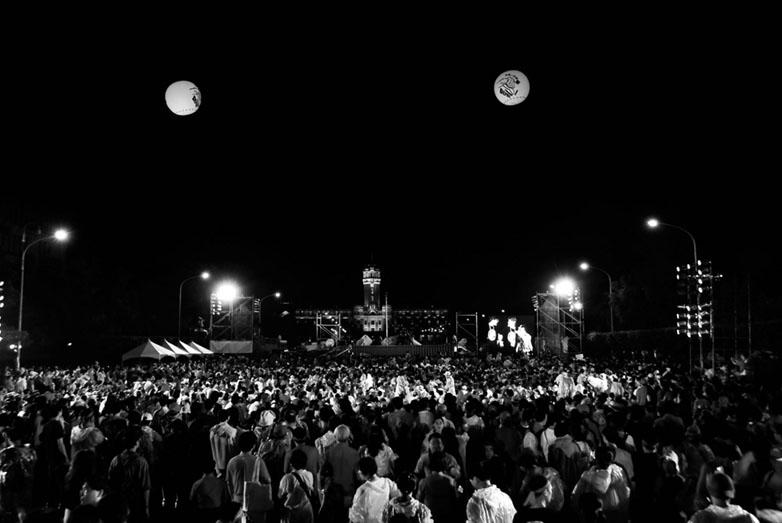 2006 九月九 百萬人民反貪倒扁序幕 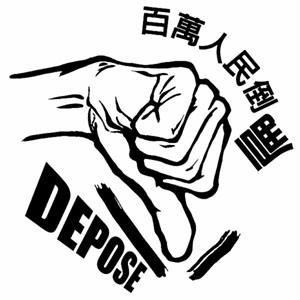 |
| 2007 | 六十六歲 (age 66) | 四月一日,宣布結束「自囚」。 八月三日,施明德等人十六人因率領紅衫軍發動天下圍攻,遭台北地檢署以違反「集會遊行法」起訴。 On April 1, he announced the end of his “self-confinement.” On August 3, Shih Ming Te and fifteen others — sixteen in all — were indicted by the Taipei District Prosecutors Office for violating the Assembly and Parade Act in leading the Red Shirt Movement’s Nationwide Siege. |
| 2008 | 六十七歲 (age 67) | 九月五日,高俊明牧師對於紅衫軍時期攻擊施明德的言論向施明德道歉,懺悔他的不當言論,兩人公開和解。 公開反對貪腐的民進黨總統,遭到昔日同志甚至親人最無情狠毒的污衊辱罵,文化大革命毀滅式的攻訐,施痛苦萬分。 On September 5, the Reverend Kao Chun-ming(高俊明) apologized to Shih Ming Te for remarks attacking him during the Red Shirt period, repented of his improper words, and the two reconciled publicly. For publicly opposing the corrupt DPP president, he suffered the most merciless and venomous slander and abuse from former comrades and even kin — a Cultural-Revolution-style campaign of annihilating attack, which caused him profound anguish. |
| 2009 | 六十八歲 (age 68) | 二月,紅衫軍十六人違反集會遊行法,宣判無罪。 紅衫軍三週年紀念,出版《總指揮的告白》一書。 抗議馬英九政府在美麗島事件三十週年紀念時,榮耀江南案的恐怖暗殺主使者汪希苓,前軍情局局長。 In February, the sixteen Red Shirt figures charged with violating the Assembly and Parade Act were acquitted. On the third anniversary of the Red Shirt Movement, he published The Commander-in-Chief’s Confession. He protested that the Ma Ying-jeou(馬英九) government, at the thirtieth-anniversary commemoration of the Kaohsiung Incident, had honored Wang Hsi-ling (汪希苓) — the former Military Intelligence Bureau director who had masterminded the terrorist assassination in the Henry Liu case. |
| 2010 | 六十九歲 (age 69) | 美麗島軍法大審三十年紀念,出版《叛亂/遺囑》。 八月十日施明德鄭重地警告兩岸國家領導人,於聯合報、自由時報、蘋果日報等刊登「施明德的緊急呼籲」:希望提醒馬英九總統、台灣人民以及中華人民共和國政府,正視ECFA第16條片面終止條款所隱含的中華人民共和國對中華民國「以商逼政」的毀台危機。 On the thirtieth anniversary of the Kaohsiung Incident military trial, he published Sedition / Will. On August 10, Shih Ming Te solemnly warned the leaders on both sides of the strait, publishing in the United Daily News, the Liberty Times, the Apple Daily, and other papers “An Urgent Appeal from Shih Ming Te”: hoping to remind President Ma Ying-jeou, the Taiwanese people, and the government of the People’s Republic of China to face squarely the crisis of Taiwan’s destruction implicit in the People’s Republic’s “using commerce to coerce politics” against the Republic of China through the unilateral-termination clause of Article 16 of the ECFA. |
| 2011 | 七十歲 (age 70) | 夏,出版著作《常識——一個台灣人最好知道的事》自序:「我這本《常識》,寫的是我們已經生活在一個主權獨立的國家了,國人卻常常還在荒謬地爭執著『我們的國家』是否獨立?以及我們是哪一國人?我只好像說故事那樣,告訴大家一些常識,讓二千三百萬台灣人民能夠團結起來,認清自己,迎戰二十一世紀的挑戰,不要再逗留在二十世紀的對抗、仇恨之中。」 In summer, he published the work Common Sense: What Every Taiwanese Should Know. Its preface reads: This book of mine, Common Sense, is about the fact that we already live in a sovereign, independent state, and yet our countrymen still absurdly argue over whether “our country” is independent, and over which country’s people we are. So I can only, as if telling a story, tell everyone some common sense, so that Taiwan’s twenty-three million people may unite, know themselves clearly, meet the challenges of the twenty-first century, and no longer linger in the confrontation and hatred of the twentieth. |
| 2012 | 七十一歲 (age 71) | 十二月發起推動「台灣感念祠」。為表彰前人貢獻,施明德連同學術界、藝文界等民間人士規劃創設台灣感念祠,希望供奉足以為台灣精神典範的人物。 In December he launched the “Taiwan Shrine of Remembrance and Tribute.” To honor the contributions of those who came before, Shih Ming Te, together with figures from the academic and cultural worlds, planned the founding of the Taiwan Shrine of Remembrance and Tribute, hoping to enshrine those worthy to stand as exemplars of the Taiwanese spirit. |
| 2013 | 七十二歲 (age 72) | 六月二十一日,施明德在國家最高民意機構立法院禮堂舉行「敬 烈士」,遙祭一九七〇年泰源革命事件被槍決的五烈士江炳興、陳良、鄭金河、謝東榮和詹天增。施哽咽道:「民主自由是抗爭者的戰利品、絕對不是統治者的恩賜物。自己無能,走了43年才把泰源五烈士揹到立法院,使他們得以安息。」 發表〈傳承與前瞻,台灣請你愛每一個人〉支持返還同性戀者應有的天賦人權。 On June 21, Shih Ming Te held a ceremony “in homage to the martyrs” in the auditorium of the Legislative Yuan, the nation’s highest representative body, in distant memorial to the Five Martyrs shot in the Taiyuan revolutionary uprising of 1970 — Chiang Ping-hsing, Chen Liang, Cheng Chin-ho, Hsieh Tung-jung, and Chan Tien-tseng. Choking with emotion, Shih said: “Democracy and freedom are the spoils of those who resist — never the bestowal of rulers. In my own incapacity, it took forty-three years to carry the Five Martyrs of Taiyuan into the Legislative Yuan, so that they might rest in peace.” He published “Heritage and Vision: Taiwan, Please Love Everyone,” supporting the restitution to homosexuals of the natural human rights that are their due. |
| 2014 | 七十三歲 (age 73) | 五月二十七日,施明德偕同台灣藍綠政壇上處理過國際暨兩岸事務者程建人、洪奇昌、張五岳、蘇起、陳明通、焦仁和,經過數月討論,達成共識,發表「我們的呼籲——處理兩岸問題五原則」,一起捍衛台灣主權。 一、尊重現狀,不片面改變現狀。 二、現狀是:中華民國與中華人民共和國自一九四九年起,即已並存於世,而且雙方政府已從「交戰政府」轉為「分治政府」。 三、「一中原則」已被部分人士窄化、僵化成「中華人民共和國」的代名詞;既無法呈現兩岸現狀,也愈來愈難被中華民國2300萬台灣人民所接受。建議用「大一中架構」取代,才能符合現狀,邁向和解之路。 四、「大一中架構」意在「中華民國」與「中華人民共和國」之上共組一個不完整的國際法人,以共識決處理雙方關切的事務,作為兩岸現階段的過渡方案。 五、在「大一中架構」之下的雙方,應消除敵對,共同維護本地區之和平與安全。雙方承諾互不使用武力,且不得與任何國家簽定不利於另一方的軍事攻防協定;雙方均享有參加聯合國等國際組織,以及與其他國家建立正常關係的權利。 On May 27, Shih Ming Te, together with figures from Taiwan’s blue and green camps experienced in international and cross-strait affairs — Cheng Chien-jen(程建人), Hung Chi-chang(洪奇昌), Chang Wu-yueh(張五岳), Su Chi(蘇起), Chen Ming-tong(陳明通), and Chiao Jen-ho (焦仁和) — after several months of discussion reached a consensus and issued “Our Appeal: Five Principles for Cross-Strait Relations,” to jointly defend Taiwan’s sovereignty. 1. Respect the status quo, and do not unilaterally change it. 2. The status quo is that the Republic of China and the People’s Republic of China have coexisted since 1949, and that the two governments have already shifted from “belligerent governments” to “governments of divided rule.” 3. The “One China Principle” has been narrowed and hardened by some into a synonym for “the People’s Republic of China”; it can neither represent the cross-strait status quo nor is it any longer acceptable to the twenty-three million people of the Republic of China on Taiwan. It is proposed that it be replaced by the “Greater One China” framework, so as to conform to the status quo and advance toward reconciliation. 4. The “Greater One China” framework is intended to have the “Republic of China” and the “People’s Republic of China” jointly constitute, above them, an incomplete international legal person that handles matters of mutual concern by consensus — a transitional arrangement for the present stage of cross-strait relations. 5. Under the “Greater One China” framework, the two sides should eliminate hostility and jointly safeguard the peace and security of the region. Both sides pledge not to use force against each other, and not to conclude with any state a military accord detrimental to the other; both enjoy the right to participate in the United Nations and other international organizations and to establish normal relations with other states. 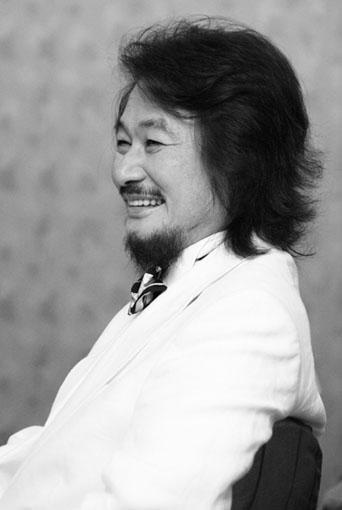 |
| 2016 | 七十五歲 (age 75) | 五月二十一日,施明德宣布以獨立參選人身份投入公民連署,高舉「和解是臺灣唯一的路」,提出「聯合政府」的主張,對各黨各派進行整合,並且採「內閣制」為中央政府體制,以公投的方式修改憲法。 施明德主張以「大一中架構」取代一中原則,在中華民國與中華人民共和國之上共組一個不完整的國際法人,以共識決處理雙方關切的事務。 施明德聲明表示:「從十六歲那年,我決心投考軍官學校,推翻獨裁政權,我不敢一刻忘記『國家、責任、榮譽』,我把『自由、平等、博愛』視如明鏡,不敢背叛。」其後因無法達到有效連署,宣布退選。 On May 21, Shih Ming Te announced that he would enter the citizens’ petition process as an independent candidate, raising high the banner “Reconciliation Is Taiwan’s Only Road,” putting forward the proposition of a “coalition government,” working to integrate all parties and factions, adopting the parliamentary system as the central governmental structure, and amending the constitution by referendum. Shih Ming Te advocated the “Greater One China” framework, whereby the Republic of China and the People’s Republic of China would jointly constitute, above them, an incomplete international legal person to handle matters of mutual concern by consensus. Shih Ming Te declared: “From the age of sixteen, when I resolved to sit the examination for the military academy and overthrow the dictatorial regime, I have not for a moment dared to forget ‘Country, Duty, Honor’; I have held ‘Liberty, Equality, Fraternity’ as a mirror, and dared not betray them.” As he was unable to gather sufficient petition signatures, he announced his withdrawal. |
| 2020 | 七十九歲 (age 79) | 出版《死囚——施明德回憶錄 I 1962-1964》 He published Death Row — Memoirs of Shih Ming Te, Vol. I, 1962–1964. |
| 2021 | 八十歲 (age 80) | 施明德人生最後最想做的兩件事是蓋血牆及台灣感念祠。十二月二十四,他透露,陳菊當總統府祕書長時,蔡英文總統曾將興建台灣感念祠一事交辦給行政院長蘇貞昌,卻被蘇貞昌擱置。 重新出版《施明德的政治遺囑:美麗島軍法大審最後答辯狀》。 The two things Shih Ming Te most wished to accomplish in the last of his life were to build a Wailing Wall and the Taiwan Shrine of Remembrance and Tribute. On December 24 he disclosed that, when Chen Chu was secretary-general of the Presidential Office, President Tsai Ing-wen(蔡英文) had entrusted the construction of the Taiwan Shrine of Remembrance and Tribute to Premier Su Tseng-chang(蘇貞昌), but that Su Tseng-chang had shelved it. He republished Shih Ming Te’s Political Will: The Final Defense at the Kaohsiung Incident Military Trial. |
| 2022 | 八十一歲 (age 81) | 一月八日,同時是四十二年前美麗島事件後施明德逃亡26天後被逮捕這天,中華人權協會為表彰施明德對台灣人權運動的貢獻,頒發《人權終身成就獎》 出版《軍法大審——施明德回憶錄III 1980》。 On January 8 — the same day on which, forty-two years earlier, Shih Ming Te had been arrested after his twenty-six-day flight following the Kaohsiung Incident — the Chinese Association for Human Rights, in recognition of his contributions to Taiwan’s human-rights movement, conferred on him the Lifetime Achievement Award for Human Rights. He published The Military Trial — Memoirs of Shih Ming Te, Vol. III, 1980. |
| 2023 | 八十二歲 (age 82) | 出版《金馬是引信,亦是誘餌?——遙送習總書記一支橄欖枝》。 肝臟再度發現一公分的腫瘤,十一月十三日再度用電燒治療,引發一系列併發症,隨後住進加護病房,前後四十七天。 在病房裡收到出版社送來妻子嘉君出版的新書《特務時代與他的人生》,一本獻給他的書。 He published Kinmen and Matsu: Fuse or Bait? — An Olive Branch to General Secretary Xi. A one-centimeter tumor was again found in his liver; on November 13 he was again treated by radiofrequency ablation, which triggered a series of complications, and he was then admitted to intensive care for forty-seven days in all. In the ward he received the new book his wife, Jessica Gina Chen Shih, had published, brought over by the publisher — The Age of the Secret Agent and His Life — a book dedicated to him. |
| 2024 | 八十三歲 (age 83) | 一月十五日八十三歲生日當天,凌晨一時四十七分,在妻子的懷抱和女兒的陪伴下,與世長辭。家人遵旨謝絕告別式、追思會、紀念會,靈柩在家中停靈百日後花葬火化。 On January 15, his eighty-third birthday, at 1:47 a.m., in the embrace of his wife and the company of his daughters, he departed this life. In accordance with his wishes, the family declined a funeral ceremony, a memorial service, and a commemorative gathering; his coffin lay in repose at home for one hundred days, after which he was cremated and given a flower burial, his ashes enshrined in the family shrine at home. |
